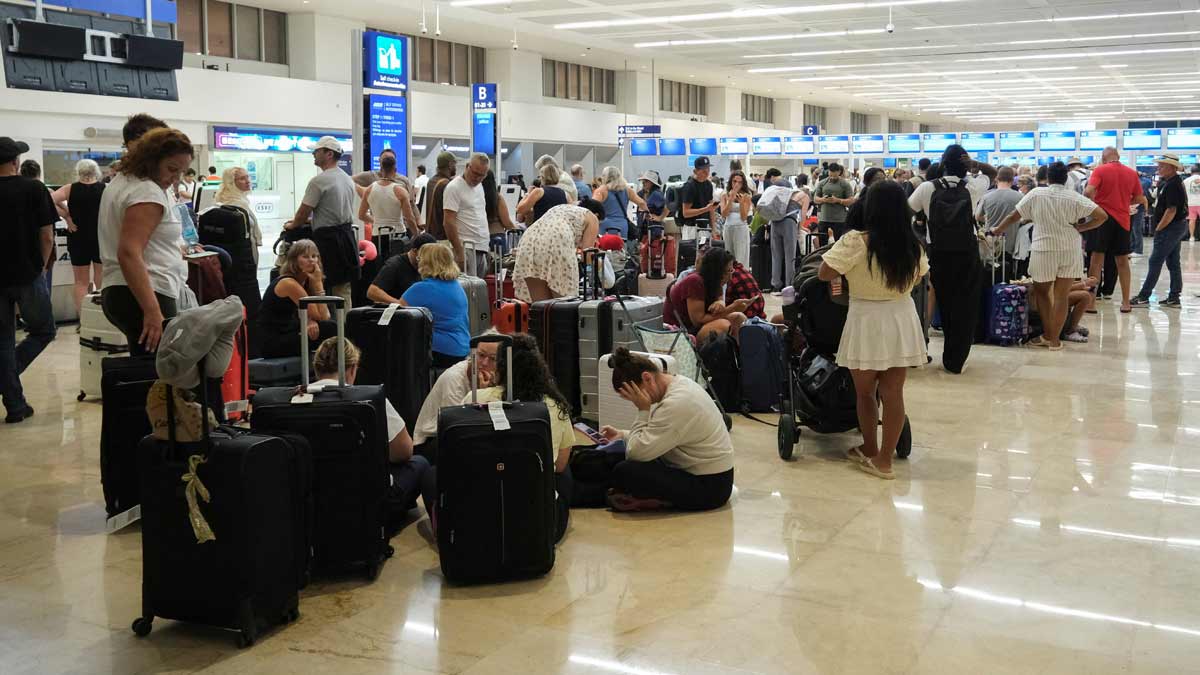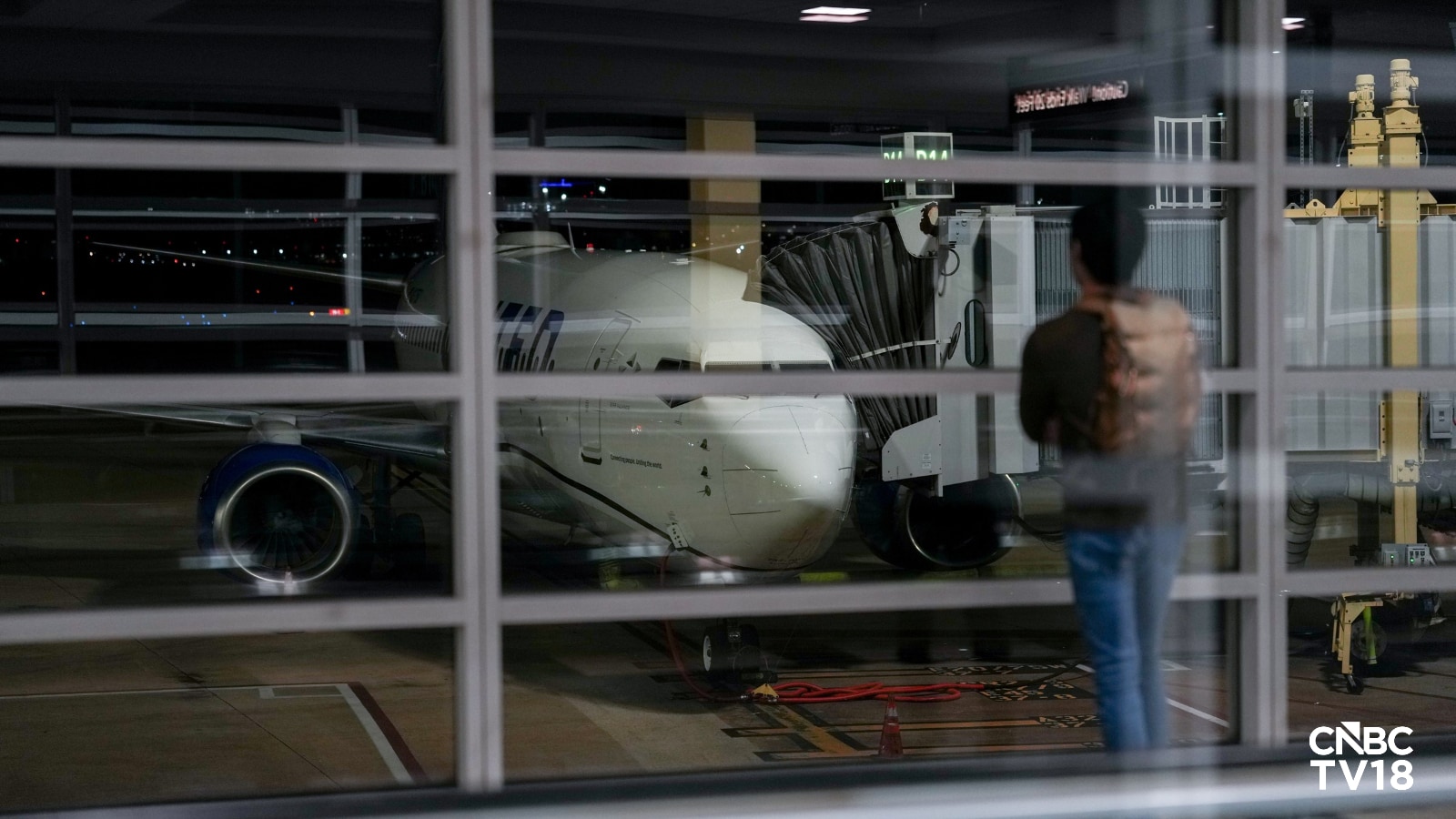
A nationwide flight ground stop does not end when the Federal Aviation Administration lifts the directive; it transitions from an acute containment phase into a multi-day network desynchronization crisis. Standard news coverage treats the lifting of a ground stop as the resolution of a disruption, missing the operational reality of commercial aviation. In a tightly coupled hub-and-spoke network, halting departures for even two hours severs the spatial and temporal alignment of aircraft, flight crews, and airport gate capacity. Recovery is governed by rigid physical, regulatory, and thermodynamic constraints that force airlines into a cascading triage protocol long after the skies officially reopen.
The Mechanics of Network Containment
To understand why a lifted ground stop triggers secondary failures, one must examine the architecture of the National Airspace System (NAS). The NAS operates as a complex adaptive system with near-zero slack during peak operating windows. When the Air Traffic Control System Command Center (ATCSCC) issues a ground stop—whether triggered by a critical telecommunications failure, a Notice to Air Missions (NOTAM) database outage, severe convective weather, or radar degradation—it is executing a deterministic safety protocol. The objective is to prevent airborne holding patterns from exceeding airspace sector capacity and fuel reserves.
During an active ground stop, three distinct operational states emerge simultaneously across the network:
- Airborne Attrition: Flights already en route are permitted to land at their destinations, provided those terminals have open gates.
- Tarmac Saturation: Aircraft that have pushed back from gates but have not yet taken off remain on taxiways, consuming auxiliary power unit (APU) fuel and blocking surface movement.
- Gate Lock: Outbound flights remain parked at terminal gates, preventing arriving aircraft from deplaning passengers.
The moment the FAA lifts the ground stop, the system faces an immediate bottleneck known in queuing theory as a bulk arrival surge. Hundreds of aircraft request instrument flight rules (IFR) clearances, pushback tugs, and departure slots within the same fifteen-minute window. Air traffic control cannot release all held traffic simultaneously without violating minimum longitudinal and vertical separation standards. Instead, the ATCSCC transitions from a ground stop to a Ground Delay Program (GDP) or Miles-in-Trail (MIT) restrictions, metering traffic into the airspace at a controlled flow rate.
The Three Vectors of Post-Stop Desynchronization
Once metering begins, airlines confront the primary operational damage: the decoupling of their scheduled resource matrices. An airline schedule is not a collection of independent flights; it is a continuous chain of linked assets. Breaking the chain at a single node propagates failure downstream across three distinct vectors.
1. Aircraft Routing and Maintenance Windows
Commercial airframes are scheduled to fly multi-leg rotations throughout a 24-hour cycle, often terminating at specific maintenance bases overnight. A single Boeing 737 or Airbus A321 might operate six legs across four time zones in a single day. When a nationwide ground stop delays leg two by three hours, legs three through six inherit that delay plus any ground turnaround friction.
If an aircraft misses its scheduled arrival at a maintenance hub, required Federal Aviation Regulation (FAR) airworthiness checks—such as daily fluid inspections, tire wear measurements, or scheduled component replacements—cannot be performed on time. The aircraft is legally grounded until maintenance can be executed, removing a hull from the next morning's schedule before the first flight even boards.
2. Flight Crew Legality and FAR Part 117
The most unforgiving constraint in aviation recovery is human regulatory compliance. Under Federal Aviation Administration Title 14 CFR Part 117, pilots are bound by strict Flight Duty Period (FDP) limits, which dictate the maximum hours a crew member can be on duty based on their report time and the number of flight segments scheduled. Flight attendants operate under parallel, albeit distinct, duty limits governed by federal rules and collective bargaining agreements.
Crucially, the duty clock does not stop when an aircraft sits on a taxiway during a ground stop. Once the ground stop is lifted, airlines frequently discover that flight crews sitting in the cockpit of ready-to-depart aircraft have "timed out"—meaning their remaining legal duty window is shorter than the block time required to fly the segment and taxi to the arrival gate.
Replacing a timed-out crew requires dispatching reserve pilots. However, reserve pools at major hubs are sized for normal statistical variance—typically 10% to 15% of active daily lines—not a 100% network-wide halt. When a crew times out at an outstation (a non-hub airport without a pilot base), the aircraft is stranded indefinitely until a deadheading crew can be flown in on another flight, which is itself delayed.
3. Terminal Gate and Ramp Congestion
Airports are physical bottlenecks with fixed concrete footprints. During a prolonged ground stop, arriving flights from international origins or unaffected domestic sectors continue to land. Because outbound flights are frozen at the gates, arriving aircraft are directed to remote hardstands or penalty boxes on the airfield.
This creates a compounding ramp problem:
- Ground handling crews are stretched thin managing prolonged tarmac waits rather than turning aircraft.
- Federal regulations (the Tarmac Delay Rule) prohibit airlines from keeping domestic passengers on an aircraft on the tarmac for more than three hours without offering an opportunity to deplane, forcing carriers to burn scarce gate capacity just to offload held passengers and reset the regulatory clock.
- Baggage sorting systems jam as thousands of misconnected bags accumulate in terminal basements, requiring manual re-tagging and security rescreening.
The Cost Function of Schedule Recovery
When airline Network Operations Centers (NOCs) evaluate how to restore equilibrium after a ground stop is lifted, they optimize against a multi-variable cost function. The public often assumes airlines prioritize minimizing total passenger delay minutes. In practice, NOCs prioritize network integrity—the rapid restoration of the baseline schedule for the following operating day.
To achieve this, operations controllers rely on strategic flight cancellations. Canceling a flight is not an admission of defeat; it is a mathematical tool used to reset the asset matrix. By canceling a round-trip rotation between a hub and a regional spoke, an airline achieves three immediate operational gains:
- Hull Recovery: The aircraft remains at the hub, instantly eliminating a four-hour rolling delay and positioning the airframe on time for the next morning's departure bank.
- Crew Preservation: The assigned pilots and flight attendants are released from duty, preserving their FAR Part 117 legality for the following day's schedule rather than burning their duty hours on a late-night recovery flight that would render them illegal for tomorrow's morning bank.
- Slot Reclamation: The vacated gate and departure slot are reassigned to a high-yield long-haul or high-load-factor trunk route carrying hundreds of connecting passengers.
This explains a common point of passenger frustration: watching a flight get canceled under clear skies hours after the FAA officially lifted a ground stop. The cancellation is a deliberate surgical excision designed to prevent the disruption from bleeding into day two and day three of the operating week.
Structural Vulnerabilities in Legacy Aviation Infrastructure
A nationwide ground stop exposes the fragility of centralized aviation infrastructure. While commercial aircraft feature triple-redundant avionics and fly-by-wire flight controls, the ground-based systems governing the NAS often rely on legacy data architectures.
When a single point of failure—such as a corrupted database file in the NOTAM system or a fiber-optic cut at an Air Route Traffic Control Center (ARTCC)—forces a nationwide halt, it reveals an asymmetry between airborne resilience and ground-system vulnerability. Legacy systems often operate on batch-processing architectures or rely on aging telecommunications protocols that lack automated failover capabilities.
Furthermore, the economic deregulation of the airline industry incentivized carriers to maximize asset utilization. High-density schedules, minimized turnaround times (often 35 to 45 minutes for narrow-body jets), and bank-and-hub connection waves maximize capital efficiency during nominal operations. Under Little's Law—which states that the long-term average number of items in a stationary system equals the average arrival rate multiplied by the average time an item spends in the system—operating a network near 95% capacity leaves virtually zero buffer to absorb shockwaves. When a system with no buffer hits a zero-flow state during a ground stop, recovery time scales non-linearly relative to the duration of the halt. A two-hour stop routinely requires 24 to 48 hours of operational triage to clear.
Limitations of Current Recovery Models
Even with advanced algorithmic recovery tools—such as integer programming models that solve for optimal aircraft tail-swapping and crew pairing adjustments—NOCs face hard physical limits that software cannot bypass:
- Fleet Heterogeneity: An airline cannot simply swap a delayed Boeing 737-800 with an available Airbus A320 if the assigned flight crew is only type-rated for the Boeing platform. Cockpit crew qualifications are strictly segregated by aircraft family.
- Airport Curfews: Major metropolitan airports, such as John Wayne Airport (SNA) or Ronald Reagan Washington National Airport (DCA), enforce strict noise-abatement curfews. If a delayed flight cannot depart or arrive before the curfew cutoff, no amount of operational optimization can legally execute the flight until the following morning.
- Passenger Rebooking Elasticity: With domestic load factors routinely exceeding 85%, spare seat inventory across the industry is scarce. Stranded passengers cannot be absorbed immediately onto subsequent flights, creating a multi-day backlog in terminal customer service queues regardless of how quickly the aircraft themselves are repositioned.
Tactical Execution for Disruption Mitigation
For corporate travel managers, logistics coordinators, and individual travelers navigating the immediate aftermath of a lifted nationwide ground stop, passive waiting is the highest-risk strategy. Because airlines execute rolling cancellations for hours after airspace restrictions end, travelers must act on operational data rather than terminal departure boards.
Execute the following sequence the moment a ground stop is lifted:
- Audit Incoming Hull Telemetry: Do not rely on the airline's posted departure time, which often updates optimistically based on minimum turnaround assumptions. Use flight-tracking telemetry to locate the specific tail number assigned to your flight. If the incoming aircraft has not yet departed its previous station, your posted departure time is mathematically impossible.
- Identify Crew Base Proximity: Determine whether your current airport is a crew base for your carrier. If you are at a non-hub spoke airport and your flight is delayed beyond two hours, the probability of a crew timeout cancellation rises sharply. Initiate rebooking immediately rather than waiting for the gate agent to announce a crew shortage.
- Prioritize Morning Bank Rebookings: If a cancellation is imminent, bypass afternoon recovery flights—which carry the highest risk of secondary crew timeouts and cascading gate delays—and secure confirmed inventory on the first departure bank of the following morning (0600 to 0800 local time), when aircraft are already positioned at gates and crews are starting fresh FAR Part 117 duty clocks.
- Exploit Interline and Hub Bypass Routing: Request rebooking via secondary hubs or partner carriers operating outside the most congested airspace corridors, specifically avoiding major Northeast and Midwest choke points where Miles-in-Trail restrictions linger longest after a nationwide halt.
The lifting of a nationwide ground stop marks the beginning of the operational triage phase, not the end of the disruption. Until aviation infrastructure transitions to decentralized, cloud-native redundancies and carriers build measurable schedule slack into peak hub banks, every systemic halt will trigger a predictable, multi-day mathematical cascade across the national network.