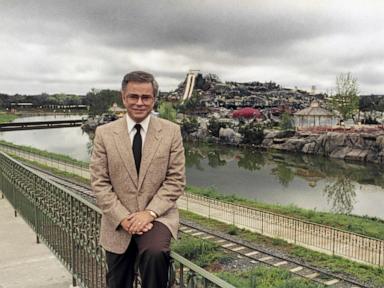
The television screen used to glow with a very particular kind of amber warmth in the late 1970s and 1980s. It was a light manufactured by studio bulbs, filtered through heavy broadcast lenses, and beamed into living rooms where millions sought comfort, certainty, and perhaps a miracle. At the center of that light stood Jim Bakker. With his wide, eager smile, heavy-lidded eyes, and a tear that seemed always on the verge of spilling over, he became the architect of a religious broadcasting empire that promised heaven on earth—or at least, a very comfortable approximation of it through a Christian theme park.
Jim Bakker has died at the age of 86.
To understand the man is to understand a specific, peculiarly American brand of ambition where spiritual salvation and commercial enterprise were woven together so tightly that untangling them became impossible. Long before social media influencers monetized their daily lives, Bakker and his then-wife, Tammy Faye, were broadcasting their marriage, their tears, their joys, and their building projects directly to the faithful. They invited viewers into an intimate, high-stakes drama where every dollar donated was framed as a brick laid in the foundation of the Kingdom.
The zenith of this ambition was Heritage USA. Located in South Carolina, it was envisioned as a Christian Disneyland. There was a luxury hotel, a water park, an indoor faux-Main Street, and a broadcast studio where the cameras never really stopped rolling. For thousands of believers, it represented a sanctuary from a rapidly changing secular world. It was a place where faith came with amenities, where praising God could be paired with a weekend stay in a climate-controlled resort.
But empires built on charisma and constant financial expansion require an immense amount of fuel. The machinery of daily broadcasting, combined with lavish construction projects and an extravagant lifestyle, created a deficit that faith alone could not balance.
The collapse, when it came, was not quiet. It arrived in the late 1980s amid financial scandals, federal investigations, and a web of hush money payments and moral failures that dominated the national headlines. The tears on television were no longer tears of joy or spiritual breakthrough; they were tears of public humiliation. Bakker’s trial and subsequent conviction for fraud and conspiracy felt less like a courtroom drama and more like a Greek tragedy broadcast in color. He served years in federal prison, trading custom suits and studio lights for a green jumpsuit and a concrete cell.
Prison changes a person, or at least it forces them into a severe, unavoidable stillness. When Bakker was released in the mid-1990s, the world had moved on. The PTL Club was long gone, converted into memories, lawsuits, and abandoned properties. Yet, the impulse that drove him never truly vanished. In later years, he returned to television in a much smaller, more apocalyptic key, selling survivalist food buckets alongside end-times prophecies to a new generation of viewers primed to believe that the world was unraveling.
His life reads like a cautionary tale about the intersection of mass media and religious fervor. It demonstrates what happens when the transcendent is packaged, marketed, and scaled to meet the demands of a corporate balance sheet. Yet, beneath the headlines of scandal and courtrooms remains the human element: a man who genuinely believed he was doing divine work, surrounded by millions who wanted to believe it too, caught in a cycle of ambition that ultimately consumed everything it built.
The studio lights have finally gone dark for good. What lingers in the quiet is not the theme park, nor the money, nor the controversies, but the enduring question of how easily human hope can be monetized, and how heavy the fall is when the architecture of illusion finally gives way.