When military headlines announce that hundreds of aerial vehicles are intercepted in a single night, skepticism is usually the correct baseline. Russia's frequent assertions that air defense networks have downed massive swaths of Ukrainian drones often mask a much messier reality on the ground. Behind the high interception tallies lie burning industrial facilities, exploding fuel depots, and a shifting energy battlefield that neither side can fully conceal.
The Mathematics of Mass Interception Claims
Moscow routinely reports staggering statistics regarding incoming aerial threats. Claims of nearly 900 Ukrainian drones intercepted within compressed timeframes sound like absolute air supremacy. Yet, military analysts know that raw interception numbers require heavy context. Electronic jamming, decoy deployment, and sheer volume saturate radar screens.
When hundreds of low-cost loitering munitions fill the airspace, air defense batteries expend high-value interceptor missiles at an unsustainable rate. Even if a high percentage is claimed destroyed, the sheer scale guarantees that a fraction will leak through. That leaking fraction is precisely what targets high-value logistics and fuel storage sites across Russian regions.
When Fuel Depots Catch Fire
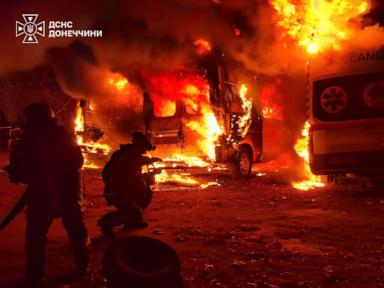
Official reports from regional authorities often minimize ground impacts, but open-source intelligence and local footage tell a different story. Industrial hubs, petrochemical plants, and regional fuel depots frequently catch fire despite active air defense shields.
For instance, facilities in areas like Rostov and surrounding industrial sectors have repeatedly felt the impact of long-range strikes. When a fuel terminal burns, it disrupts local distribution networks and forces military logistics to adapt on the fly. These fires illuminate a simple truth: air defense systems cannot protect every square mile of an expansive logistics grid.
The Strategic War of Attrition
This ongoing campaign is not about random destruction. It is a systematic attempt to throttle the fuel supply lines feeding frontline operations. Ukraine's strategy targets the economic and logistical backbone supporting the Russian military machine.
Refinery capacity and fuel storage facilities represent soft targets compared to heavily fortified frontline trenches. By forcing Moscow to redeploy mobile air defense units away from combat zones to protect domestic refineries, the drone campaigns achieve a dual objective. They strain defensive resources while directly hitting fuel supplies.
Reading Between the Official Lines
Evaluating these developments requires looking past press releases from either side of the conflict. When Moscow claims near-total interception rates while local residents film massive smoke plumes over fuel terminals, the gap between propaganda and physical reality becomes obvious.
The war in the air has evolved into an industrial endurance test. Interception statistics will continue to climb as both sides scale up production, but the burning depots on the ground remain the true metric of effectiveness.