When a crime crosses international borders and involves foreign service members stationed abroad, the fallout goes far beyond the courtroom. The arrest and subsequent indictment of 20-year-old U.S. Marine Lance Cpl. Devin Jacob Ballard in Okinawa, Japan, on suspicion of robbing and strangling 39-year-old Anna Yagi isn't just an isolated tragedy. It’s a flashpoint that exposes the raw, unresolved friction of a military footprint dating back generations.
If you've followed headlines out of East Asia, you know this story touches a nerve that never truly heals. Let's look at what actually happened, how the legal framework handles these cases, and why local residents are demanding a fundamental rewrite of the rules.
What Happened in Okinawa
The incident unfolded in early October 2026. Okinawan prefectural police arrested Ballard, who was stationed at Marine Corps Air Station Futenma, following the discovery of Anna Yagi's body in a hotel in Naha, the prefecture's capital. Prosecutors formally indicted him on charges of robbery and murder.
While Ballard has reportedly denied the allegations, the impact was immediate. The case triggered massive public protests in Naha and outside the U.S. Embassy in Tokyo. Local citizens, politicians, and activists didn't just express grief for the victim—they redirected decades of accumulated anger straight at the massive U.S. military presence that dominates the island.
Prime Minister Sanae Takaichi publicly denounced the crime as an extremely vicious and brutal incident, putting immediate diplomatic pressure on Washington to cooperate fully with Japanese investigators. Meanwhile, the U.S. military slapped curfews and junior enlisted alcohol bans on personnel across Okinawa, scrambling to contain the fallout.
Navigating the Legal Maze of the Status of Forces Agreement
Whenever a U.S. service member is accused of a serious crime on foreign soil, people immediately ask: Who gets to judge them?
The answer lies in the U.S.-Japan Status of Forces Agreement (SOFA), signed way back in 1960. People often misunderstand SOFA, assuming it grants blanket immunity or places service members above local laws. It doesn't. Troops remain subject to host-nation laws, but the agreement dictates jurisdictional priority and custody rules.
Under the standard framework, the United States holds primary jurisdiction if an offense happens on duty, targets solely U.S. property/security, or involves another service member or military dependent. But when an off-duty service member commits a serious crime against a local civilian outside a base, Japan generally holds the primary right to prosecute.
Custody rules also play a huge role. Normally, under SOFA, if a suspect is already in American hands, the U.S. retains custody until Japanese authorities officially charge them. But because local Okinawan police arrested Ballard outside a military installation before U.S. forces secured him, he entered Japanese custody immediately. That procedural detail meant Japanese authorities kept physical custody and drove the prosecution straight through their own domestic legal system.
Why Okinawan Residents Say Enough Is Enough
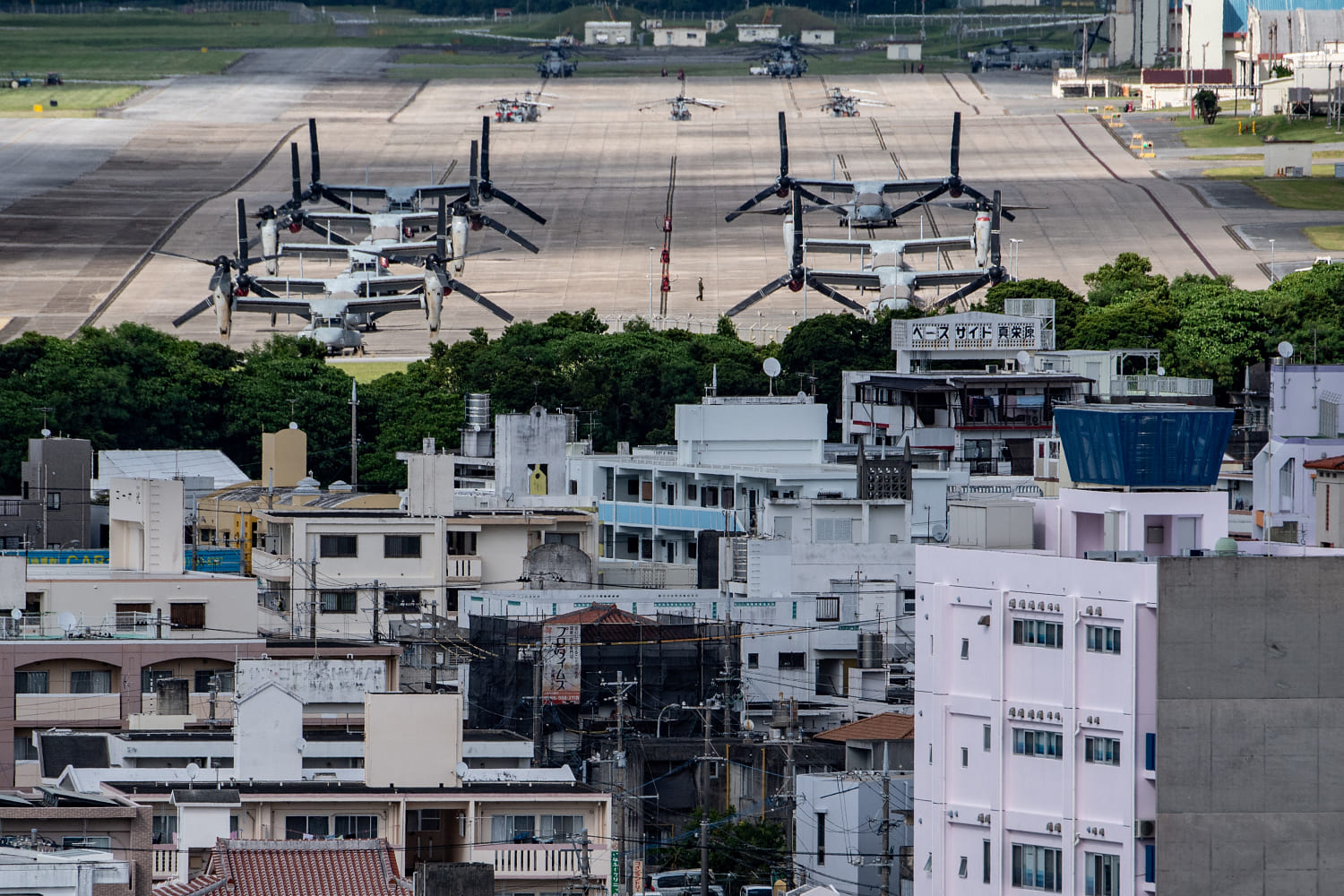
To understand the scale of the protests, you have to look at the numbers. Okinawa hosts the vast majority of the roughly 54,000 U.S. troops stationed in Japan, crammed onto an island that accounts for a tiny fraction of Japan's total landmass.
For decades, residents have dealt with the burdens of this footprint. It's not just occasional high-profile crimes or violent offenses against women—though those cause deep societal trauma. It's daily friction: roaring aircraft noise, environmental concerns regarding base contamination, and the feeling that their prefecture shoulders an unfair share of national security risks.
Okinawa Governor Genta Koja and local assemblies didn't mince words after the indictment, calling for a comprehensive review of the 1960 SOFA pact. Critics argue that parts of the agreement treat military areas as extraterritorial bubbles, shielding environmental practices from local inspection and complicating criminal cooperation.
Efforts by Tokyo and Washington to roll out new community education programs and military orientation rules feel entirely hollow to activists on the ground. When historic grievances run this deep, superficial adjustments to military conduct guidelines don't quiet the demand for structural change.
The case will grind through the Japanese court system, where a conviction could carry a sentence of life imprisonment or worse. But regardless of the verdict, the political shockwaves will force both governments to confront a strained alliance that grows more fragile with every avoidable tragedy.