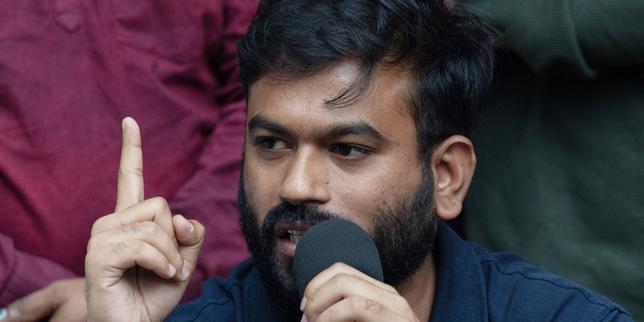
Locking up Abhijeet Dipke right before a New Delhi protest doesn't quiet the street. It pours gasoline on a fire that has been burning since May.
When police detain the founder of the Cockroach Janta Party ahead of demonstrations over India's sweeping voter roll purge, they're fighting a symbol, not a conventional party headquarters. A cockroach survives nuclear winter. That's literally why young Indians picked the mascot. You swat one leader, detain another at the airport, lock a couple more behind a peace bond, and somehow another crowd pops up near Jantar Mantar or Connaught Place or Kochi. For an alternative look, read: this related article.
Let's be honest about what's actually happening here. Most quick news summaries treat the cockroach movement like a quirky viral stunt that got out of hand. That misses the whole point. A satirical youth group founded in May 2026—with tongue-in-cheek membership rules about being unemployed, chronically online, and ready to rant—has become one of the sharpest street headaches Prime Minister Narendra Modi's government has faced in over twelve years in power.
http://googleusercontent.com/lmdx_content/APQxTZlvCybluUKRQjRWkoLwDIUniDkGlMgFZPVXHtbkFSTHAhBdSdWiVQGRRUbdYWTarypLDhulMAOWZYDQLrtxMLCPbprnJkIOBBEjSphQAwjaajUyOzMGUppxFwfllxqLerYOEQWbpRJDYDdtcDYEhYWHGVGlBdMCnNnLz771 Further coverage on this matter has been shared by USA Today.
How the Cockroach Movement Went From Exam Leaks to Voter Rolls
If you watched this story only through the October arrests in New Delhi, you might think it started over electoral rolls. It didn't.
The cockroach movement cut its teeth on something painfully personal to millions of young Indians: broken exams and stalled futures. After paper leaks rattled national testing—including the NEET-UG medical entrance exam—thousands of students hit the streets. Tear gas, batons, mobile internet curbs, and mass detentions followed. Yet the pressure held for weeks. By late July 2026, Education Minister Dharmendra Pradhan resigned.
That mattered enormously. For years, critics argued that street protests couldn't force top-level political concessions out of Modi's administration. Once young protesters saw a cabinet minister step down, their playbook changed. A movement with no formal office and a deliberately absurd name suddenly looked dangerous because it had already won once.
Once exam anger cooled into a partial victory, the group pivoted straight to the Special Intensive Revision (SIR) of India's electoral rolls. Why? Because if you can't trust the gatekeepers of the vote, every other grievance feels rigged.
What Is Actually Happening With India's Voter Purge?
The Election Commission of India, led by Chief Election Commissioner Gyanesh Kumar, rolled out the SIR to scrub dead voters, duplicate entries, people who moved away, and what its June 2025 order termed "foreign illegal immigrants" from rolls covering roughly a billion people.
On paper, cleaning up bloated voter lists sounds boring and routine. In practice, the numbers are staggering. Reports on the exercise indicate more than 130 million names have been removed across phases. In New Delhi alone, roughly 4.76 million to 4.77 million voters—nearly a third of the capital's electorate—were dropped from draft rolls.
Here is where the friction gets real. The Election Commission and BJP leaders insist the cleanup is lawful, necessary, and free of bias, pointing out that genuine dead, shifted, and duplicate records needed clearing. Yet investigations and civil society reports—including findings cited by Human Rights Watch and reporting from The Guardian—highlight severe collateral damage. Poor residents, women, migrant workers, and Muslims have been disproportionately knocked off the rolls. In one West Bengal pocket that is 9% Muslim, reporting noted that over 92% of deletions hit Muslim voters. Meanwhile, appeals and corrections have shown high reversal rates when people actually manage to navigate the paperwork, leaving millions stuck in limbo until cases are resolved.
Even inside the institution itself, cracks became public. In late September 2026, The Indian Express reported that two of the three election commissioners—Sukhbir Singh Sandhu and Vivek Joshi—had formally objected at least 14 times over ten months to decisions and orders tied to the recheck issued in the commission's name without their knowledge. When insiders raise that kind of alarm, dismissing critics as sore losers gets much harder.
Why Repeat Arrests in Delhi Keep Missing the Mark
When New Delhi police detain Abhijeet Dipke ahead of a rally—just as authorities have repeatedly moved to contain protests around Jantar Mantar and central Delhi—the tactical goal is obvious. Cut off the head, block the roads, cut mobile data, and let the crowd fizzle out.
Sometimes that works in the short run. Fewer people reach the designated square, and dozens or hundreds get loaded into police buses.
Still, there's a catch when you're dealing with a decentralized, meme-literate movement. First, courts have repeatedly stepped in to release detained leaders—such as when a New Delhi court ordered the release of Dipke alongside fellow leaders Saurav Das and Ashutosh Ranka after an airport detention in October, even as other activists faced jail time under peace bonds and ongoing cases. Every courtroom release turns a routine police action into another news cycle.
Second, locking up one figurehead doesn't answer the core question voters are asking: Why was my name deleted, and how do I prove I belong here? When a daily-wage worker in Delhi who lost a demolished housing settlement—or a family in West Bengal with decades of land records—suddenly vanishes from the electoral roll, arresting a protest organizer in a different neighborhood doesn't fix their voter status.
Third, heavy-handed crowd control in New Delhi often backfires optically. Barricading a historic protest hub like Jantar Mantar and shutting down connectivity fuels the exact charge protesters make abroad and at home: that the state prefers managed quiet over messy democratic pushback.
What Critics and Supporters Are Missing
Not everything about the cockroach movement is spotless, and pretending otherwise would be sloppy analysis. Critics, including figures aligned with the ruling establishment and the RSS, have argued that organized opposition groups and left-leaning student outfits have latched onto student unrest to turn it into a broader anti-government campaign. There's also a real tension inside any leaderless or semi-leaderless street movement: without tight discipline, fringe actors or provocations can hand the state an excuse to escalate.
At the same time, supporters sometimes treat a protest wave as if it were already a governing alternative. Marching in Delhi, Mumbai, Bengaluru, or Kochi—and getting backing from opposition leaders like Rahul Gandhi or public intellectuals—creates political heat. Turning street energy into durable legal safeguards for voters is a much slower, grindier job.
Practical Steps If You're Tracking or Affected by the Roll Recheck
Whether you're an Indian voter trying to protect your ballot or an analyst following how this standoff plays out through late 2026, waiting on headlines isn't enough.
- Check your electoral roll status right away: Don't assume your name stayed on the list just because you voted in past elections. Verify your entry on official Election Commission portals or local electoral offices before deadlines pass.
- Gather backup proof early: Keep copies of identity, address, birth, and family land or residency records organized. If you recently moved or live in an informal or redeveloped area, missing address proof is one of the easiest traps to hit.
- Watch official objection windows and court dockets: Track local revision deadlines and Supreme Court proceedings on the SIR exercise so legitimate claims aren't missed while political headlines swirl.
- Separate street theater from legal remedies: Pay attention to both the protests and the quiet legal battles—appeals, petitions, and administrative hearings—where actual voter restoration happens.