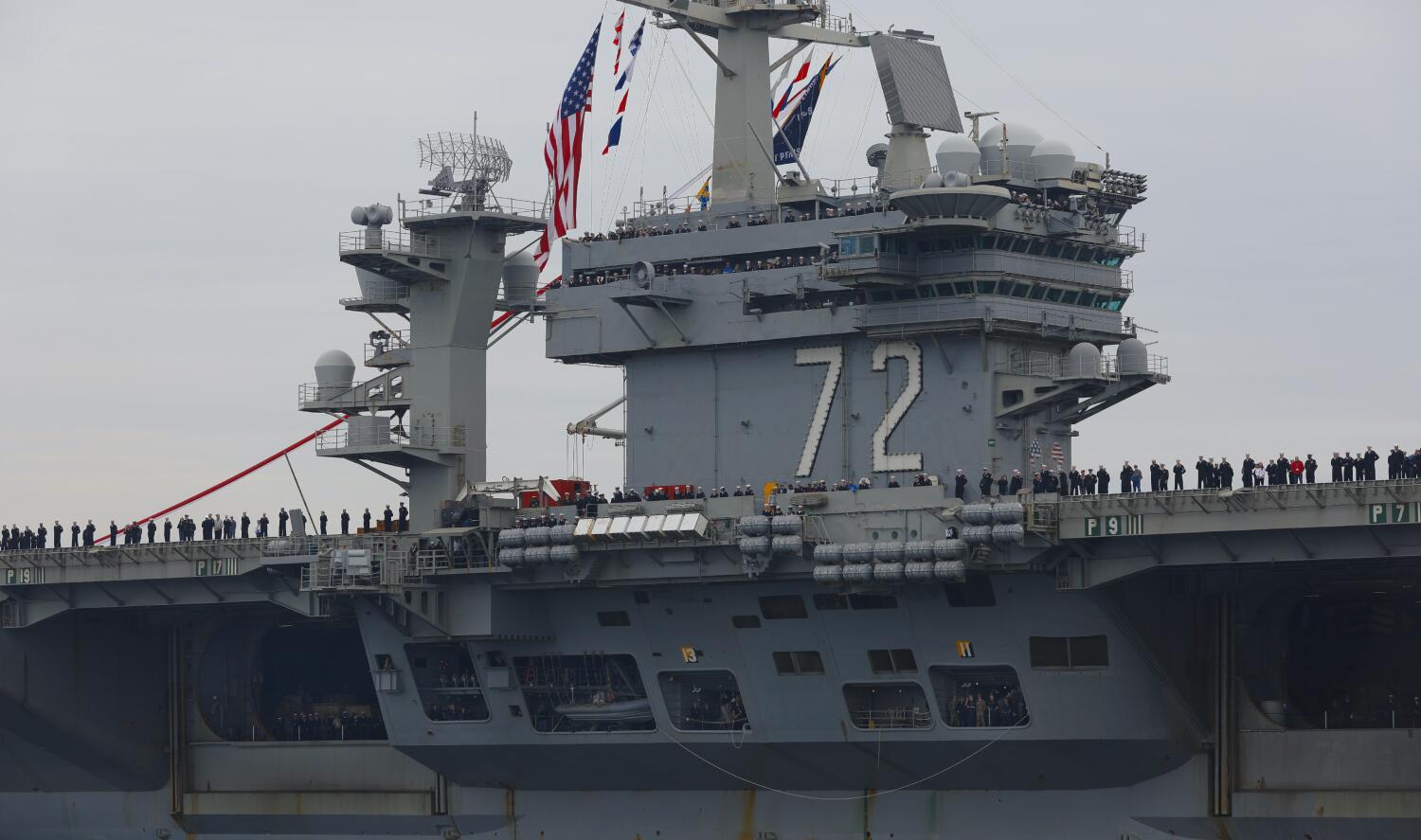
Modern naval architecture operates on a precise calculus of asset rotation, maintenance windows, and human capital limits that breaks down under geopolitical duress. The public discourse surrounding the USS Abraham Lincoln exceeding two hundred and sixty days at sea in the Middle East theater exposes a fundamental misalignment between strategic ambition and fleet capacity. When political leadership asserts that a record-breaking operational stretch is insufficient despite documented crew exhaustion, material degradation, and family outcry, the conflict ceases to be a simple public relations dispute. It reveals an underlying systems failure in how force management metrics evaluate risk, endurance, and operational output.
To understand the mechanics driving this crisis, one must deconstruct the structural constraints of the United States Navy surface fleet. The service maintains an inventory of eleven nuclear-powered aircraft carriers, a nominal force structure mathematically incapable of satisfying simultaneous global theater requirements under standard rotational baselines. The Optimized Fleet Response Plan relies on a stringent twenty-four to thirty-six-month cycle designed to balance maintenance, basic training, advanced integration, and deployment phases. When regional contingencies—such as sustained operations against ballistic missile and drone threats in the Central Command area of responsibility—demand constant presence, combatant commanders routinely bypass rotational guardrails.
This operational overextension produces distinct vectors of systemic failure that degrade both the instrument of power and the personnel operating it. The first vector is material entropy. Nimitz-class aircraft carriers are complex, aging engineering systems requiring strict maintenance schedules to preserve structural integrity, propulsion reliability, and habitability systems. Pushing a vessel past the two-hundred-day mark without a major shipyard availability introduces severe friction into mechanical sub-systems. Water purification plants, waste management infrastructure, and air conditioning units operate under extreme duress in high-temperature maritime environments. When supply chains in the operational theater experience disruption from ongoing combat actions, the degradation accelerates, forcing crew members to manage rationing protocols that degrade basic quality of life.
The second vector is cognitive and psychological attrition. Human operators inside a carrier strike group function under extreme operational tempos, characterized by continuous watch-standing rotations, high-density flight operations, and constant threat environments. When port visits are restricted or canceled due to tactical imperatives, sailors lose the essential psychological decompression cycle required to reset cognitive bandwidth. The cumulative effect of isolation, sleep deprivation, and uncertainty regarding return dates manifests in behavioral health crises, including documented incidents of severe depression, suicidal ideation, and personnel attempting to jump overboard. Institutional responses that attribute these manifestations entirely to external misrepresentation fail to account for the predictable physiological limits of human capital under chronic stress.
The third vector involves institutional dissonance. A profound communication chasm exists between operational families experiencing acute distress and civilian-military leadership evaluating theater posture. When family networks mobilize through town halls to demand relief, and senior civilian authorities dismiss these accounts as inaccurate while political figures argue for extended timelines, trust erodes within the force. This institutional friction degrades the psychological contract between the service member and the military hierarchy. The cost of this erosion extends far beyond immediate morale; it directly impacts retention rates among mid-grade technicians and officers whose specialized expertise is difficult to replace.
Evaluating the economics of carrier deployment reveals a profound false economy in extending operational windows. Proponents of extended deployments argue that maintaining a continuous maritime presence deters regional adversaries and projects absolute resolve. However, this calculation ignores the deferred maintenance liabilities and human capital depreciation incurred during extended deployments. When a carrier returns from an over-extended tour, the subsequent maintenance availability often expands significantly due to accelerated wear on propulsion and combat systems. Consequently, the vessel spends more time sidelined in dry dock later, creating a compounding deficit in available fleet inventory that forces the next carrier into an equally punishing cycle.
The maintenance backlog within public and private naval shipyards exacerbates this structural deficit. Public shipyards face persistent workforce shortages, supply chain bottlenecks for specialized components, and aging dry-dock infrastructure. When an aircraft carrier returns from an extended deployment with compromised engineering plants, it enters a maintenance queue that is already oversubscribed. This bottleneck ensures that every extra day spent at sea by a current hull directly translates into delayed maintenance start dates for future hulls, creating a systemic logjam across the entire naval enterprise.
Furthermore, the retention penalty associated with unpredictable, extended deployments imposes severe replacement costs on the institution. Training a nuclear reactor operator, an advanced aviation electronics technician, or an experienced flight deck director requires millions of dollars and years of institutional investment. When these professionals exit active service prematurely due to burnout or family strain, the institutional capability loss far outweighs the marginal utility of keeping a single hull on station for an extra ninety days. The balance sheet of naval power is thus eroded by short-term optimization strategies that consume long-term capital.
Addressing this structural vulnerability requires examining the limitations of current defense planning models. Relying on carrier strike groups as the primary instrument for crisis response in restricted littoral waters creates severe tactical concentration risks. Surface action groups operating within narrow seas face asymmetric threats from land-based anti-ship cruise missiles, ballistic weapons, and unmanned surface vehicles. Tethering a high-value capital asset to a fixed geographic box for over nine months maximizes its exposure to these threats while minimizing its operational flexibility.
Strategic modernization must therefore pivot toward dynamic force employment models that rely on distributed maritime operations, long-range land-based air power, and allied burden-sharing. By decoupling deterrence from the physical presence of a single nuclear carrier, naval planners can protect their human capital and maintain predictable rotational cycles that preserve long-term fleet readiness. The strategic imperative moving forward is not to stretch existing assets past their breaking point, but to restructure the baseline calculus of operational endurance to reflect the finite limits of both machinery and personnel.
To restore equilibrium to force management, defense leadership must decouple operational presence metrics from strategic effectiveness assessments. The military establishment should establish hard caps on deployment lengths that cannot be waived without a formal declaration of direct national survival. By enforcing strict rotational boundaries, the Department of Defense can stabilize retention curves, protect fleet health, and ensure that the naval force remains a sustainable instrument of national power rather than a rapidly depreciating asset.