When you have a total land area under 280 square miles and an aggressive national climate agenda like the Singapore Green Plan 2030, you run out of ground fast. You have to look elsewhere. For Singapore, that meant pushing off the mainland and onto the open water.
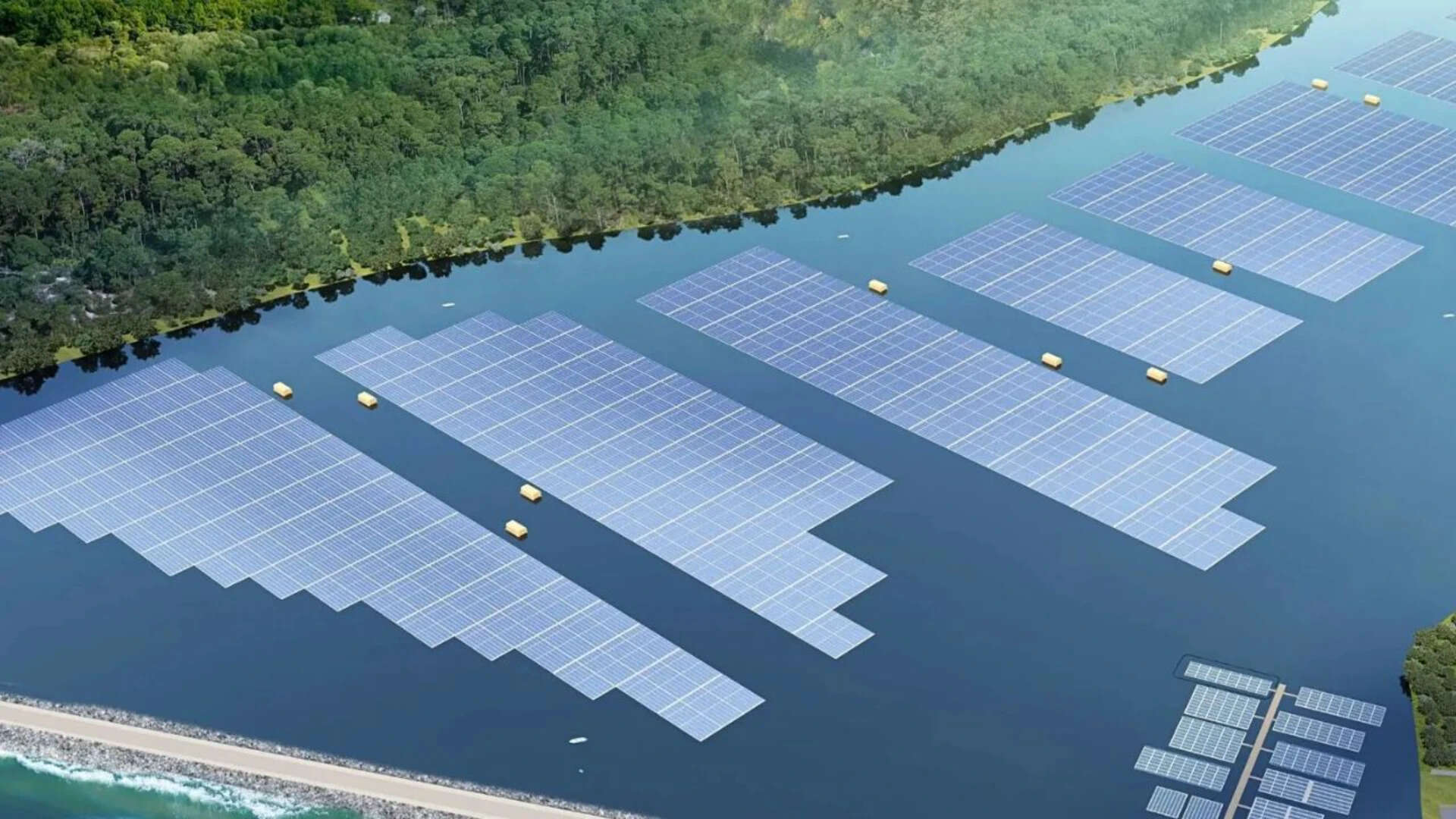
The Sunseap Group tackled this constraint by engineering an ambitious 5-megawatt floating solar farm in the Strait of Johor off Woodlands. This installation relies on 13,312 solar panels mounted across more than 30,000 plastic pontoons anchored securely to the seabed. It is designed to generate nearly 6 million kWh of clean electricity every year, balancing thousands of metric tons of carbon emissions.
It sounds like a clean victory for renewable energy. But nature had other plans.
Soon after deployment, the project ran headfirst into an unexpected biological hazard: relentless marine biofouling. Micro-organisms, algae, and thousands of sharp-shelled barnacles and invasive mussels latched onto the underwater pontoons and anchor lines. These uninvited passengers didn't just cling on for the ride. They created dense, heavy crusts that are brutally difficult to scrub away.
The Physics of Marine Weight Gain
Why do barnacles spell disaster for high-tech solar infrastructure? It comes down to simple weight and buoyancy.
Warm tropical seawater acts as a powerful accelerator for marine growth. Research from initiatives like the STEWART project indicates that heavy marine buildup can swell the mass of a floating platform by nearly 43%.
That extra mass triggers a cascade of physical failures:
- Buoyancy Loss: As the weight mounts, the plastic pontoons ride lower in the water than intended.
- Submerged Electronics: If the platforms sink past their critical tolerance line, sensitive electrical connectors and inverters designed to stay dry risk going underwater.
- Mechanical Stress: Marine mats jam up flexible hinges, preventing the array from moving naturally with ocean waves.
- Corrosion Acceleration: Aggressive saltwater combined with dense biological crusts speeds up material degradation.
If you don't manage the biology, the physics will sink your investment.
Invasive Species and Local Waters
The problem isn't just standard local barnacles. Singapore's bustling shipping lanes and coastal waters act as magnets for invasive aquatic species.
Biologists have tracked aggressive colonizers like the American brackish-water mussel (Mytella strigata) and the black-striped mussel (Mytilopsis sallei) crowding coastal structures. These species form tight, suffocating mats numbering in the tens of thousands. They crowd out native organisms and turn smooth engineering surfaces into jagged, heavy concrete-like slabs.
When you scale up a solar project to 13,000-plus panels, you are essentially building an artificial reef. Marine life will treat your renewable energy installation as prime real estate.
Engineering Solutions for Ocean Solar
Engineers are scrambling to adapt. You can't just send divers out with wire brushes every week. The operational costs would quickly outpace the value of the electricity generated.
Instead, the industry is pivoting toward smarter design choices. One promising concept is geometric separation, pioneered by marine researchers. This involves redesigning pontoons so that hinges, mechanical joints, and panel edges sit safely elevated above the water line, entirely out of the primary danger zone where barnacles thrive.
At the same time, developers are looking at advanced anti-fouling coatings. Much like the hull of a commercial cargo ship, floating solar pontoons need non-toxic, slick surfaces that make it nearly impossible for barnacle larvae to cement themselves in place.
Smart monitoring is also stepping in. Operators are deploying remote sensors and digital twins to track real-time buoyancy changes. Instead of guessing when a clean is necessary, predictive algorithms calculate exact weight thresholds based on sub-surface drag and immersion depth.
What This Means for Global Offshore Solar
If crowded coastal cities want to tap into marine solar power, they need to treat ocean engineering as a cross-disciplinary science. You cannot separate electrical engineering from marine biology.
Singapore's early stumbles in the Strait of Johor offer a vital blueprint for the rest of the world. Transitioning to net-zero requires building infrastructure that can survive harsh, living ecosystems.
If you plan to scale up floating solar, bake marine maintenance into your financial models from day one, or watch your green energy margins get dragged straight to the bottom of the sea.