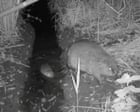
Wild beavers have bred in Norfolk for the first time in more than five hundred years. A pair of Eurasian beavers living within a fenced enclosure at the Wild Ken Hill estate successfully produced kits, marking a quiet biological milestone that carries heavy historical irony. Five centuries ago, the English aristocracy hunted Castor fiber to extinction for its fur, castoreum, and meat. Today, conservationists are scrambling to put them back, hoping these industrious rodents can reverse decades of ecological degradation.
Yet this milestone is only the beginning of a much harder transition. A few kits born in a controlled marshland project do not equal a triumphant ecological restoration. The real work involves moving these animals from secure enclosures into open river catchments, where they will inevitably clash with modern British infrastructure, agricultural zoning laws, and landowners who view teeth and timber with deep suspicion. Learn more on a related topic: this related article.
The Engineering Reality Beneath the Cute Kits
Media coverage focuses heavily on the charm of newborn kits splashing in re-wetted ditches. That optics-driven narrative misses the core ecological mechanics. Beavers are not passive wildlife additions. They are ecosystem engineers that alter hydrology with absolute permanence.
When a beaver moves into a watershed, it builds dams using mud, sticks, and stone. This activity transforms fast-flowing, straightened agricultural drainage channels into slow, complex wetlands. For a county like Norfolk, which is low-lying, intensively farmed, and vulnerable to drought, this transformation provides massive benefits. The newly formed ponds retain water during summer dry spells, trap agricultural nitrate runoff before it hits vulnerable chalk streams, and create complex habitats for amphibians, fish, and birds. More journalism by Al Jazeera explores comparable views on the subject.
However, engineering comes with collateral damage. Beaver dams raise water tables. When water tables rise, adjacent landowners watch their productive arable land turn into saturated marsh. Drainage ditches stop draining. Field corners flood.
The standard conservation line suggests that these conflicts are easily resolved with flow devices—pipes inserted through dams to cap water levels at a tolerable threshold. That approach works on paper and in small private reserves. Scale that solution up to a county-wide watershed with hundreds of separate landowners, and administrative friction grinds restoration projects to a halt.
The Legal Limbo of British Rewilding
Britain is currently trapped in a regulatory half-light regarding beavers. The species holds official protected status in parts of England, yet navigating the permit system required to release them into the wild remains an administrative gauntlet.
Landowners face a stark reality. If wild beavers migrate onto private property from an unofficial release or an upstream escape, the landowner inherits a protected species they never asked for. They cannot legally move, harm, or disrupt the animals without specialized government licenses that take months to secure. This dynamic breeds quiet resentment.
Instead of cooperation, the current policy framework encourages preemptive friction. Landowners who fear unauthorized wetland expansion on their drainage networks have a perverse incentive to remove habitat features or discourage wildlife presence before populations establish a permanent toehold.
True reform requires shifting the burden of management from individual farmers to regional trusts. If a beaver dam floods a rural access road or saturates a productive wheat field, government bodies must respond within forty-eight hours with compensation or direct mitigation. Leaving a dairy farmer or a cereal grower to fight rising water alone while bureaucrats debate endangered species legislation guarantees failure.
Managing the Human Element
Ecological restoration is rarely about biology. It is almost entirely about human sociology.
In rural Norfolk, deep skepticism exists toward top-down environmental directives issued by urban policymakers. Generations of families have managed these drainage basins, clearing ditches and maintaining sluice gates to keep water moving off the land. To them, the introduction of a rodent that actively blocks drainage channels feels like an existential threat to centuries of land management traditions.
Proponents of rewilding must address these concerns directly rather than dismissing them as backward resistance. When Wild Ken Hill or similar projects introduce keystone species, they must demonstrate clear economic models for coexistence. Ecotourism offers one avenue, but it rarely helps the tenant farmer whose lower pasture is currently underwater.
We need functional local management groups where farmers, drainage board engineers, and conservationists sit at the same table with equal authority. If local communities do not have veto power over release sites that directly affect their livelihoods, public backlash will eventually stall the entire British beaver renaissance.
The birth of those kits in Norfolk proves that the biology works. The animals will breed, build, and adapt if given half a chance. Whether human institutions possess the flexibility and pragmatism to accommodate them remains the unresolved question.