The chalk dust always settled the same way in the old lecture halls of Shatin. It caught the amber light cutting through tall windows, settling quietly on wooden desks worn smooth by decades of restless palms. For generations, students sat at those desks trying to parse the immense weight of identity, history, and civic duty against the backdrop of a changing city.
Right now, that chalk dust is settling over a new blueprint. Read more on a related subject: this related article.
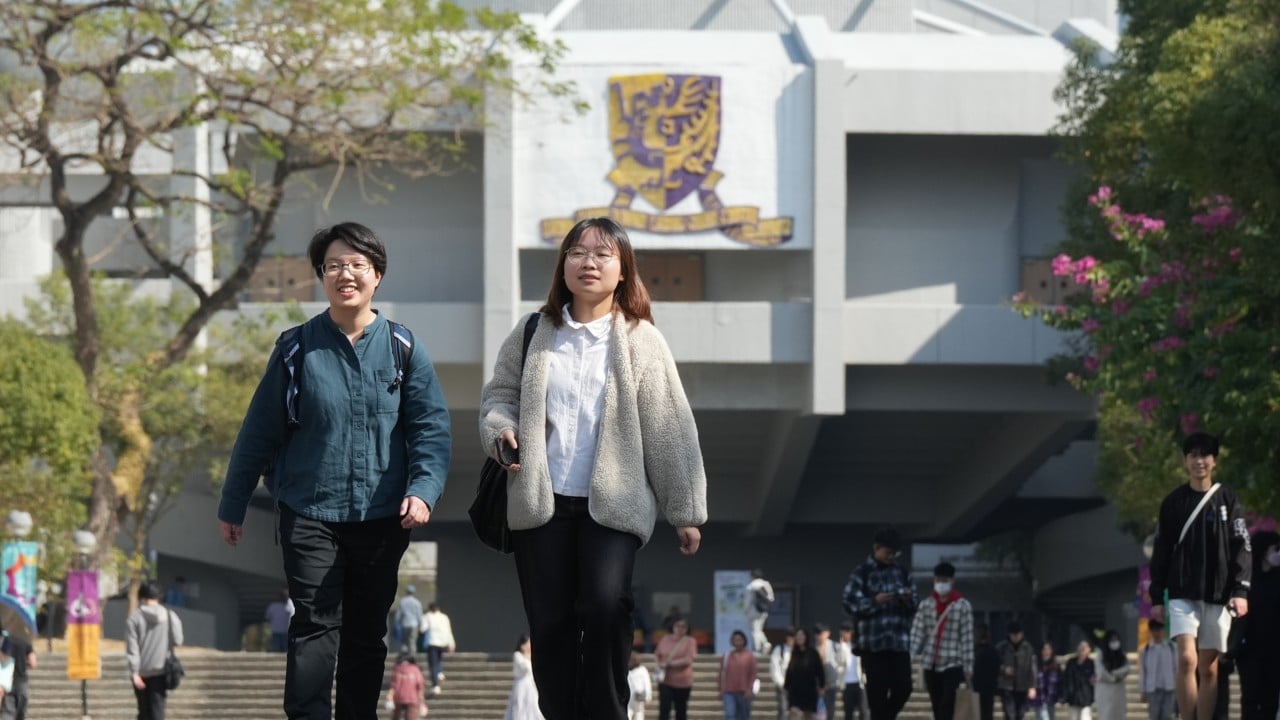
The Chinese University of Hong Kong just rolled out its five-year strategic plan. Buried beneath the standard administrative prose about international rankings and research grants lies a structural shift that will change how a key professional programme operates. National education is no longer an elective sidebar or an occasional seminar. It is being woven directly into the core curriculum.
To understand why this matters, you have to step inside the reality of a modern lecture room. Further analysis by NBC News explores comparable views on this issue.
Picture a hypothetical student named Rachel. She is twenty years old, majoring in a high-stakes professional discipline that demands absolute precision—let us say social work or public administration. Rachel spends her days calculating policy frameworks, analyzing demographic data, and learning the mechanics of how a metropolis functions. She is sharp, ambitious, and entirely focused on securing her place in a hyper-competitive job market.
Until recently, Rachel could view her education through a purely utilitarian lens. Pass the exams. Secure the internship. Build the career.
The new five-year plan collapses that boundary.
Under the updated framework, the university is embedding national education requirements directly into core degree tracks. This is not about a sudden ideological conversion. It is about a fundamental realignment of what it means to hold a degree from a top-tier institution in this specific geographic and political coordinate. The university's leadership has decided that professional competence without an explicit grounding in national history, constitutional development, and mainland integration is an incomplete education.
People like Rachel feel the friction immediately. They wonder how this impacts their independence, their critical inquiry, and their preparation for a globalized workforce. But beneath the anxiety lies a much older question: How does a city educate its youth when the definition of home is actively being redrawn?
Look back forty years. The university was built as a bridge, a unique hybrid space where East met West, where British colonial administration rubbed shoulders with traditional Cantonese culture. The curriculum reflected that duality. Students read Western political philosophy alongside classical Chinese literature, operating in a delicate space of cultural translation.
That bridge has not collapsed, but its foundations have been retrofitted.
The new strategic plan reflects a stark, pragmatic recognition of geopolitical gravity. The university is not operating in a vacuum. By integrating national education into premier programmes, the administration is signaling to policymakers, employers, and the public that academic excellence and patriotic alignment are no longer separate tracks. They are parallel rails welded to the same iron.
Critics call it indoctrination. Proponents call it alignment. Both terms miss the messy, human reality of what happens when a curriculum collides with a generation trying to figure out its future.
Consider what happens inside the seminar room when a professor introduces a module on constitutional order alongside professional ethics. Some students cross their arms, retreating behind polite silence. Others lean in, eager to decode the exact expectations of the new system so they can navigate it efficiently. A few genuine believers find validation in a curriculum that finally matches their sense of civic belonging.
This is the invisible stakes of the five-year plan. It is fought not in legislative chambers, but in the micro-interactions between a tired professor and twenty-five skeptical twenty-year-olds at eight-thirty in the morning.
Universities have always been engines of reproduction. They take raw human material—ambitious, chaotic, unformed—and process it into functional units for society. In the past, Hong Kong's universities produced cosmopolitan professionals who looked outward toward London, New York, and Sydney. The new five-year plan recalibrates those compass needles. The trajectory now points decisively northward, toward Shenzhen, Guangzhou, and Beijing.
For the key professional programmes targeted by this integration, the implications are profound. Social workers, educators, and public administrators hold the levers of local trust. If their training explicitly incorporates the national narrative, the downstream effects will ripple through every community center, school board, and government office in the territory within a decade.
We are watching the quiet institutionalization of a new normal.
The strategy document uses sterile corporate language to describe this transition. It speaks of enhancing curriculum relevance, deepening regional integration, and fostering civic responsibility. But strip away the administrative varnish, and you find a profound identity exercise playing out in real time.
A university is ultimately a mirror. When CUHK looks into its new five-year plan, it wants to see an institution that is indispensable to the region's future. To remain indispensable, it had to adapt to the shifting political architecture of the state.
Back in the lecture hall, Rachel closes her laptop as the lecture ends. The room empties out in a rush of backpack zippers and muted chatter about upcoming assignments. The syllabus on the projector screen still glows with the new course codes, the fresh module requirements neatly itemized in bold text. The history of a city is rarely written with a dramatic flourish. Most of the time, it is written in syllabus revisions, quietly approved on a Tuesday afternoon, waiting for the students to walk in and live them.