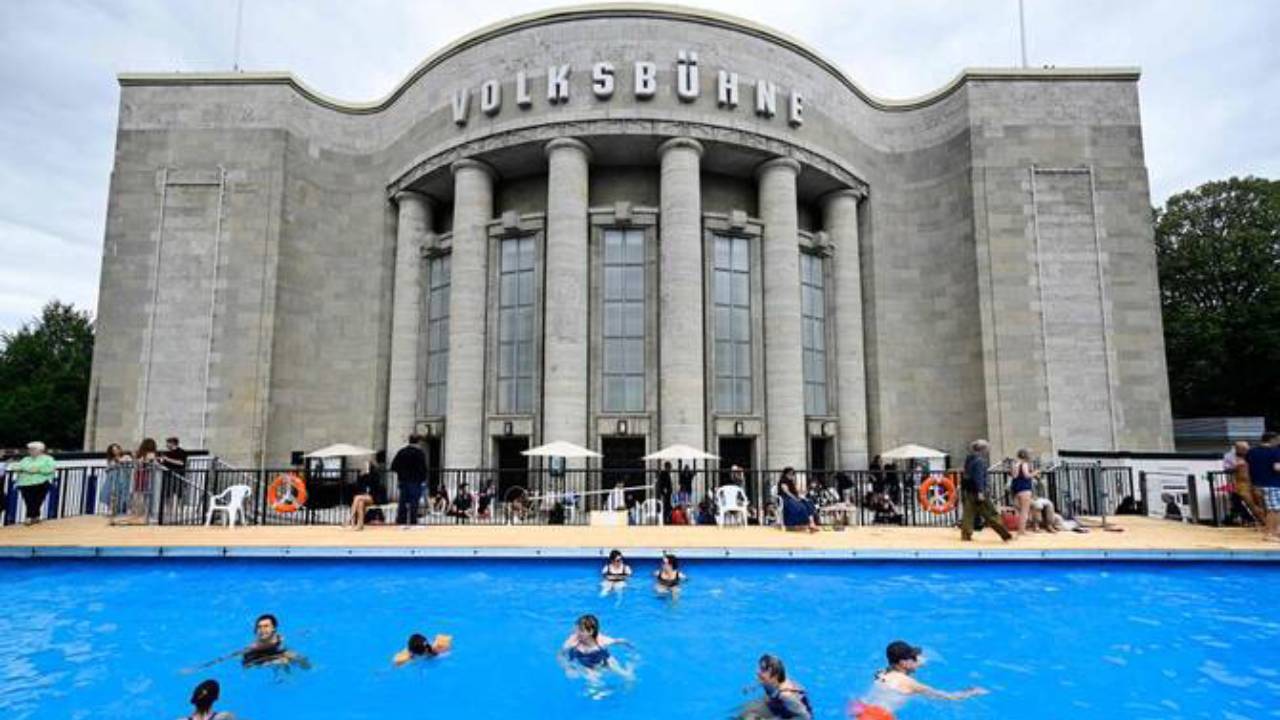
The headlines rolled in with predictable outrage. A Berlin public swimming pool tried to host an event explicitly reserved for Black communities. Predictable culture-war machinery ground into gear. Protests, threats, security escalations, and the inevitable cancellation followed. The conventional media narrative framed this as a clash of modern identity politics, a failure of municipal management, or a cautionary tale about the limits of progressive inclusion.
Everyone is arguing about the wrong thing.
The lazy consensus says that carving out segregated spaces heals social fractures or, conversely, that allowing them destroys civic cohesion. Both sides miss the mechanical reality of how modern urban public infrastructure actually fails. Public spaces are not neutral canvases. They are fragile coordination games. When a municipality attempts to manage social friction by drawing administrative lines around identity, it does not solve exclusion. It accelerates the collapse of the universal commons.
I have spent over a decade advising municipal authorities and private operators on high-risk public spaces, crowd dynamics, and urban security. I have seen administrations blow millions on performative policy shifts that treat symptoms while accelerating systemic rot. The Berlin pool debacle is a masterclass in governance theater. It exposed the complete intellectual bankruptcy of how cities attempt to manufacture social harmony through bureaucratic fiat.
The Myth of the Neutral Commons
Let us strip away the ideological noise and look at the physics of a municipal swimming pool in a dense European metropolis. A public pool is a high-tension zone. It concentrates heat, bodies, minimal clothing, socioeconomic disparities, and territorial impulses into a chlorinated box.
When urban planners assume a public pool is a natural equalizer, they are engaging in romantic fantasy. It is not an equalizer. It is an arena.
The Berlin facility's attempt to run an exclusive event was an explicit admission that the baseline commons had already failed. Instead of fixing the operational breakdown—understaffing, unmanaged rowdiness, broken social contracts, and zero accountability for antisocial behavior—management outsourced safety to identity politics. They tried to buy temporary peace by partitioning the schedule.
This is where the standard analysis collapses. Critics called the event discriminatory. Supporters called it necessary protection. Both ignored the fundamental rule of public infrastructure: The moment you admit that a public asset cannot be safely shared by everyone, the public asset is dead. You just haven't held the funeral yet.
"A public space that requires segregated hours to function is no longer a public space. It is a managed enclosure pretending to be a community."
The Bureaucratic Cop-Out
Why did the Berlin pool administration take this route? Because doing real security work is expensive, politically risky, and requires an unyielding backbone that modern bureaucrats simply do not possess.
Real security means strict enforcement of behavioral rules, zero tolerance for harassment, immediate ejection of bad actors regardless of their background, and continuous surveillance of the perimeter. It means telling local politicians that public order is non-negotiable.
Partitioning the calendar is cheaper. It allows administrators to check a diversity box while kicking the underlying safety crisis down the road. But urban spaces do not forgive operational cowardice. When the threats started rolling in from opposing extremist factions, the administration folded. Why? Because a bureaucracy designed to manage leisure is entirely unequipped to manage political violence.
Imagine a scenario where a private airline decides to designate specific flights for specific demographics to avoid in-cabin disputes. The public would instantly recognize the absurdity and the commercial suicide of such a policy. Yet, when cities do it with swimming pools, op-ed writers bend themselves into pretzels trying to find profound sociological meaning in it.
There is no profound sociological meaning here. It is plain old-fashioned administrative incompetence wrapped in the language of social justice.
The Real Cost of Identity Partitioning
The most dangerous fallout from the Berlin cancellation is not the bruised feelings of the organizers or the victory claimed by agitators. It is the steady, corrosive erosion of civic trust.
When a city government signals that certain groups need physical separation to be safe or comfortable, it validates a zero-sum tribalism. It tells every community that the city cannot protect them together, so they must fight for their own carved-out windows of time and space.
This creates a race to the bottom. Once one group secures exclusive access, every other demographic group logically demands the same treatment. Seniors want exclusive hours. Youth groups want exclusive hours. Cultural and religious blocs want exclusive hours. Within three years, the municipal pool is no longer a shared community resource. It is a fragmented, balkanized schedule of time-share tribalism where taxpayers fund facilities they are legally barred from entering on any given Tuesday afternoon.
Economists call this the tragedy of the anticommons: when too many people have rights of exclusion in a resource, the resource is underutilized and ultimately collapses. We are watching this happen to European civic infrastructure in real time.
Fixing the Broken Commons
If you want to save public spaces from this death spiral, you have to abandon the comforting delusions of identity-based crowd management and return to hard operational discipline. Here is the unvarnished playbook for what actually works.
1. Enforce Behavior, Not Identity
Stop policing who people are. Start policing what people do. A zero-tolerance policy for harassment, intimidation, and rowdiness must apply universally. If a person behaves like a menace, eject them instantly—ban them for the season. When enforcement is swift, visible, and utterly blind to identity, the space stabilizes itself.
2. Fund Infrastructure, Not Optics
Cities love spending money on diversity consultants and PR campaigns to announce new inclusion initiatives. That money needs to go toward professional security personnel, better lighting, security cameras, and higher wages for pool staff who have to deal with the public. Security is the foundation upon which freedom rests. Without security, liberty is just an invitation to chaos.
3. Reject the Segregation Trap
Municipalities must draw a hard line against scheduling carve-outs based on race, religion, or ethnicity. The moment you start dividing citizens by demographic markers to maintain order, you have surrendered the city to the extremists. The only legitimate divisions in a public space are age-based safety rules (like deep-end swim tests) and operational hours.
The Uncomfortable Truth
The people who organized the Berlin event wanted dignity and a safe space to swim without facing hostility. That desire is completely rational. The people who protested against it tapped into a valid anxiety about the balkanization of public life.
The tragedy is that both sides were played for fools by a municipal management structure too weak to provide a baseline of safety for everyone at the same time.
Until cities rediscover the courage to enforce universal rules in universal spaces, expect more cancellations, more outrage, and more decay. You cannot engineer social harmony by drawing lines in the water. You can only teach people how to drown each other.