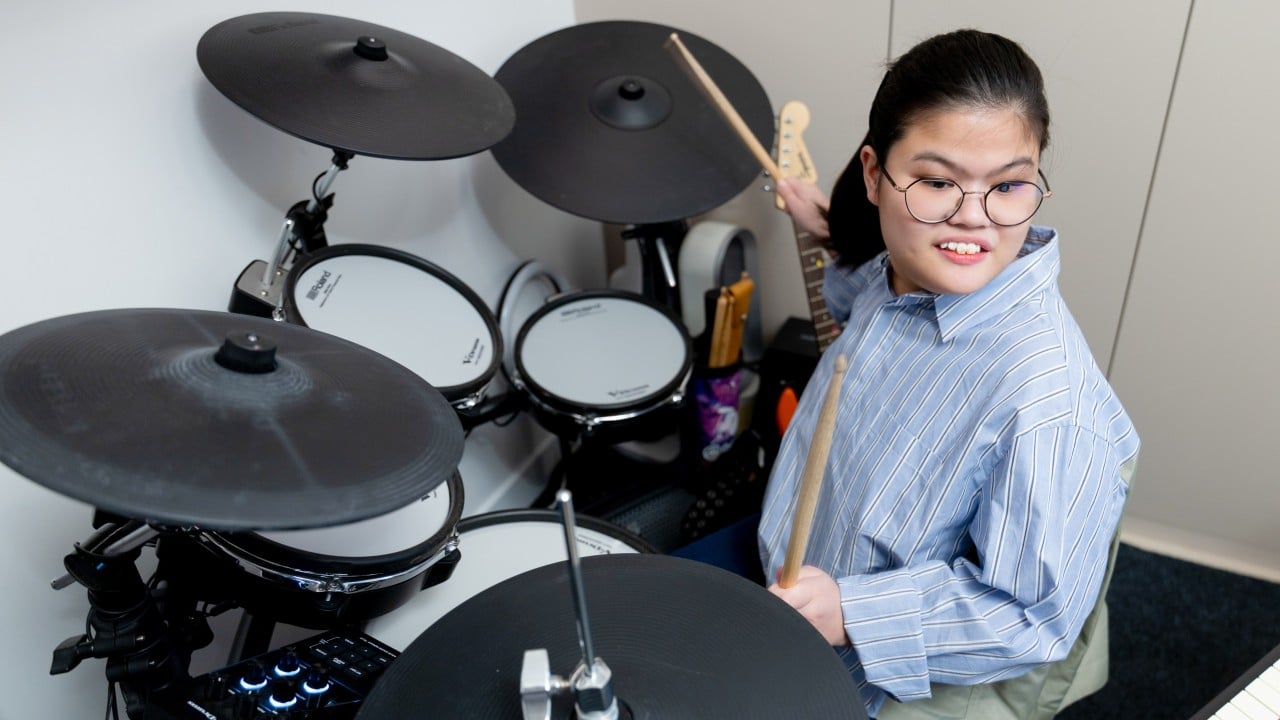
We love a good underdog story. They make us feel warm inside, offering a neat little escape from our daily coffee commutes and spreadsheet deadlines. But most media coverage of young people overcoming adversity treats them like fleeting spectacles rather than human beings navigating relentless reality. When 17-year-old Cassie Li was named a finalist for the Spirit of Hong Kong Awards, headlines focused on the surface-level shock value. Born blind and battling severe health conditions including Hirschsprung's disease, she plays music with striking intensity.
Honestly, stop right there.
Pity is cheap, and inspiration porn is lazy. Cassie doesn’t need your sympathy, and she certainly doesn't exist to make your Monday morning commute feel more tolerable. What she demands is actual attention—not just to her music, but to the brutal intersection of rare congenital illnesses, systemic accessibility gaps, and the sheer grit it takes to live out loud when your own body keeps turning against you.
The Reality Behind the Rare Disease Label
Let's talk about what a rare birth condition actually looks like behind closed doors. Born with Hirschsprung's disease—a severe intestinal condition that requires multiple high-risk surgeries and endless hospital stays—alongside total blindness, Cassie's life hasn't been a gentle afternoon movie script. It has been defined by clinical coldness, sterile recovery rooms, and the exhausting administrative nightmare families face when navigating complex medical systems.
Most people have no idea what it means to live with an invisible or rare illness until it hits their own household. It means spending your formative years hooked to monitors while other teenagers worry about math tests and weekend plans. Chronic pain doesn't care about your musical ambitions or your school grades.
Yet, Cassie chose a different route. Instead of shrinking away from a world built entirely for sighted, healthy bodies, she turned to music.
Why Music Became the Ultimate Weapon
For someone who cannot see the room, sound is architecture. Music isn't just a hobby or a nice extracurricular activity to pad a resume; it is a primary language. When Cassie sits down to play, she isn't performing for applause or validation. She is exercising absolute agency in a life where medical diagnoses try to dictate her boundaries every single day.
Learning an instrument without sight requires a brutal, obsessive level of memorization and physical coordination. Every chord, every scale, and every dynamic shift has to be mapped entirely through touch and auditory feedback. It demands a level of focus that most people never cultivate in a lifetime.
When you watch her play, you aren't seeing a tragic figure triumphing over adversity. You are witnessing a master craftswoman at work, forcing an indifferent world to listen to her terms.
The Problem With How We Honor Heroes
The Spirit of Hong Kong Awards, co-organized by the South China Morning Post and Sino Group, do important work by dragging unsung community pillars into the light. But society has a bad habit of treating awards ceremonies like emotional wash cycles. We applaud extraordinary individuals for a night, snap a few photos with government officials, and then go right back to ignoring the structural barriers that made their journeys so unnecessarily difficult in the first place.
Think about the physical reality of navigating a hyper-dense metropolis like Hong Kong when you are blind and managing a complex gastrointestinal disease. Public transit, architectural design, medical support networks, and educational institutions are rarely built with true universal access in mind. People like Cassie shouldn't have to possess superhuman resilience just to get a basic, dignified education or medical care.
When we label someone a hero just for surviving, we let the rest of the system off the hook.
What You Can Actually Do
If stories like this move you, stop leaving supportive comments on social media feeds and start looking at your own immediate environment.
Accessibility isn't just a compliance checklist for architects or a corporate buzzword for HR seminars. It's about whether the spaces you inhabit, fund, or manage can actually accommodate human variation. Support local charities funding medical research for rare pediatric diseases. Push your local institutions to prioritize true sensory and physical inclusion. Listen to disabled artists, musicians, and writers without filtering their experiences through a lens of tragic inspiration.
Cassie Li will keep playing her heart out, regardless of whether anyone is listening. The real question is whether the rest of us are finally ready to change our tune.