Spain's North African enclave of Ceuta is facing an unprecedented systemic strain following a massive border rush that has pushed its reception facilities to more than three times their intended capacity, leaving local authorities urgently demanding the transfer of unaccompanied migrant minors to the Spanish mainland.
The Arithmetic of Overcrowding
Numbers rarely capture human desperation, but in Ceuta, the statistics tell an unforgiving story. The local government administers a shelter system originally engineered to house roughly eighty minors. Today, that same infrastructure struggles under the weight of more than four hundred children and teenagers.
Municipal budgets are bleeding. Social services are stretched past their breaking point. When hundreds of youths scale the perimeter fences or swim around the breakwaters in a single weekend, the shockwave hits a territory spanning just nineteen square kilometers.
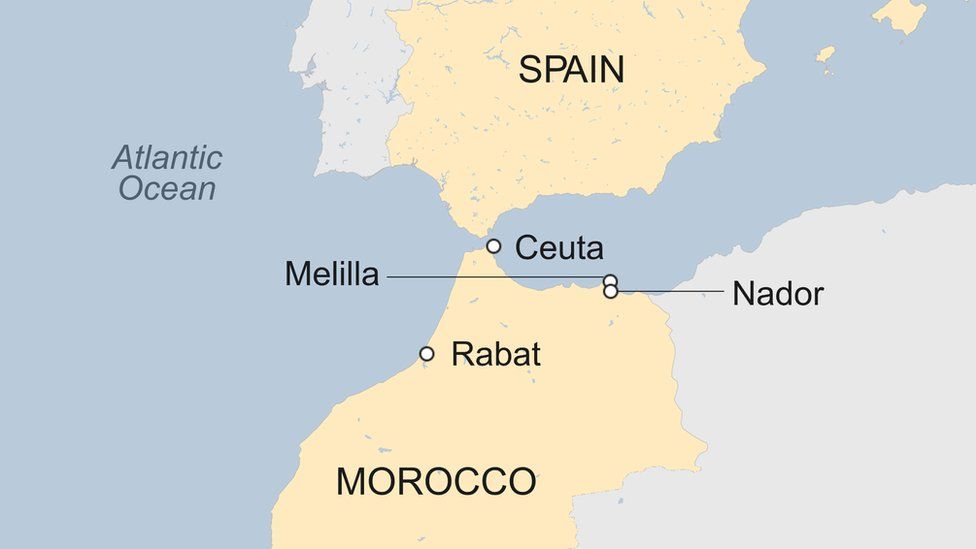
Geographic isolation exacerbates every administrative bottleneck. Ceuta is not a sprawling province with room to expand emergency housing. It is a dense peninsula locked between the Mediterranean Sea and Morocco. Every square meter counts. Every extra bed placed in a corridor represents a temporary band-aid on a gushing wound.
Local leaders have spent years warning Madrid that the current model is unsustainable. Each influx triggers a familiar cycle of emergency appeals, temporary inter-regional agreements, and eventual fatigue. Mainland regions often drag their feet when asked to absorb a share of the minors, citing their own budgetary constraints and social service shortages.
Meanwhile, the minors themselves languish in a bureaucratic purgatory. They sleep on gym floors, wait months for proper legal identification, and face an uncertain future. The system was designed for steady, predictable flows. It breaks entirely when confronted with sudden surges driven by geopolitical friction and economic desperation across the border.
The Diplomatic Lever
Migration across the Spanish-Moroccan frontier is never merely a humanitarian issue. It functions as a diplomatic barometer. When bilateral relations warm, patrols tighten on the Moroccan side. When political tensions flare, enforcement slackens, and groups gather along the hills overlooking the border fence.
This dynamic places Ceuta on the front lines of foreign policy decisions made hundreds of kilometers away in Madrid and Rabat. Local officials manage the fallout of high-stakes diplomatic maneuvering with municipal tools.
Border guards and social workers often find themselves caught between competing governmental priorities. The central government seeks to maintain strategic stability with its North African neighbor, while local authorities must manage overcrowding that threatens public safety and social cohesion.
Understanding the demand for mainland transfers requires looking beyond the immediate humanitarian crisis. It is an act of political pressure. By forcing the central administration to act, Ceuta's government highlights the failure of the state to share the burden of border management equitably across all autonomous communities.
The Legal and Ethical Labyrinth
Spanish law is explicit regarding the protection of minors. Once a child enters national territory without parents or legal guardians, the state assumes responsibility for their welfare, education, and legal representation.
Yet, executing that mandate in a border territory creates severe friction. Regional governments on the mainland frequently resist mandatory relocation quotas. Political friction between the ruling national coalition and regional administrations turns the redistribution of minors into a partisan battlefield.
Legal frameworks guarantee rights that local shelters simply cannot fulfill under current conditions. Privacy, psychological support, and rapid integration programs require resources that are scarce in an overwhelmed enclave.
Courts have repeatedly ruled that administrative delays in processing asylum or guardianship claims violate fundamental protections. Yet judges possess limited power to force wealthy mainland regions to open facilities against their political will. The burden remains disproportionately concentrated on small territories like Ceuta and the Canary Islands.
The Human Reality Beyond the Headlines
Behind the political disputes and municipal budget hearings are individuals navigating impossible circumstances. Many of these youths leave home driven by extreme poverty, lack of educational prospects, or family breakdown.
The journey to Ceuta is perilous. Some brave freezing mountain temperatures, while others risk their lives in freezing maritime waters. Reaching the fence or the shore feels like victory, but it often marks the beginning of a different kind of struggle.
Integration requires more than a bed and three meals a day. Language barriers, trauma from the journey, and the psychological weight of displacement demand specialized care. Without proactive intervention, these youths risk falling into cycles of marginalization, petty crime, and institutional despair.
Community reactions within Ceuta reflect a complex mix of empathy and exhaustion. Citizens recognize the humanity of the arriving children, but residents also witness the strain on local infrastructure, schools, and hospitals. Tolerance wears thin when public services groan under permanent emergency conditions.
The Breakdown of Solidarity
Spain prides itself on a decentralized administrative model designed to distribute power and responsibility efficiently. In moments of national crisis, however, decentralization frequently devolves into territorial selfishness.
Wealth wealthier autonomous communities routinely balk at taking in their proportionate share of unaccompanied minors. They argue logistical hurdles and administrative burdens, effectively shifting the human cost back to the borders.
This lack of internal solidarity undermines the credibility of national migration policy. If territories at the geographic margins bear the brunt of geopolitical realities while interior regions remain insulated, the system ceases to function as a national enterprise.
Reform proposals stall in parliamentary committees while local politicians trade blame through the media. Proposals for binding relocation mechanisms face fierce resistance from regional leaders protective of their autonomy.
Looking Ahead Without Illusions
The demand from Ceuta for immediate transfers is not a radical policy shift. It is a desperate plea for survival disguised as administrative procedure.
Until the central government establishes a permanent, automatic mechanism for redistributing arrivals across all regions upon landing, enclaves like Ceuta will remain perpetual crisis zones. Voluntary agreements fail because they rely on political goodwill rather than statutory obligation.
The border will not become quieter. Economic disparities between Europe and North Africa ensure that young people will continue to seek paths across the Mediterranean. Climate pressures and political instability in sub-Saharan transit nations will likely increase migratory flows in the coming years.
Ceuta has become a mirror reflecting Europe's broader inability to construct a humane and sustainable migration architecture. The children waiting in municipal gymnasiums are not temporary anomalies. They are the permanent face of a changing world, and current policies offer no answers beyond the next emergency transfer.