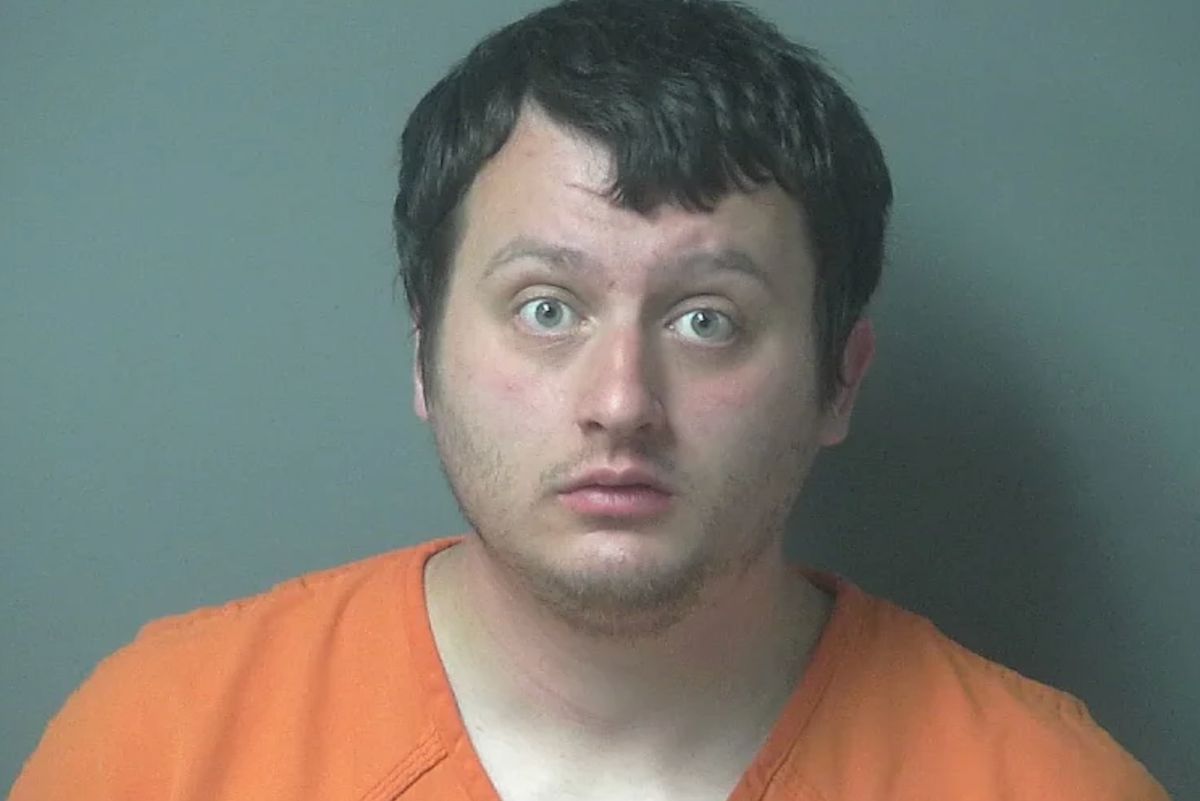
Truth is often weirder than fiction. You’ve probably seen the headlines about a son planning to kill his mother, but the details make this case feel like a dark, twisted movie script. It’s not just about the crime itself. It’s about the bizarre, almost casual detour to a Dairy Queen right before a planned execution. When we look at violent crime, we expect a certain level of logic, even if it's warped. This case throws that out the window. It shows a terrifying disconnect between a heinous act and everyday life.
Why the Dairy Queen Plot Baffles Investigators
Most people can't wrap their heads around the idea of a "final meal" before a murder, especially when the person eating it is the one holding the weapon. In this specific case, 19-year-old Peyton Munger allegedly detailed a plan to take his mother’s life. But before the act, he wanted a Blizzard.
Police reports out of Michigan suggest this wasn't a heat-of-the-moment outburst. It was calculated. It was cold. According to the records, Munger didn't just have a bad day. He had a map. He had a method. And he had a craving for fast food that preceded his intent to commit matricide. This kind of behavior points toward a psychological state that most of us will never understand—a complete lack of empathy or perhaps a total break from the gravity of the situation.
The Details of the Alleged Plan
The prosecution's case rests on the idea of premeditation. You don't just "accidentally" plan a murder that includes a specific route and a pit stop for ice cream. Investigators found evidence suggesting Munger intended to use a knife. He reportedly spoke about the plan with others, which is often how these things fall apart.
- He allegedly talked about the timing.
- He picked a weapon.
- He identified the "last stop."
It’s the banality of the Dairy Queen stop that sticks in your throat. Think about it. You’re sitting in a drive-thru, smelling frying oil and sugar, knowing what you intend to do in twenty minutes. It’s a level of compartmentalization that’s frankly haunting. When you look at the legal definitions of first-degree murder, "premeditation" is the heavy hitter. Taking the time to stop for a snack is the ultimate proof of a "cool head," which is exactly what prosecutors need to prove to secure a life sentence.
Identifying Red Flags in Domestic Relationships
We like to think we’d see this coming. We tell ourselves that someone planning something this radical would be foaming at the mouth or acting like a monster. That’s rarely the case. Often, the signs are much quieter. They’re buried in social media posts, weird comments to friends, or a sudden shift in temperament.
In many high-profile domestic plots, there’s a history of escalating tension. Maybe it’s about money. Maybe it’s about control. In this case, the motive seems as murky as the actions are clear. Neighbors and acquaintances often say the same thing after the fact. "He seemed quiet." "He was a bit odd, but I never thought he'd do that." This "quietness" is exactly why these crimes are so hard to prevent. The horror happens behind closed doors, right after a trip to a local landmark.
The Legal Battle Ahead for Peyton Munger
The court system isn't interested in the irony of the ice cream. It's interested in the law. Munger faces charges that could put him away for the rest of his natural life. His defense will likely have to pivot toward mental health. Was he in his right mind? Does a sane person plan a murder around a Dairy Queen schedule?
The prosecution will argue that the stop proves he was lucid. He could navigate a transaction. He could follow a plan. He wasn't "lost" in a psychosis; he was executing a checklist. This distinction is where the entire case lives or dies. If the jury sees the snack as a sign of calculated calmness, he's done. If they see it as evidence of a shattered mind, the outcome changes.
What This Tells Us About Modern Crime
We live in an age where everything is documented. If you’re planning something, you’re likely leaving a digital footprint a mile wide. The Dairy Queen plot wasn't just a physical act; it was part of a narrative that existed in texts or verbal "leaks" to peers.
I’ve seen enough of these cases to know that the "why" is often less satisfying than we want. Sometimes there isn't a grand motive. Sometimes there’s just a broken individual and a series of terrible choices. The lesson here isn't just about the shock value of the headline. It's about the reality that violence doesn't always look like a movie. Sometimes it looks like a teenager in a parking lot with a cup of soft serve, waiting for the sun to go down.
Pay attention to the people around you. Don't ignore the "jokes" about violence or the hyper-fixation on dark outcomes. Most of the time, it's nothing. But when it's something, it’s everything. If you or someone you know is dealing with domestic volatility or dark thoughts, reach out to local mental health services or a crisis hotline immediately. Don't wait for the plan to reach the "final stop."