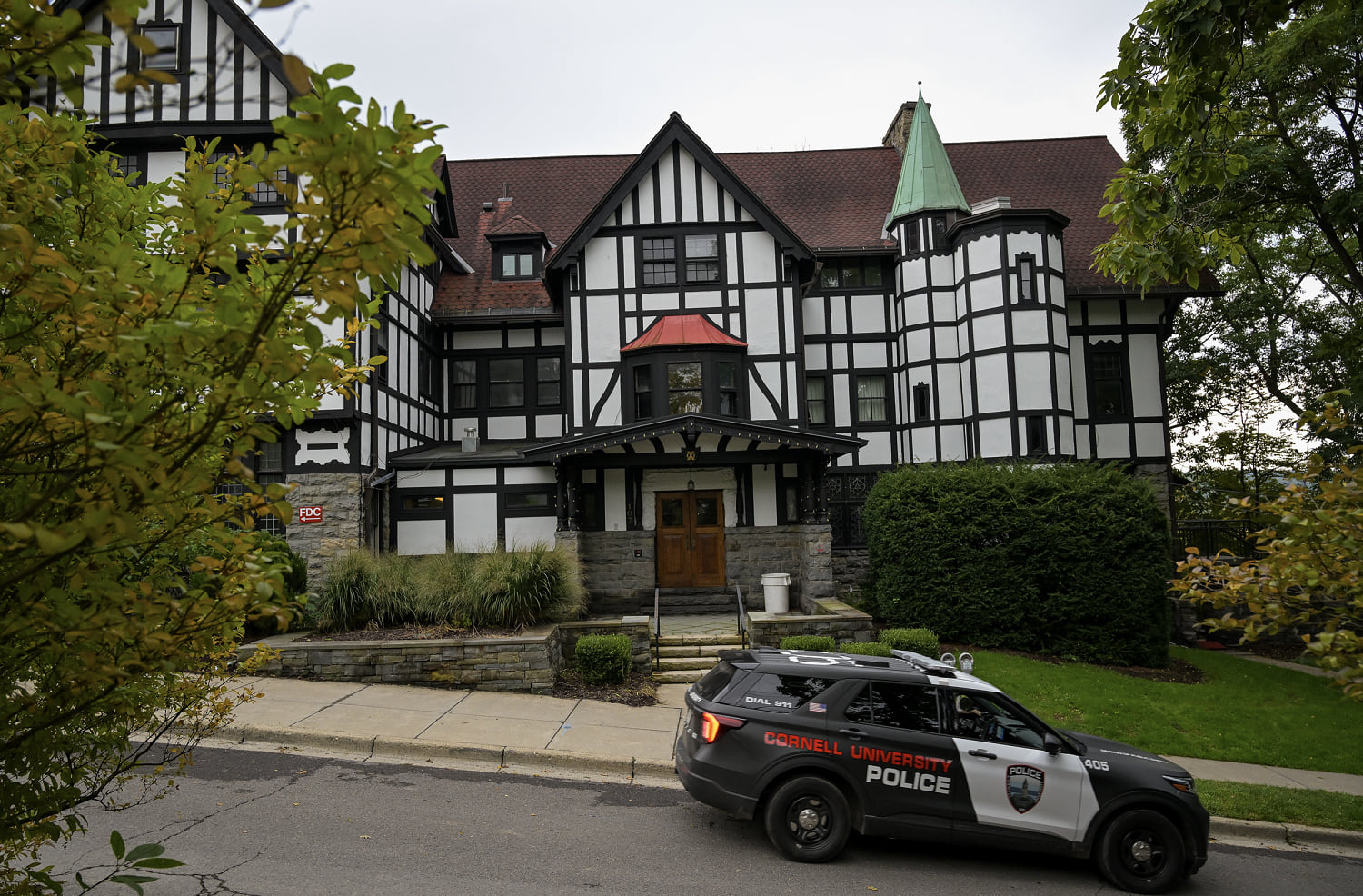
The legal battle surrounding the Cornell fraternity case has intensified as a second defendant formally petitions for the New York Attorney General to step down from the proceedings. Behind the procedural filings lies a fierce struggle over prosecutorial independence, institutional liability, and the boundaries of state authority in Greek life litigation.
When a defense team moves to disqualify the top prosecutor in the state, they are rarely engaging in routine paperwork. They are signaling an all-out war on the credibility of the investigation. This latest maneuver in the Cornell fraternity case highlights deep anxieties regarding how high-profile institutional scandals are managed, prosecuted, and politicized in New York courts.
The Mechanics of a Recusal Motion
To understand why a defendant seeks the recusal of the New York Attorney General, one must examine the high stakes of state-level oversight. State prosecutors hold immense discretion. When they target an organization, individual members, or an entire collegiate Greek life apparatus, the lines between public safety enforcement and political posturing can blur.
Motions for recusal typically rely on demonstrating a conflict of interest, an appearance of bias, or pre-judgment of guilt. Defense attorneys in the Cornell fraternity case argue that the office under Letitia James has adopted an adversarial posture that compromises impartial justice. They point to public statements, the timing of enforcement actions, and the unprecedented scope of civil and criminal exposure facing individual students and alumni chapters.
Proving bias in a court of law remains an uphill battle. Courts generally grant broad latitude to elected prosecutors unless clear evidence emerges that personal animus or political ambition drove the charging decisions. Yet, even if a judge ultimately denies the motion, the filing achieves a strategic objective. It forces the prosecution onto the defensive, publicizes defense narratives, and lays the groundwork for future appeals if convictions or substantial civil penalties result.
The Pressure Mounts on Greek Life Accountability
The broader narrative extends far beyond a single courtroom or a single procedural motion. Higher education institutions and fraternities across the country face an existential reckoning. Hazing allegations, substance abuse liabilities, and institutional negligence have transformed local campus traditions into high-stakes litigation battlegrounds.
When a major university like Cornell becomes the epicenter of such a controversy, public scrutiny reaches a fever pitch. Parents demand accountability. Alumni organizations scramble to protect their endowments and reputations. Meanwhile, state regulators step into the vacuum, eager to demonstrate that institutional power does not exempt organizations from rigorous legal consequences.
The Attorney General’s office views these cases through the lens of consumer protection, public safety, and corporate governance. Fraternities and sororities, despite their social branding, operate as complex legal entities with property holdings, national oversight boards, and substantial cash flows. Prosecuting misconduct within these structures requires unraveling layers of local chapter autonomy versus national organizational liability.
When defense teams fight back with recusal demands, they are often attempting to decouple the case from the broader political momentum surrounding hazing reform. They want the matter judged strictly on the narrow statutory elements of the specific charges, free from the heavy shadow of public outrage.
Examining the Precedent
Legal history shows that challenges against state prosecutors rarely succeed in entirely removing an elected official or an entire agency from a case. Landmark rulings consistently affirm that the threshold for disqualifying a prosecutor requires proof of actual prejudice that deprives the defendant of a fair trial.
However, successful or not, these motions shift the battlefield. They force prosecutors to spend valuable time and resources litigating their own impartiality rather than focusing solely on the underlying facts of the incident. In complex multi-defendant cases, coordinated legal strategies often involve multiple parties filing overlapping motions, creating a bureaucratic maze for the state to navigate.
As this specific Cornell fraternity case moves forward, the immediate question centers on how the presiding judge evaluates the recusal arguments. Will the defense produce documentation or statements crossing the line from aggressive public advocacy into disqualifying bias? Or will the court view the petition as a standard defensive playbook designed to delay proceedings and score public relations points?
The outcome will establish a notable marker for how future institutional accountability cases are litigated in New York. If the Attorney General remains on the case, the defense must pivot back to the core evidentiary battles, challenging witness credibility, forensic timelines, and the precise legal definitions of liability. If unexpected concessions or modifications occur, the power dynamic in the courtroom shifts overnight.
The system grinds forward, driven by legal technicalities, public expectations, and the relentless pressure of high-stakes litigation. The focus remains locked on the courtroom doors, where every motion and ruling shapes the immediate fate of the defendants and the long-term enforcement powers of the state.