The rain in Belfast does not fall so much as it occupies the air, a heavy, damp wool that clings to the limestone of the public buildings and blurs the edges of the city. On a morning like this, the architectural grandiosity of the courts feels less like a monument to justice and more like a fortress designed to keep the world out. Inside, the air is dry, smelling of old paper, polished wood, and the distinct, sharp tang of anxiety.
For decades, power in this corner of the world was a solid, tangible thing. It was built on a foundation of fiercely defended certainties, unyielding rhetoric, and the absolute authority of tribal leadership. To understand the gravity of what is unfolding now, one must understand how tightly that power was held. In the small, interconnected communities of Northern Ireland, a political leader is not just a representative. They are a shield. They are the voice that speaks for your survival, your history, your identity. When a figure at the absolute apex of that structure steps into a dock, the ground beneath everyone’s feet begins to shift.
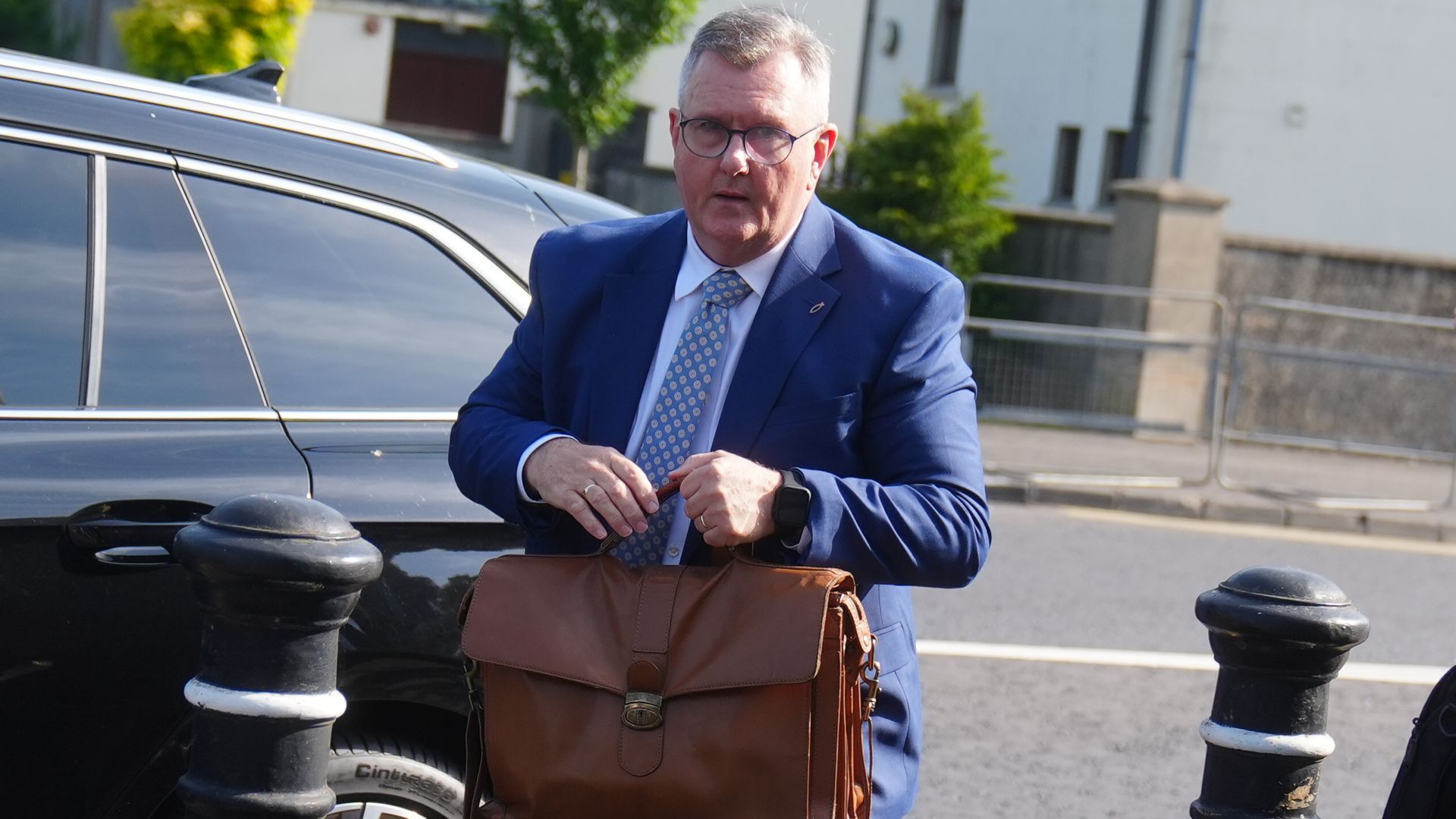
The opening of a criminal trial against a former First Minister and leader of the Democratic Unionist Party is not merely a legal proceeding. It is an earthquake. Sir Jeffrey Donaldson, a man whose career was defined by the meticulous curation of a respectable, traditional statesman image, now sits in the quiet center of a storm. The allegations—historical sex offenses spanning decades—have shattered the political landscape, not because the wheels of justice are moving, but because of the profound, destabilizing realization of human vulnerability they carry with them.
Imagine a small, tightly knit community anywhere in these islands. The local hall is the center of gravity. The minister, the politician, the community elder—these are the pillars. For a young person, or indeed anyone seeking protection, these figures are towering, almost mythical. Now, consider the courage it takes to speak a truth that threatens to pull down one of those pillars. It is a psychological tightrope walk over an abyss. The prosecution’s opening statement did not just outline dates and legal statutes; it began the agonizing process of dismantling a legacy, piece by piece, before a public that is still struggling to reconcile the public statesman with the private accusations.
The courtrooms of Belfast are intimate places. Despite the high ceilings and the formal gowns of the barristers, the distance between the accuser, the accused, and the public is painfully small. Every twitch of a hand, every heavy breath, every long pause carries the weight of a decade. The legal machinery moves with a deliberate, agonizing slowness. It does not care about political deadlines or the stability of a fragile power-sharing government. It cares only for the grueling accumulation of evidence.
We often view power through the lens of television cameras, press conferences, and high-stakes negotiations in London or Brussels. We see the crisp suits, the practiced soundbites, the confident strides down the corridors of Stormont. It feels permanent. It feels impenetrable. But the real problem lies elsewhere, hidden in the quiet corners where the vulnerable are left to navigate the shadow side of that very same power. The true measure of a society’s strength is not found in how well it protects its leaders, but in how safely it listens to the voices that rise from the shadows.
Consider what happens next when the gavel falls each afternoon. The lawyers pack their leather briefcases. The journalists rush to the phones, desperate to distill hours of complex legal argument into a two-minute broadcast. But for the people at the heart of this case—and for the public watching from a distance—the tension does not dissipate. It settles into the bones.
The defense will have its say, as the fundamental principles of justice demand. The presumption of innocence is a vital, non-negotiable shield that protects every citizen, regardless of their status. Yet, regardless of the ultimate verdict, a profound threshold has been crossed. The invisible contract between the powerful and the public has been fundamentally altered. The armor has cracked, and the light pouring through the fractures reveals a landscape that can never quite return to the way it was before.
The court sits again tomorrow. The rain will likely still be falling, streaking the gray stones of the city, while inside, the quiet, devastating work of uncovering human truth continues.