Ink on paper matters very little when the wind shifts. Years ago, men in tailored suits stood before microphones and poured vitriol into the ether, secure in the belief that opposition was a permanent state and power was something that happened to someone else. They wrote essays. They marched. They raised banners against the incoming tide of a populist storm, convinced their words would be preserved in amber as a monument of righteous defiance.
Then reality arrived.
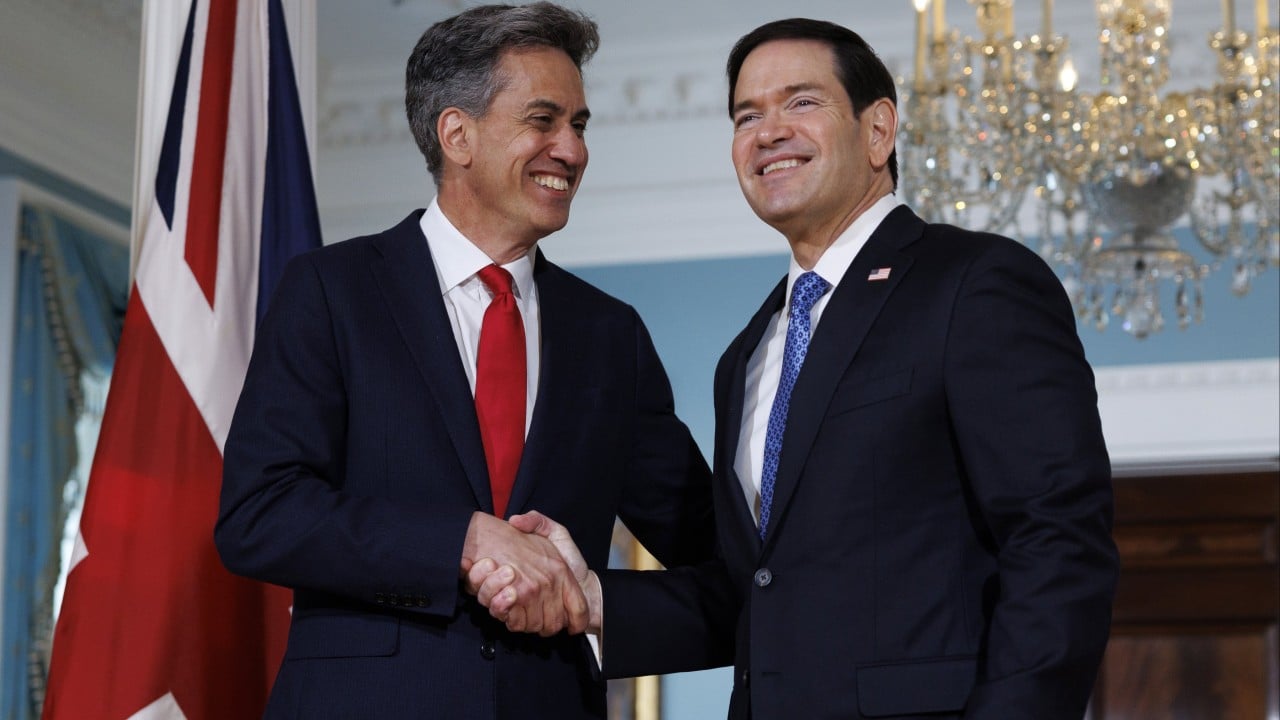
Consider the plight of a diplomat stepping into a room where the air conditioning hums too loudly and the coffee is perpetually lukewarm. This is the quiet theater of statecraft, far removed from the roaring crowds and the televised shouting matches. Ed Miliband now sits with the weight of British foreign policy resting squarely on his shoulders, tasked with navigating an Atlantic alliance that feels less like a partnership and more like a tightrope walk over an active volcano.
The archives are merciless. They remember everything. They remember the fiery declarations from years past, the public rebukes, and the moral clarity of the opposition bench. But statecraft is an exercise in creative amnesia. When a journalist leans across a microphone and asks about yesterday's insults, the modern minister does not bristle. He smiles a thin, practiced smile. He looks past the lens. He pivots.
Why? Because power demands compromise, and survival demands silence.
The friction between London and Washington is not a secret. Behind closed doors, officials in the White House view the new British foreign secretary not as a partner, but as an ideological friction point. His past opposition to fossil fuel expansion and his historical distaste for American right-wing populism are cataloged in Washington dossiers. They are not forgotten. They wait, dormant, until a trade negotiation sours or a defense pact hits a wall.
Imagine standing at a podium, knowing that a single ill-chosen sentence could unravel billions in strategic cooperation. The temptation to defend one's honor is immense. Human nature dictates that we want to stand tall, to say, "I meant every word." Yet the machinery of government grinds such vanities into dust. To survive in the high-stakes arena of international relations, one must learn the art of the evasion. Questions about past remarks are met with a swift redirection toward shared futures, mutual security, and economic cooperation.
The past is a foreign country, the saying goes. For a foreign minister, it is an active minefield.
When pressed on whether his previous stance on Donald Trump or his aggressive green energy mandates would fracture diplomatic channels, the response is carefully scrubbed of conviction. It is replaced by the bland, reassuring vocabulary of diplomacy. We look forward to working together. Our shared values transcend political cycles.
Yet, beneath the polished veneer, a quiet tension persists. The Trump administration watches London with a transactional eye. Every policy shift regarding North Sea drilling, every defense expenditure, and every hesitant nod toward European security frameworks is weighed against old grievances. The foreign minister's silence on his past is not an oversight. It is a calculated shield.
Words have consequences, but in the halls of power, silence is currency. As the geopolitical landscape shifts beneath their feet, leaders across Europe are discovering that yesterday's fiery convictions are today's heavy baggage. They must either drop them in the dark or carry them forward in secret, hoping the weight does not pull them under before the term is through.
How Trump's White House Reacted To Ed Miliband's Appointment As Foreign Secretary
This video provides context on how the Trump administration reacted to the appointment of Ed Miliband as foreign secretary and the diplomatic friction it created.