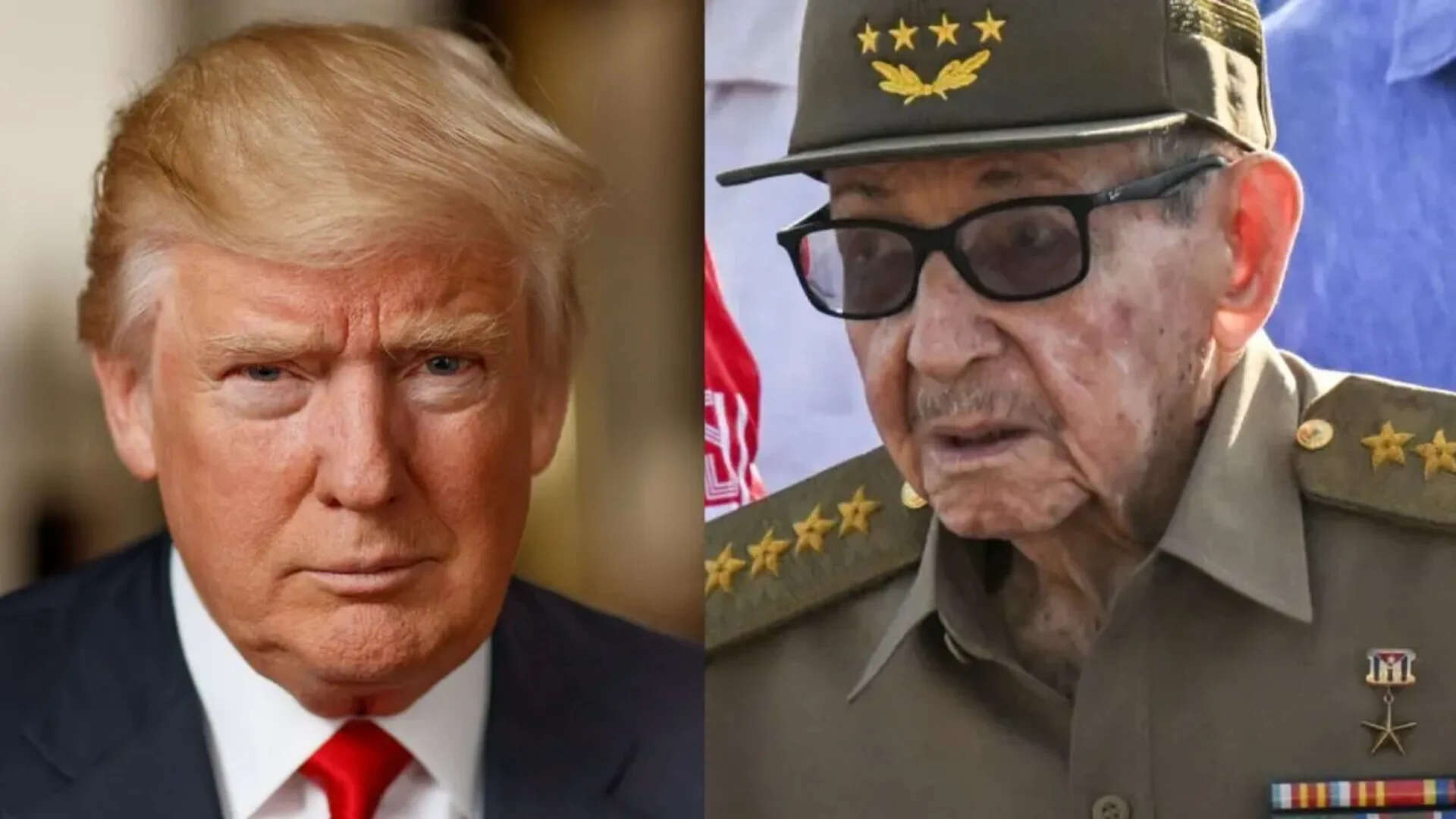
The United States Justice Department just dropped a legal bomb on Havana. In an unsealed federal indictment from a Miami grand jury, the U.S. government charged 94-year-old former Cuban President Raúl Castro with conspiracy to kill U.S. nationals, four counts of murder, and the destruction of aircraft. It stems from a 30-year-old scar: the 1996 shootdown of two unarmed civilian planes operated by the Miami-based exile group Brothers to the Rescue.
Four men died when Cuban MiG fighter jets blew those Cessna planes out of the sky over international waters. For decades, South Florida has demanded blood. Now, the Trump administration has delivered a piece of paper that brands the remaining titan of the Cuban Revolution a fugitive murderer.
Yet, hours after Acting Attorney General Todd Blanche stood inside Miami’s symbolic Freedom Tower to announce the charges, Donald Trump did something unexpected. He told everyone to calm down.
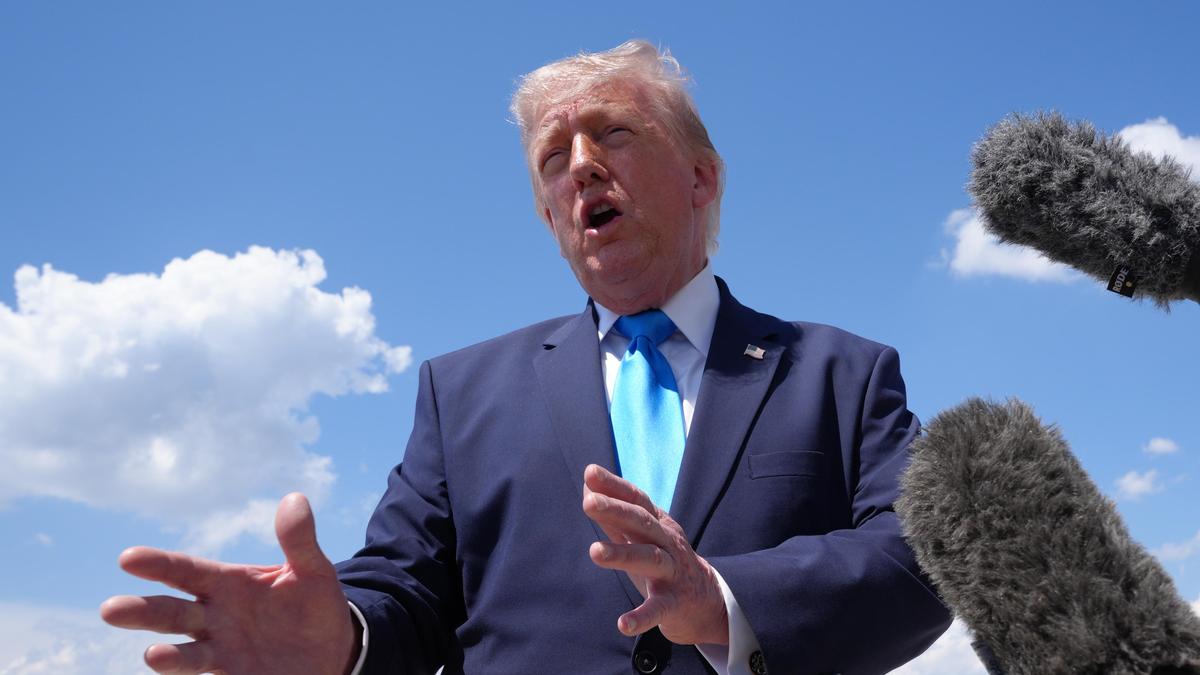
Returning from a commencement speech at the Coast Guard Academy in Connecticut, Trump shrugged off the idea that this historic indictment would spark a military conflict. "There won't be an escalation," Trump told reporters on the tarmac. "I don't think there needs to be. Look, the place is falling apart. It's a mess, and they've sort of lost control."
It sounds like a contradiction. This administration spent months tightening an oil blockade on Cuba, dropping hints about regime change, and boasting about the January military raid in Caracas that dragged Venezuelan President Nicolás Maduro into a New York federal prison. Trump even bragged earlier this year that Cuba was "next." Why launch a massive legal assault against Castro only to dismiss the threat of a kinetic blowup?
You have to look at the reality on the ground in Havana to understand the strategy. Trump isn't backing off; he's practicing strategic patience because he thinks the Cuban regime is already on life support.
The Long Memory of the Florida Straits
To understand why this indictment matters, you have to look at what happened on February 24, 1996. Brothers to the Rescue wasn't a military outfit. They were a humanitarian group of Cuban exiles who flew small, slow-moving aircraft over the Caribbean Sea to spot balseros—Cuban migrants risking their lives on homemade rafts to reach Florida.
According to the 20-page indictment, the Cuban military spent weeks practicing intercepts on slow-moving targets before the attack. When three Cessna planes took off from Opa-locka Airport that morning, Cuban MiG pilots intercepted them. Operating under a command structure overseen by Raúl Castro, who was then Cuba’s Defense Minister, the fighter jets fired air-to-air missiles without warning.
Two planes—tail numbers N2456S and N5485S—disintegrated. Armando Alejandre Jr., Carlos Alberto Costa, Mario Manuel de la Peña, and Pablo Morales were killed instantly. A third plane escaped.
Havana claimed the planes breached Cuban airspace illegally. International aviation investigators and U.S. authorities proved otherwise: the planes were destroyed in international airspace. Fidel Castro later claimed the military acted on standing orders, but the U.S. now directly lays the blame for those execution orders at the feet of Raúl.
The Maduro Blueprint and the Fear of a Bloodbath
The timing of this unsealed indictment isn't accidental. It comes right as Washington squeezes Cuba with an intense oil embargo and targeted sanctions. The island is crippled by rolling blackouts, food shortages, and a crumbling economy.
The Cuban exile community in Miami is ecstatic. U.S. Representative Maria Elvira Salazar didn't mince words at a press conference, drawing a direct line between the aging Cuban dictator and the captured Venezuelan leader. "Maduro thought Trump was fooling… and look where Maduro is today, in a federal prison in New York," Salazar said. "So we are sending the message to the Castro family, it's time for you to leave."
Acting Attorney General Blanche also hinted at a potential forced extraction, noting that the U.S. expects Castro to show up in court "by his own will, or by another way."
Naturally, Havana is furious. Cuban President Miguel Díaz-Canel slammed the indictment on X, calling it a "political maneuver" to justify "the folly of a military aggression." His deputy foreign minister, Carlos Cossio, accused Washington of lying unscrupulously to cover up a cruel campaign against the Cuban people. Díaz-Canel previously warned that any American boots on the ground would result in a "bloodbath."
Why Trump Believes He Doesn't Need a War
So why did Trump downplay the risk of escalation?
Because he knows he's holding all the cards. A military invasion of Cuba is messy, risky, and entirely unnecessary when the island's infrastructure is already imploding under the weight of U.S. sanctions and domestic mismanagement.
Trump’s comments reveal his actual playbook for Havana. He thinks the regime is a house of cards waiting for a stiff breeze. By securing the indictment, Trump scores a massive political victory with the Cuban-American voting bloc in Florida and establishes a legal mandate for future actions. He doesn't need to send warships into Havana Harbor tomorrow because the oil blockade is doing the heavy lifting.
The CIA already has a footprint on the island, and Secretary of State Marco Rubio is actively pulling the diplomatic levers behind the scenes. Trump’s strategy is simple: let the internal pressure cook. Why waste American military capital on a regime that is, in his own words, "falling apart"?
It's a waiting game. Raúl Castro is 94 years old. He stepped down from the presidency in 2018 and left his post as head of the Communist Party in 2021, but he remains the ultimate shadow authority on the island. He will almost certainly never willingly step foot in a Miami courtroom, and Cuba doesn't have an extradition treaty with the United States.
By labeling Castro a wanted criminal for the deaths of American citizens, the U.S. has effectively blocked any future diplomatic off-ramps for the current Cuban leadership. If you want to watch how this plays out next, keep your eyes on the streets of Havana and the fuel docks, not the Pentagon. The real test is whether the economic misery inside Cuba sparks a domestic uprising before the 94-year-old former dictator faces an American judge.