The floor does not warn you before it drops.
I remember the coffee in my cup, how the surface suddenly fractured into concentric rings of dark brown, trembling without a hand touching it. You live your life trusting the ground beneath your boots. You build walls of concrete and steel, you paint the trim, you hang family photographs on drywall, and you tacitly agree with the planet that things will stay put. Then, out in the deep trenches of the sea, miles beneath the blue indifference of the western Philippines, tectonic plates catch, groan, and slip. Discover more on a related issue: this related article.
Energy does not care about your morning routine.
A magnitude 5.8 earthquake tore through the dark waters off the Philippine coast, sending sharp, rolling shudders all the way to the capital city of Manila. Cups rattled on desks in high-rise offices. Elevators paused their ascents. People stepped out onto pavement that felt, for a terrifying few seconds, less like solid earth and more like the back of a breathing animal. More analysis by NPR delves into similar perspectives on the subject.
To look at a seismograph is to look at a language of violence translated into jagged lines of ink. But to live through the tremor is something entirely different. It is an immediate, primal stripping away of certainty.
Consider what happens inside a high-rise office building when the shockwaves arrive. Imagine a young woman named Clara, clutching her lanyard, staring up at the acoustic ceiling tiles as they sway in unison. The structural engineers who designed her building calculated for this exact moment. They built elasticity into the skeleton of the skyscraper, allowing it to flex, to bend like a reed in a heavy wind instead of snapping like dry twigs. The physics work. The building holds.
Yet physics offer cold comfort to the human heart hammering against ribs.
When the earth rumbles at 5.8 magnitude, you are reminded that we occupy a very thin crust floating over an ocean of molten fury. This particular quake struck at a specific depth, its epicenter logged carefully by monitoring agencies like PhilVolcs, registering deep enough to dampen the catastrophic surface rupture right at the source, yet broad enough to let the rolling energy travel dozens of miles inland.
Buildings sway. Sirens begin their low, electronic wailing in the distance. And for a moment, the frantic hum of modern commerce simply stops.
We treat earthquakes like sudden weather, but they are deep time erupting into the present. The Philippine archipelago sits atop one of the most volatile tectonic intersections on the planet, the Pacific Ring of Fire, where giant slabs of the earth's crust constantly grind against one another. This is not an anomaly. This is the earth doing what it has done for billions of years, reshaping continents, lifting mountains from the sea floor, and occasionally reminding the millions of souls living in its shadow just how temporary our tenure really is.
The numbers tell part of the story. Depth, epicenter coordinates, magnitude scales. But the real weight of the event lives in the silence that follows the shaking.
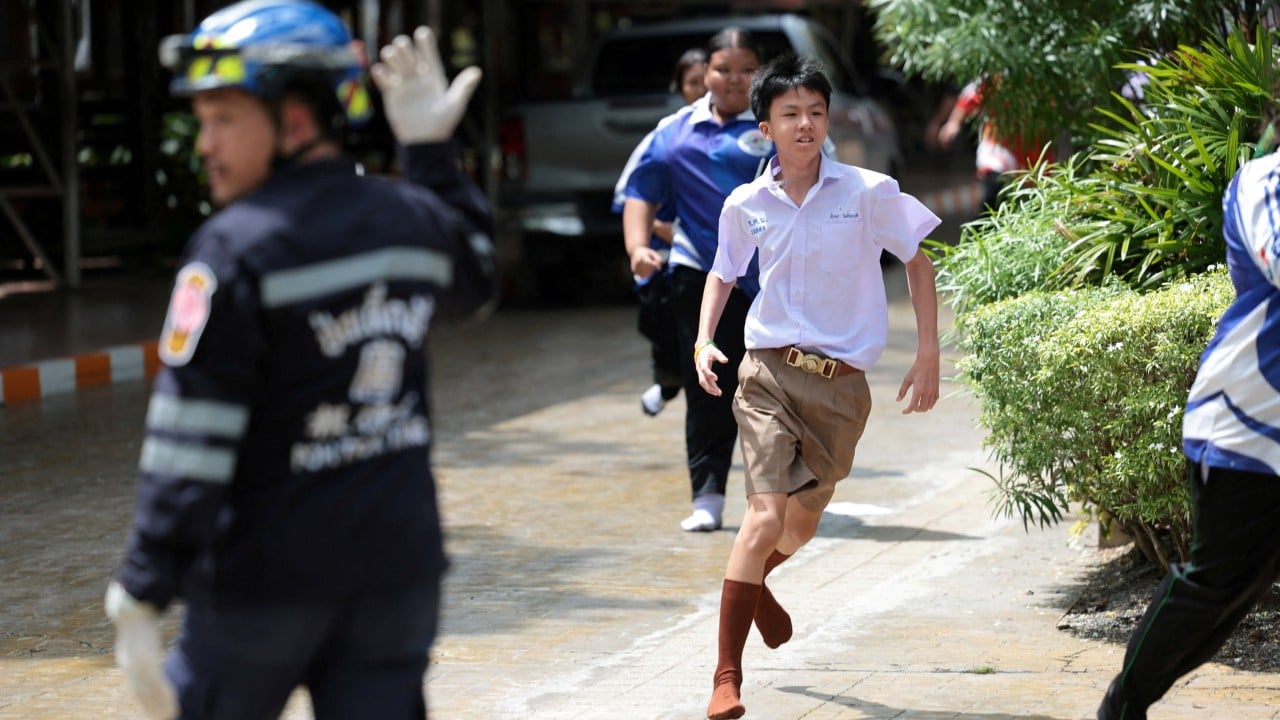
That brief pause where everyone looks at each other, waiting to see if the floor will roll again. The quick-fingered checks of smartphones to call aging parents across town. The sudden evacuation down concrete stairwells, shoulders brushing against strangers, united by the universal, invisible thread of vulnerability.
We check the news feeds. We look for the aftershocks. We learn that thankfully, initial reports show no major structural collapse or widespread devastation, though minor cracks might spider-web across older masonry. We exhale. The collective breath of a capital city lets out a ragged sigh of relief.
Then, Clara goes back inside her building. She steps back into the elevator. She sits back down at her desk, looks at her coffee cup—now still, the liquid calm once more—and gets back to work.
We are remarkably fragile, and yet infinitely stubborn creatures. We build our cities on restless ground, and when the earth tries to shake us off, we simply steady ourselves, patch the drywall, and keep living.