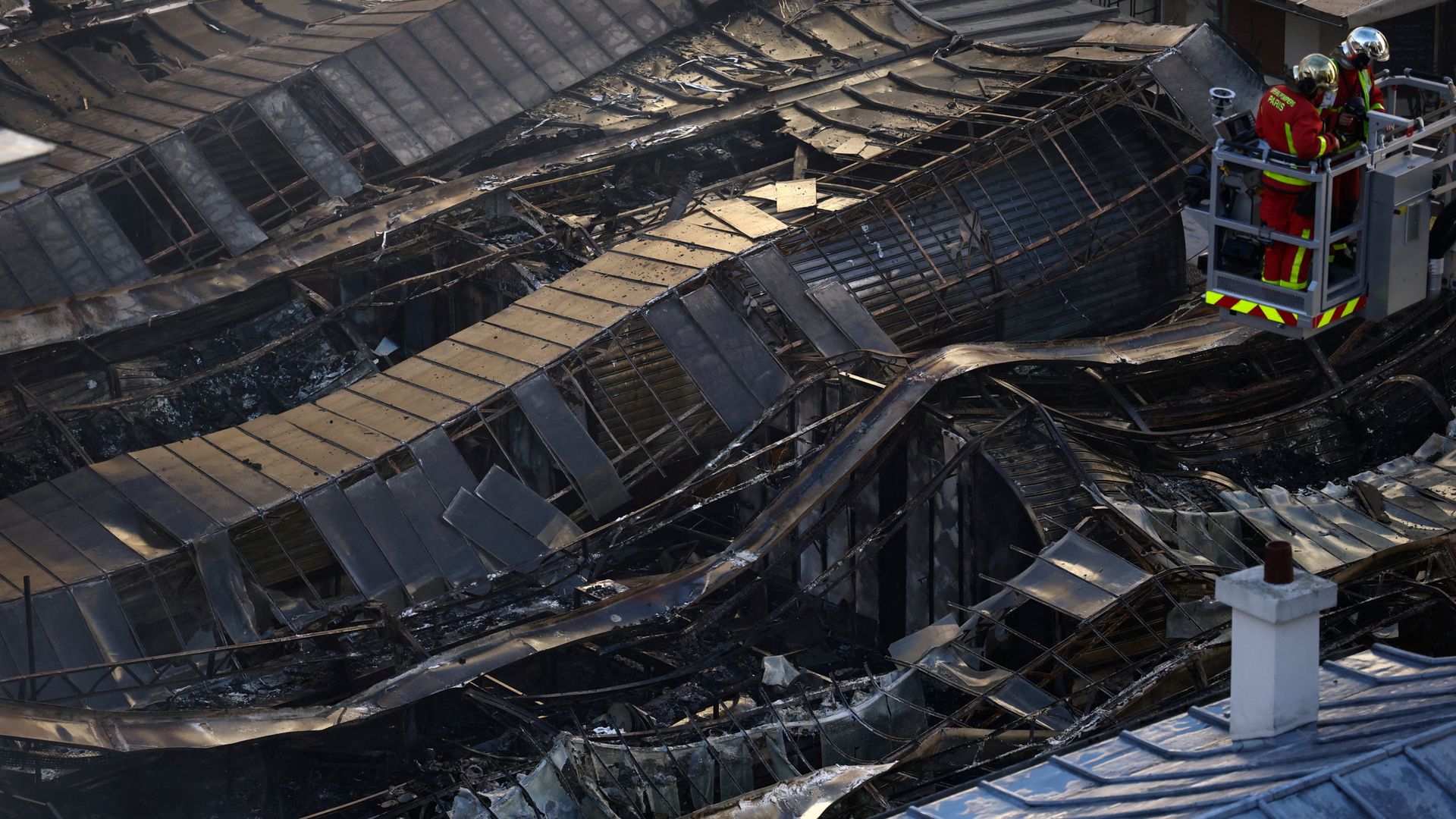
Urban infrastructure loss, particularly regarding historic commercial architecture, exposes severe deficiencies in regulatory compliance, asset management, and municipal disaster mitigation. When a catastrophic fire consumes a centuries-old public market like the historic Marché des Enfants Rouges or its municipal equivalents in Paris, the disruption extends far beyond immediate structural failure. It initiates an economic and spatial shockwave that propagates through local supply chains, heritage asset valuation, and urban real estate markets.
The Cost Function of Heritage Loss
Traditional media coverage typically reduces such disasters to emotional narratives of cultural loss. A rigorous economic perspective, however, requires deconstructing the incident through quantitative and structural vectors. The destruction of a historic food market generates three distinct cost layers:
- Replacement Cost Disparity: The physical reconstruction of a 17th- or 19th-century timber-and-masonry commercial space incurs costs that vastly exceed standard commercial build-outs. Regulatory mandates for historic preservation require artisanal materials, specialized labor, and adherence to modern fire-suppression codes that often conflict with heritage preservation aesthetics.
- Operational Disruption Velocity: Small-scale food vendors operating within historic markets typically operate on razor-thin margins with high inventory turnover. A sudden cessation of trading operations breaks short-term cash flow cycles, forcing permanent business closures or costly relocations that erode established customer loyalty.
- Spatial Externality Decline: Urban food markets function as commercial anchors for surrounding retail ecosystems. Their sudden removal suppresses foot traffic for adjacent businesses, immediately contracting retail rents and municipal tax revenues within the immediate catchment area.
Regulatory and Structural Vulnerabilities
Historic commercial structures in dense urban cores present unique engineering and compliance challenges. Most European urban food markets evolved organically over centuries, resulting in complex spatial configurations that defy modern fire safety paradigms.
The primary vulnerability stems from deferred maintenance combined with archaic utility infrastructure. Older electrical grids, high timber loads, and enclosed stall layouts create high fire load densities. When municipal authorities balance heritage preservation mandates against modern life-safety codes, compliance bottlenecks frequently emerge. Upgrading electrical systems, installing compartmentation fire walls, or integrating automated sprinkler systems often requires altering protected architectural elements, leading to prolonged regulatory standstills.
Furthermore, municipal oversight models often rely on reactive maintenance rather than predictive risk assessments. Without continuous thermal imaging inspections of aging wiring and mandatory compartmentalization audits, historic markets remain highly susceptible to rapid fire propagation once ignition occurs.
The Supply Chain Ripple Effect
A historic food market is not merely a retail venue; it is a localized node in an agrarian and artisanal supply chain. The sudden loss of a major municipal distribution point forces immediate logistical adjustments for small-scale agricultural producers, cheesemakers, butchers, and bakers.
Without immediate alternative outlets, perishable inventory suffers total write-offs. Producers must quickly reallocate distribution to peripheral supermarkets or secondary neighborhood shops, channels that often demand higher slotting fees or impose rigid volume minimums that disadvantage micro-enterprises. This creates a supply-side bottleneck, temporarily driving up consumer prices for artisanal goods while compressing producer margins.
Long-Term Urban Regeneration Dynamics
The destruction of a historic market invariably triggers a political and economic contest over its future state. Municipal governments face a fundamental trade-off between preservation-led restoration and commercial modernization.
The standard trajectory involves an extended insurance litigation phase, followed by architectural competitions and protracted public-consultation periods. During this interim, the local neighborhood experiences a structural deficit in fresh food access and community cohesion. When reconstruction finally occurs, the capital expenditures required often necessitate higher stall rents upon reopening. This economic pressure can unintentionally catalyze commercial gentrification, pricing out the original artisanal vendors and replacing them with higher-margin corporate concepts.
To mitigate this systemic drift, municipal strategies must shift toward mandatory resilience frameworks. Future-proofing historic commercial spaces requires deploying hidden infrastructure upgrades—such as micro-mist suppression systems embedded within timber framing and real-time thermal sensors—that preserve aesthetic heritage while neutralizing catastrophic risk.
Implement a mandatory municipal audit of all historic commercial food markets within dense urban cores, focusing specifically on electrical load capacities, timber treatment histories, and compartmentalization efficacy before structural failures force reactive capital allocation.