The mainstream media is treating the European Union's backdoor phone calls to Moscow as a tactical chess move. They call it "scoping out potential," "defending specific interests," or "ensuring a seat at the table."
Let us strip away the diplomatic varnish.
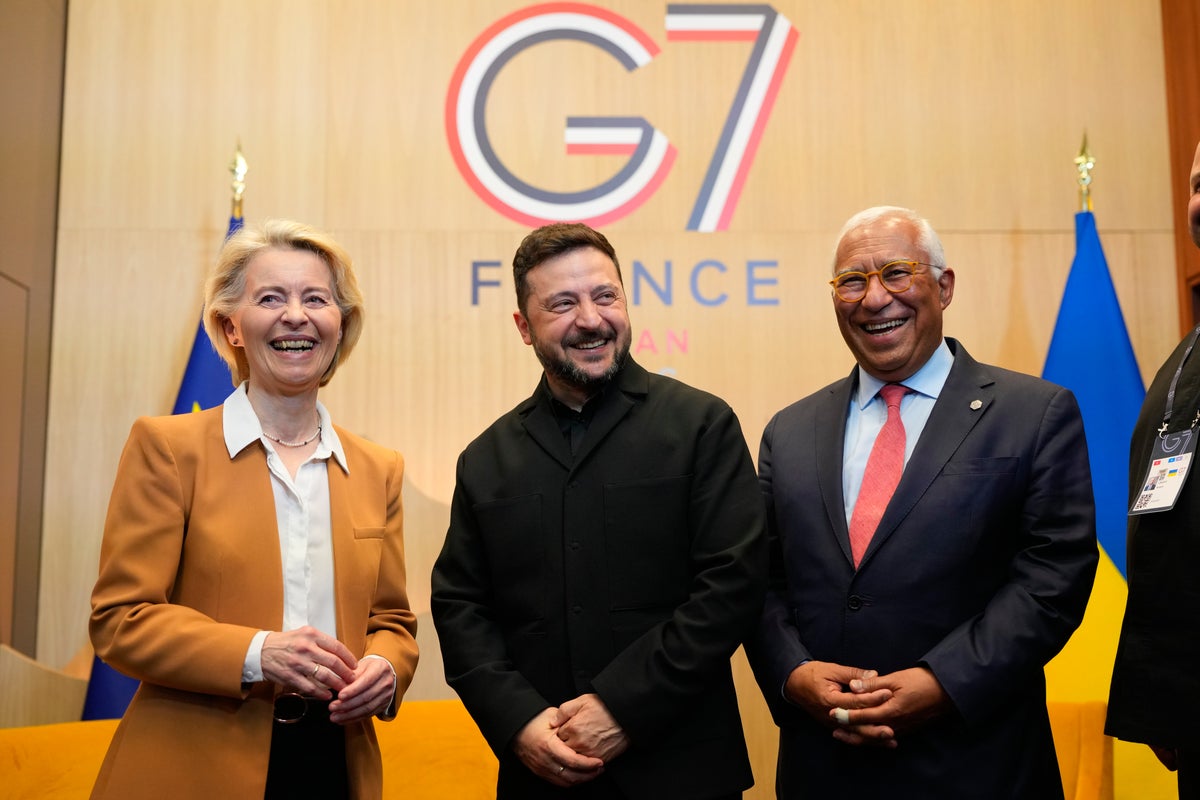
When Pedro Lourtie, chief of staff to EU Council President António Costa, picks up the phone to dial a senior Kremlin official close to Vladimir Putin, it is not an act of geopolitical strategy. It is panic. For over four years, Brussels maintained a public posture of absolute economic and diplomatic decapitation toward Russia. Now, with Washington distracted by Middle Eastern fires and domestic policy shifts, the EU has realized it has spent trillions of euros to buy itself total irrelevance.
Reopening communication channels with Russia is not a sign of European diplomatic maturity. It is a loud, structural admission that the EU's entire post-2022 strategy has collapsed under the weight of its own economic illusions.
The Myth of European Leverage
The lazy consensus dominating current coverage suggests that Europe is stepping up because the U.S. has dropped the ball. The narrative implies that the EU can act as a powerful structural counterweight to protect its continental architecture.
This is fiction. Europe has no cards left to play.
I have spent nearly two decades watching European institutions design policy. If there is one constant, it is the belief that regulatory frameworks and market size equal raw power. They do not. When you weaponize your economy but fail to build a credible military deterrent, you do not isolate your adversary—you isolate yourself from the eventual peace terms.
Consider the baseline mechanics of what the EU actually did over the last few years. It attempted a rapid, forced decoupling from Russian energy. It froze central bank assets. It cut off semiconductor pipelines. Yet, as the European Commission's own March 2026 national diversification reports show, the continent is still choked by structural economic pain, while Russia's war economy has managed to reroute its supply lines through corporate proxies in Central Asia and the South Caucasus.
When Brussels begs for a line of communication now, Moscow knows exactly why. The EU is terrified of a scenario where the United States and Russia negotiate the future borders of Europe entirely over the heads of the Europeans. By creeping back to the Kremlin, the EU is confirming Putin’s long-held thesis: Western European strategic autonomy is a paper tiger that folds the moment Washington looks away.
The Hidden Failure of the Energy Decoupling
To understand why Europe's diplomatic knees are shaking, you have to look at the catastrophic math of the green transition and the energy embargo. The official line from the European Commission celebrates the implementation of the REPowerEU Gas Regulation. They point to the political agreements to completely phase out Russian fossil fuels.
But look at the corporate spreadsheets, not the Brussels press releases.
The forced abandonment of cheap pipeline gas did not make Europe green; it made Europe structurally uncompetitive. European industrial manufacturing—the literal engine of German and French economic power—has been hollowed out. Energy-intensive industries have fled to the United States and China, where energy inputs are multiple times cheaper.
Imagine a scenario where a manufacturing conglomerate in the Ruhr Valley faces power costs 300% higher than its competitor in Ohio or Guangdong. No amount of legislative signaling or "Industrial Accelerator Acts" can fix that basic operational deficit. The EU platform for joint gas purchasing was designed to lower prices through collective bargaining, but it merely locked in permanently higher baseline costs for liquefied natural gas (LNG).
By completely burning its bridges with its primary energy supplier without a commercially viable, immediate alternative, Europe traded short-term moral signaling for long-term industrial decline. The current back-channel diplomatic outreach is a quiet acknowledgment by European capitals that they cannot survive another five years of industrial bleeding while completely cut off from eastern markets.
Dismantling the De-risking Illusions
The standard defense of the EU's behavior usually sounds like this: “People also ask, shouldn't a global superpower maintain lines of communication even with its adversaries to manage risk?”
The answer is yes—if you are actually a superpower. If you possess the hard power to back up your diplomacy, communication is an asset. But when you have systematically underfunded your defense sectors for three decades, communication is an audition for vassalage.
Let us evaluate the actual state of European security that underpins these phone calls. The EU has recently touted its "Eastern Flank Watch," its "European Drone Defence," and a €1 billion allocation for the European Defence Fund.
A billion euros for collaborative defense R&D across twenty-seven nations is an offensive joke. It is the financial equivalent of bringing a butter knife to a ballistic missile fight. The entire European defense apparatus remains completely dependent on the American logistical backbone, satellite intelligence, and nuclear umbrella.
When European ambassadors from London, Paris, and Berlin meet at the Russian Foreign Ministry, they are not acting from a position of strength. They are trying to pre-empt a deal that ignores their core concerns. They are desperately trying to assert a role that their military capabilities cannot justify.
The fundamental misunderstanding of the European political class is the belief that Russia views the EU as a peer. It does not. Moscow views Brussels as a bureaucratic branch office of NATO. By engaging in these hushed, substance-free phone calls, the EU is giving Putin the exact psychological victory he desires: the spectacle of Western leaders coming to him to ask for a path back to normalcy.
The Cost of Backdoor Diplomacy
There is an inherent danger in this contrarian reality that must be addressed. The moment you expose the weakness of the European position, you play into the hands of realpolitik cynics who argue that Europe should just capitulate and return to business as usual.
That is also a delusion. A return to the pre-2022 status quo is structurally impossible. The infrastructure has been altered, the trust is gone, and the supply chains have permanently shifted.
The real tragedy of the EU’s quiet outreach is that it achieves the absolute worst of both worlds:
- It signals profound weakness to Moscow, inviting further hybrid pressure along the eastern borders.
- It alienates frontline member states like Poland, Finland, and the Baltics, who view any conversation with Putin as a direct threat to their existential security.
Look at the European Commission's own policy communications regarding the eastern border regions. They are spending tens of billions to harden infrastructure, counter disinformation, and build physical barriers from the Baltic to the Black Sea. Yet, simultaneously, the senior leadership in Brussels is calling the Kremlin to find out how to wind down the confrontation. This is institutional schizophrenia. It shatters the illusion of EU unity and tells the world that when the pressure mounts, the core of Europe will always prioritize its short-term economic comfort over the long-term strategic defense of its periphery.
Stop asking whether Europe should have a seat at the negotiating table. The table has already been built, the seats have been assigned by the entities with the actual hard power, and Europe is on the menu.