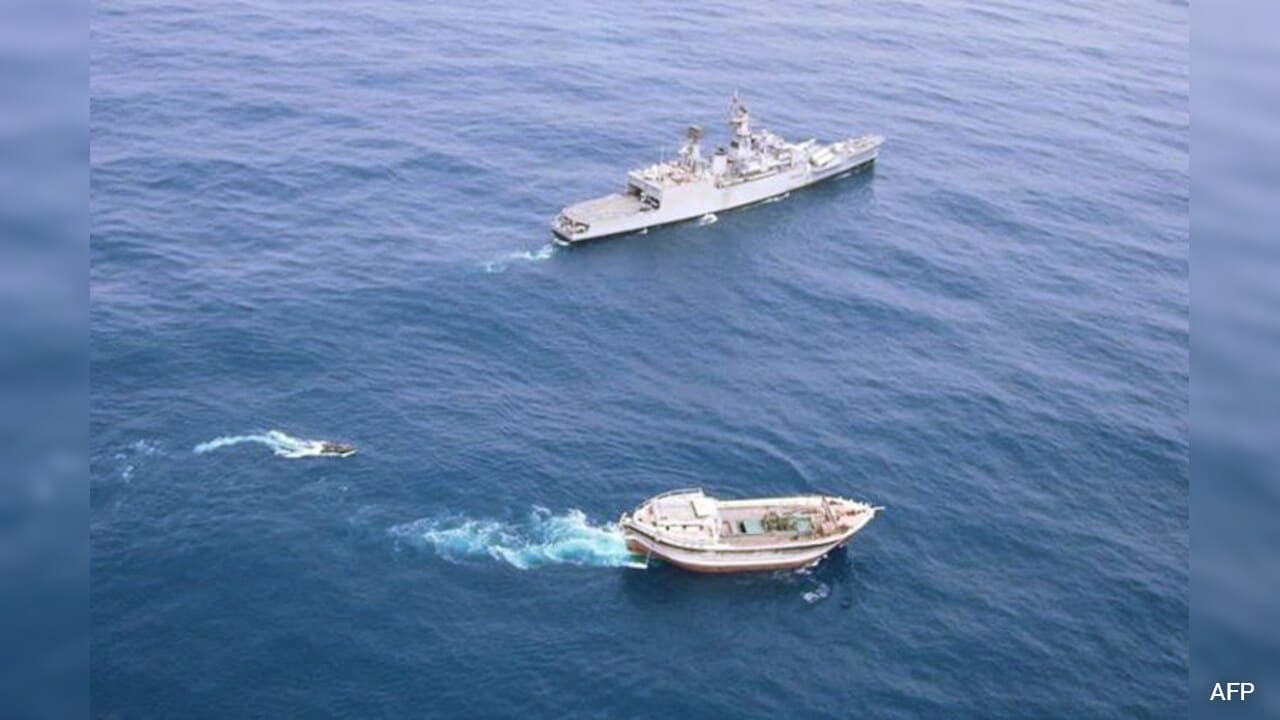
Two commercial fishermen walked away from a five-day ordeal adrift in the open Pacific Ocean, surviving inside an oversized plastic cooler box after their vessel sank. The incident, which unfolded off the coast of the Federated States of Micronesia and caught the attention of international maritime agencies, highlights a stark reality. Most people perish within hours of losing their vessel to the open sea. Hypothermia, severe dehydration, and panic usually dismantle human endurance long before a rescue vessel cuts through the horizon.
Yet these men beat the ocean's grim statistics. Discover more on a connected subject: this related article.
Understanding how they survived requires looking past the miraculous headlines and examining the hard mechanics of open-ocean survival. Marine environment exposure is an unforgiving math problem. When a boat goes down, the human body enters an immediate physiological crisis. Saltwater spray accelerates core temperature loss. Wind chill strips heat from wet skin at an exponential rate. Without fresh water, the kidneys begin to shut down within seventy-two hours, triggering acute delirium.
The fishermen did not survive on luck alone. They survived because they accidentally or intuitively utilized the exact physical containment principles taught in advanced military survival schools. Additional reporting by Al Jazeera highlights comparable views on this issue.
The Physics of the Floating Vault
Insulated plastic containers are designed to keep internal temperatures cold by blocking thermal transfer from the outside world. On the water, that exact engineering flips its utility. A heavy-duty insulated ice chest acts as a thermal shield against the relentless glare of the tropical sun by day and the biting wind chill by night.
Open ocean survival experts know that exposure is the primary killer. Sharks and thirst get the press, but hypothermia kills in the tropics just as surely as it does in the Arctic, driven by evaporative cooling from constant sea spray.
By pulling themselves into a closed or partially sealed insulated box, the men created a micro-climate. They reduced wind exposure to near zero. They stopped the convective heat loss that strips energy from the human frame.
- Thermal Mass: Enclosed spaces trap body heat, keeping ambient temperatures inside the container significantly higher than the surrounding gale.
- Moisture Retention: A confined container limits air circulation, reducing the rate of sweat evaporation and slowing down dehydration.
- Profile Reduction: A low-riding container minimizes the wind sail effect, preventing the makeshift refuge from spinning wildly or capsizing in heavy swells.
Standard life rafts are engineered with dual chambers and ballast bags for this exact reason. When those commercial rafts fail or go down with the ship, improvising a container that floats low and blocks the wind is the difference between a five-day survival story and a closed Coast Guard case file.
The Psychological Crucible of Isolation
Five days on the Pacific is a masterclass in psychological disintegration. The human brain craves stimuli. In the middle of an endless blue flatland, sensory deprivation sets in quickly, followed closely by auditory and visual hallucinations.
Veterans of maritime disasters report that the second or third day is when minds break. The sound of slapping waves starts to mimic human voices. Shadows on the horizon morph into nonexistent rescue ships. Succumbing to panic in these moments leads to erratic movements, accidental drowning, or drinking seawater out of sheer desperation.
Seawater contains roughly three point five percent sodium chloride. Drinking it forces the kidneys to use more water than the body absorbs just to flush the excess salt out, accelerating renal failure and accelerating fatal madness.
The men in the cooler box maintained their faculties. They managed the terror of the unknown. They kept their physical movements restricted to conserve vital metabolic energy. Every calorie burned inside that box was a calorie stolen from their baseline survival timeline.
The Flawed Architecture of Modern Coastal Safety
Every time a story like this breaks, public fascination centers on the miracle. Media outlets run feel-good segments about the triumph of the human spirit. They miss the structural failure that put two men into a plastic ice box in the first place.
Commercial fishing remains one of the most perilous occupations on the planet. Small-scale operators across the Pacific basin frequently operate vessels that lack modern Emergency Position-Indicating Radio Beacons, satellite tracking arrays, or stable life rafts. Safety equipment is expensive. Profit margins are thin. When a squall hits or a hull breaches, crews are left scrambling for whatever debris floats.
The reliance on improvised flotation devices is an indictment of maritime safety infrastructure in developing regions. If a multi-million-dollar cargo ship goes down, automated distress systems trigger instant international responses. When an artisanal or small commercial fishing boat slips beneath the waves in remote island chains, the search often begins only after someone notices they missed a port call.
Technology exists to prevent these terrifying drifts. Personal locator beacons are smaller than a smartphone and broadcast a precise GPS coordinate directly to satellite constellations. Yet, cost barriers and regulatory gaps leave thousands of workers exposed every single day.
The Reality of Search and Recovery at Sea
Finding a floating object in the Pacific Ocean is roughly equivalent to locating a specific grain of sand on a sprawling desert highway. The search area expands exponentially with every passing hour as ocean currents carry debris across unpredictable vectors.
Rescue coordinators utilize complex drift modeling software. They input wind speed, surface current data, wave heights, and the specific windage profile of the object in question.
- Leeway Factor: The speed and direction that wind pushes an object relative to the water current.
- Swell Direction: How underlying oceanic swells push floating cargo across massive distances.
- Vector Projection: Calculating where the object was when the vessel sank versus where tidal shifts moved it over seventy-two hours.
An oversized cooler box has a very low windage profile compared to a standard life raft. It sits low in the water. This makes it notoriously difficult for spotters in fixed-wing search aircraft to pick out against whitecaps and breaking waves. The visual signature of a white or blue plastic box blends seamlessly into the endless expanse of sea foam.
The fact that search planes or passing vessels spotted them underscores a massive stroke of fortunate timing, colliding with disciplined endurance.
Survival at sea strips away every illusion of human control. The ocean does not negotiate, and it does not offer second chances to those who misunderstand its weight. These two fishermen return to dry land carrying an incredible tale, but the true takeaway remains etched in the stark reality of maritime risk. When the ship goes down, the equipment you have in your hands dictates your fate, and sometimes that equipment is nothing more than an empty ice chest and an iron will to see the sunrise one more time