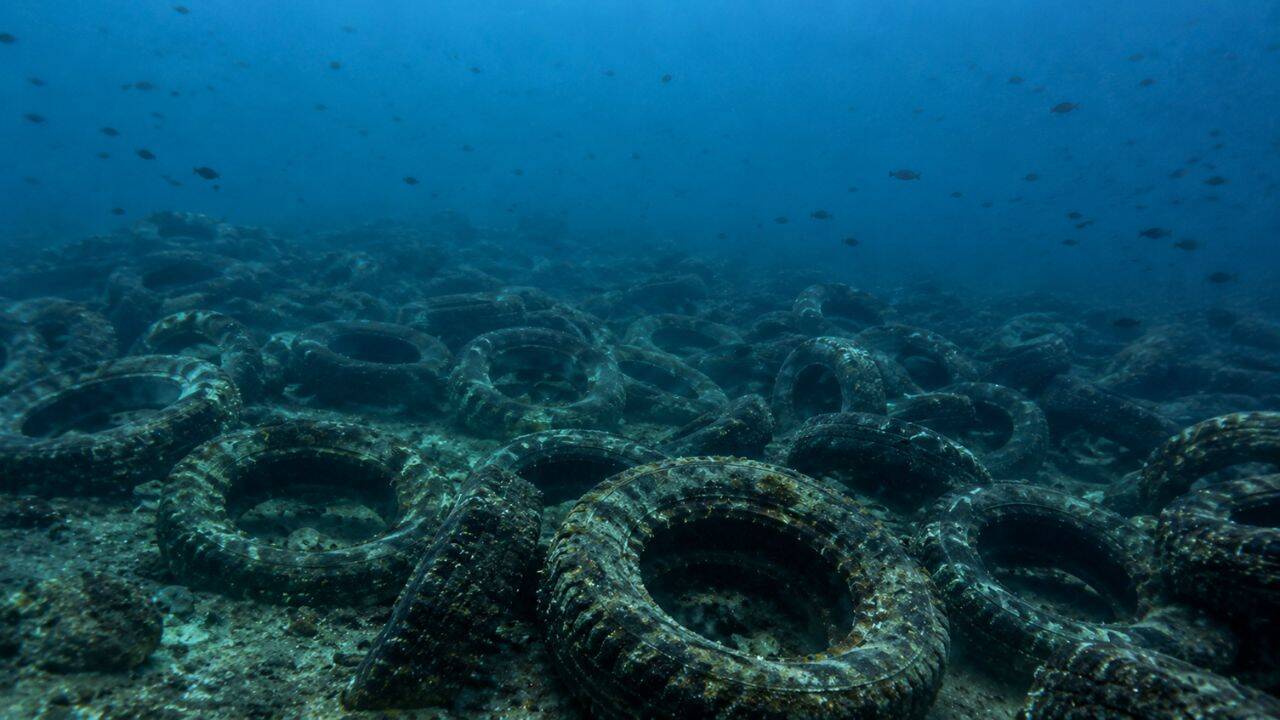
Picture a fleet of private boats and a U.S. Navy ship dumping two million old car tires straight into the Atlantic Ocean. It sounds like an illegal waste-disposal nightmare. Back in the early 1970s, local authorities and corporate sponsors called it an innovative environmental fix.
They were wrong. Big time.
That massive pile of rubber became the Osborne Reef, sitting about a mile and a half off the coast of Fort Lauderdale, Florida. Today, state agencies are still grappling with the fallout. If you think ocean pollution is only about modern single-use plastics, look at how a 1970s recycling scheme turned into a half-century underwater disaster.
The Logic Behind the Rubber Wasteland
Why would anyone sink millions of tires on purpose? Context matters. In the 1970s, municipal landfills faced an avalanche of discarded rubber. At the same time, coastal fishing communities wanted bigger fish populations and better game-fishing spots.
Enter the artificial reef concept. Marine visionaries thought sinking heavy, hollow objects would give fish a place to hide and help coral grow. Big brands like Goodyear even promoted the idea. Broward Artificial Reef Incorporated organized a volunteer fleet of over a hundred private boats to help submerge bundles of tires tied together with steel clips and nylon straps.
It felt like a win-win. Clear out local dumps, build an underwater paradise. Nobody stopped to ask what saltwater does to steel and nylon over decades.
When Good Intentions Meet Atlantic Hurricanes
Saltwater is brutal. Within a few years, the steel clips rusted through and the nylon straps rotted away.
Once the bindings snapped, the tires stood alone. They weren't heavy enough to stay anchored like concrete structures. When tropical storms and hurricanes slammed the South Florida coast, those loose tires turned into a destructive underwater army.
Instead of hosting thriving coral, the tires rolled across the ocean floor. They crashed into living, natural coral reefs, smashing and smothering the very marine life they were supposed to protect. William Nuckols, a coordinator involved in early recovery efforts, famously described the site as a constantly killing coral-destruction machine.
Fish largely ignored them. Algae barely grew on the slick rubber. The ocean floor off Fort Lauderdale became a barren wasteland of black vulcanized rubber.
The Endless Extraction Effort
Cleaning up two million underwater tires is brutally hard. You can't just drag a giant net across the seabed without destroying what little natural reef is left.
Recovery requires specialized dive teams, heavy lifting equipment, and careful sorting. Early pilot programs kicked off in the mid-2000s, backed by groups like the National Oceanic and Atmospheric Administration and the U.S. Navy. Divers hauled out tens of thousands of tires during initial surges, but the sheer volume meant progress was painfully slow.
The Florida Department of Environmental Protection has continuously renewed long-term contracts to clear out the remaining debris. State data shows hundreds of thousands of tires have been pulled from the water, yet recent surveys still map hundreds of thousands more scattered across thousands of acres of seabed. Current state contracts stretch well into the 2030s to keep the extraction moving.
What This Mistake Teaches Us Today
We love quick fixes. When a new environmental technology or waste-management hack pops up, society loves to scale it immediately without testing long-term durability.
The Osborne Reef stands as a permanent warning sign. If you alter a natural ecosystem, you better understand the chemistry and physics of decades-long exposure. Fixing an environmental blunder costs a thousand times more than doing the research beforehand.
Florida's rubber ghost town won't vanish overnight. Every tire dragged onto a barge represents a physical reminder of past overconfidence. Until the last piece of rubber leaves the Atlantic floor, the cleanup goes on.