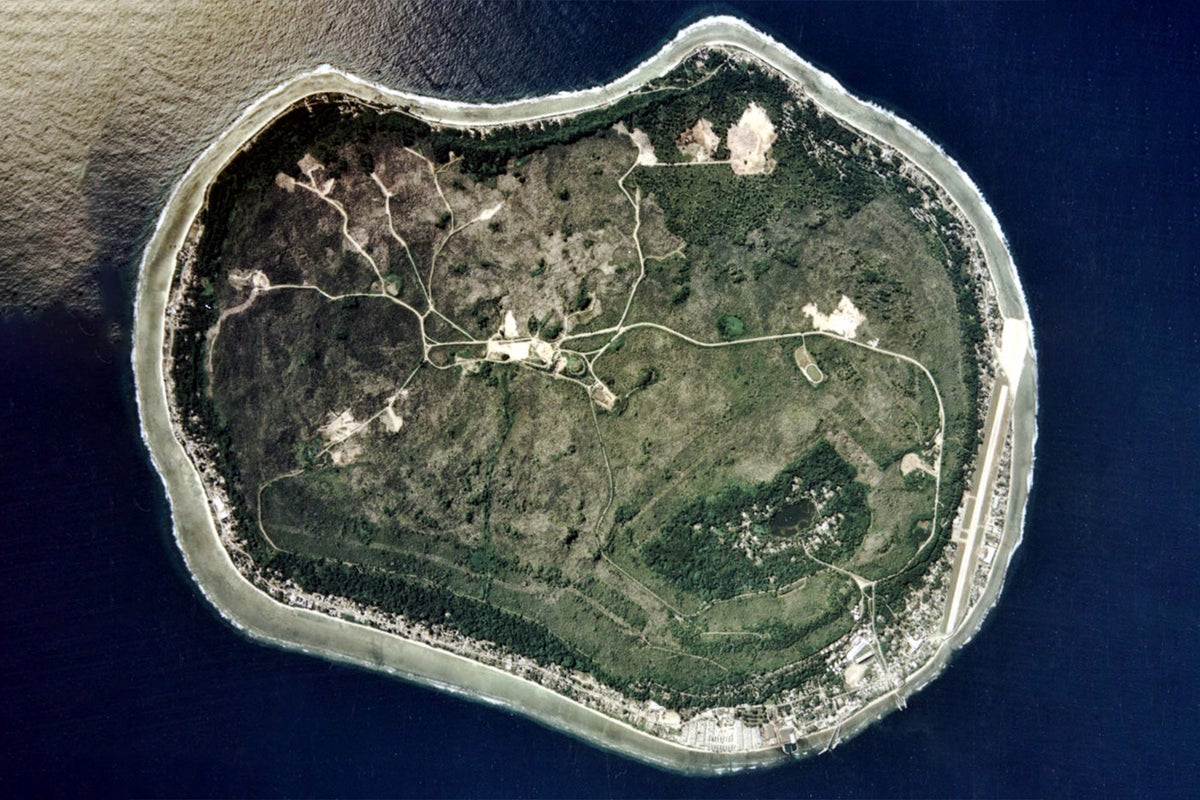
National sovereignty is historically tethered to defined territorial landmasses. When rising sea levels systematically erode the physical foundation of a state, the traditional paradigm of international law faces an unprecedented stress test. Tuvalu, the third-smallest independent nation-state globally, represents the vanguard of this structural crisis. Comprising a cluster of nine low-lying coral atolls in the South Pacific, the nation faces complete inundation by the end of the twenty-first century under current climate trajectories.
The institutional response to this existential threat extends far beyond mere relocation logistics. It requires an aggressive re-engineering of international legal frameworks, digital infrastructure, and constitutional continuity. Understanding Tuvalu's ongoing transformation demands an analysis of three distinct vectors: physical vulnerability models, constitutional innovation via digital statehood, and the geopolitical reconfiguration of maritime boundaries. Also making headlines lately: Why Empty Missile Silos Mean America is Winning Not Losing.
The Physical Vulnerability Matrix
The geographic configuration of Tuvalu creates a hyper-vulnerable exposure profile. The total land area spans approximately twenty-six square kilometers, with no point rising higher than 4.6 meters above mean sea level. Coral atolls are not static geological formations; they are dynamic ecosystems dependent on a fragile equilibrium between sediment generation, wave energy, and coral growth rates.
As global ocean temperatures rise and ocean acidification accelerates, coral calcification declines. Simultaneously, thermal expansion of sea water and polar ice sheet melting drive absolute sea level rise at a rate outpacing the global average in the western tropical Pacific. More insights on this are explored by Al Jazeera.
The vulnerability function can be broken down into three compounding physical failures:
- Subsurface Seawater Infiltration: Porous coral foundations allow saltwater to seep upward through the ground during high spring tides, contaminating the freshwater lens, destroying root systems of traditional crops like pulaka, and inducing chronic soil salinization.
- High-Energy Wave Impact: Extreme weather events and storm surges bypass diminished fringing reefs, directly stripping coastal sediment and undermining critical civil infrastructure, including the capital's main airstrip on Funafuti.
- Inadequate Sediment Accretion: Natural sand replenishment mechanisms fail to match the velocity of coastal erosion, resulting in a net structural deficit of landmass.
These physical constraints dictate that traditional adaptation strategies, such as coastal armoring or land reclamation, offer diminishing returns. The capital expenditure required to maintain habitable dry land against accelerating sea level rise exceeds the entire gross domestic product of the microstate multiple times over. Consequently, state survival requires divorcing national existence from physical territory.
The Constitutional Innovation of Digital Statehood
To address the scenario of total physical submersion, the government of Tuvalu initiated a radical legal and structural project known as the Future Now Initiative. At its core, this policy confronts a fundamental limitation of the 1933 Montevideo Convention on the Rights of States, which traditionally requires a permanent population, a defined territory, government, and the capacity to enter into relations with other states.
If territory disappears, traditional international legal recognition risks evaporation. Tuvalu’s strategy neutralizes this vulnerability through two complementary maneuvers: constitutional amendment and the digital twin project.
The constitutional framework was revised to explicitly state that Tuvalu's sovereignty, statehood, and maritime zones will endure permanently in perpetuity, regardless of the physical disappearance of its islands or the relocation of its population. This unilateral declaration forces international jurisprudence to grapple with a new category of political entity: the non-territorial sovereign state.
Complementing this legal maneuver is the digital nation project. The government is constructing a virtual replica of its islands, culture, and administrative functions in the metaverse and cloud environments. This system preserves core state operations, historical archives, and civil registries.
Yet, digital statehood introduces severe structural dependencies. A virtual government relies entirely on foreign-hosted server infrastructure, undersea fiber-optic cables, and uninterrupted global energy grids. If a displaced nation loses its physical territory, its digital sovereignty becomes structurally subordinate to the jurisdictions hosting its servers. Protecting this data sovereignty requires binding multilateral treaties that grant extraterritorial diplomatic immunity to digital state registries, transforming cloud infrastructure into sovereign soil equivalent to an embassy.
Geopolitical Reconfiguration of Maritime Boundaries
While physical land disappears, the economic value of Tuvalu shifts entirely to the ocean. Under the United Nations Convention on the Law of the Sea, an island nation generates exclusive economic zones extending two hundred nautical miles from its baselines, encompassing vast swaths of the Pacific Ocean rich in pelagic fisheries and potential deep-sea mineral deposits.
The primary legal hazard lies in the technical definition of baselines. Traditionally, baselines are drawn from low-water lines along the coast. As coastlines erode and atolls submerge, these baseline markers risk disappearing or shifting inward, which would theoretically trigger a contraction of maritime zones and the forfeiture of billions of dollars in sovereign resource rights.
To counteract this, Tuvalu, alongside neighboring Pacific Island forums, has adopted a stable baseline doctrine. Under this operational logic, once baselines are legally established and deposited with the Secretary-General of the United Nations, they remain fixed permanently, regardless of future physical coastal recession or complete inundation.
This shift transforms Tuvalu from a land-based microstate into a high-seas oceanic power. The primary economic engine transitions from domestic land use to international maritime resource management, licensing fees from tuna fisheries, and potential revenue from international seabed authority regulations. However, enforcing these maritime claims without a physical naval presence or coastal surveillance infrastructure creates a persistent enforcement deficit, inviting illegal, unreported, and unregulated fishing by foreign fleets.
Strategic Operational Forecast
The survival of Tuvalu as a recognized sovereign entity over the next fifty years depends on the institutionalization of a new class of international law. The traditional Westphalian model of statehood, which binds political authority strictly to territorial geography, is obsolete for low-lying atoll nations.
Bilateral agreements, such as the Falepili Union signed with Australia, offer an intermediate operational model. This treaty establishes a specialized migration pathway granting climate-displaced Tuvaluans permanent residency rights in Australia, while simultaneously binding Tuvalu to consult Australia on defense and security commitments. This mechanism solves the human security crisis through managed diaspora formation while maintaining administrative continuity.
The ultimate viability of this model rests on global legal consensus. If major maritime powers accept perpetual maritime boundaries and digital statehood, Tuvalu will establish a legal precedent for dozens of other climate-vulnerable island nations facing identical trajectories. If international courts reject these innovations, sovereignty will dissolve alongside the coral.
Secure long-term operational continuity for submerged or disappearing states by codifying three foundational mechanisms into international treaties: legally binding recognition of permanent maritime baselines irrespective of land loss, universal diplomatic immunity for cloud-based civil registries, and formal integration of climate-induced diaspora populations into the labor markets and civic structures of larger host nations without forfeiting their original citizenship rights.