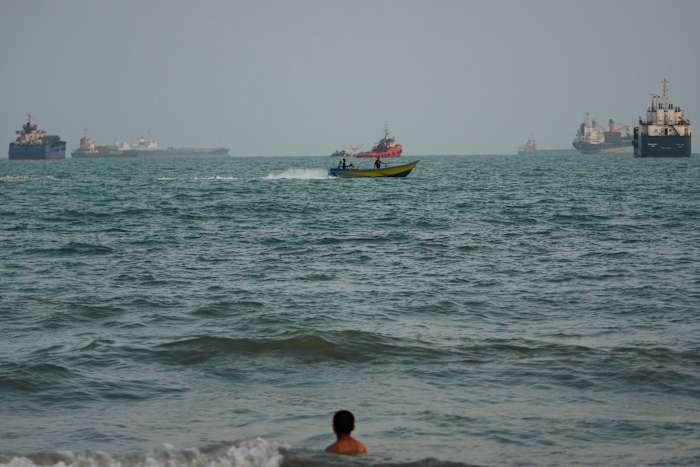
Panama’s endorsement of India’s candidacy for a permanent seat on the United Nations Security Council (UNSC) is not merely a diplomatic gesture. It is a calculated move designed to protect its own sovereignty and commercial assets amidst growing global trade rivalries. When Foreign Minister Javier Martinez-Acha Vasquez publicly declared India an "emerging superpower" entitled to global governance reform, he signaled a structural shift in how middle-market trade hubs view multi-polar security.
The primary driver behind this diplomatic alignment is not shared bilateral history, but the escalating friction surrounding major global maritime bottlenecks. Understanding Panama’s strategic maneuvering requires deconstructing the operational pressures on the Panama Canal, the architectural paralysis of the UNSC, and India’s growing role as a counterweight in global logistics.
The Strategic Triad Driving Panamanian Realignment
Panama’s foreign policy towards India rests on three interconnected imperatives:
- Maritime Neutrality Guarantees: A critical goal for Panama is securing India’s formal accession to the Neutrality Treaty of the Panama Canal. As global supply chains face disruptions in alternative routes like the Suez Canal, traffic through Panama has become increasingly valuable. Securing multi-polar support—particularly from non-aligned heavyweights like India—hedges Panama against unilateral pressure from major powers.
- Institutional Governance Re-balancing: The institutional framework of the UNSC remains frozen in 1945 realities, dominated by the Permanent Five (P5). Panama’s backing of India, alongside its own push for Latin American representation, is designed to break P5 deadlocks that routinely stall responses to international security crises.
- Security and Intelligence Integration: Panama seeks to mitigate transnational risks by pairing economic cooperation with security intelligence. Intersecting networks of organized crime, narco-trafficking, and global terrorism require international intelligence-sharing arrangements beyond traditional Western channels.
The Structural Mechanics of UNSC Expansion
The United Nations Security Council operates under an asymmetrical power structure. Five permanent members retain veto authority, while ten non-permanent members rotate on two-year terms without veto capability. This design creates systemic paralysis when P5 national interests conflict, preventing effective action on major global crises.
               [ UNSC Current Voting Mechanics ]
                              │
       ┌──────────────────────┴──────────────────────┐
       ▼                                             ▼
[ P5 Members ]                               [ 10 Non-Permanent ]
(Hold Veto Power)                            (No Veto Power)
       │                                             │
       └──────────────────────┬──────────────────────┘
                              ▼
                [ Unilateral Veto Gridlock ]
India’s campaign for permanent inclusion—supported by Panama and the broader G4 coalition (India, Brazil, Germany, Japan)—focuses on reforming this decision-making bottleneck. However, the process faces distinct structural obstacles:
- Article 108 Amendment Barrier: Amending the UN Charter requires a two-thirds vote in the UN General Assembly followed by ratification from all P5 members. Any P5 state can unilaterally block structural expansion.
- The Veto Paradox: Existing P5 members resist diluting their influence. Proposals to grant new permanent members seats without veto power risk creating a second-tier status that fails to resolve core governance imbalances.
- Regional Rivalry Coalitions: Regional opposition groups, such as the Uniting for Consensus (Coffee Club), actively block G4 bids by proposing expanded non-permanent categories instead of new permanent seats.
Hedging canal Neutrality Amid Global Tension
Panama’s diplomatic outreach directly reflects its economic exposure. The Panama Canal handles a significant portion of global maritime trade. As geopolitical conflicts disrupt alternative transit lanes, the strategic value of the canal increases.
By recruiting India into the treaty framework governing the canal's neutrality, Panama achieves two objectives:
- Diversified Risk: Broadening the coalition of treaty signatories beyond traditional Western allies reduces the risk that the canal becomes a flashpoint during broader conflicts.
- Trade Corridor Continuity: India’s expanding commercial footprint and demand for energy products make it a major stakeholder in global shipping stability. Engaging New Delhi directly integrates Indian commercial interests into the long-term defense of canal neutrality.
   [ Suez Canal Disruptions ] ────► [ Traffic Rerouted to Panama ]
                                              │
                                              ▼
[ Geopolitical Pressures ] ────► [ Panama Seeks Neutrality ]
                                              │
                                              ▼
                                 [ Recruits India as Partner ]
Diplomatic Synergies Beyond Maritime Security
Panama's alignment with India extends into shared operational priorities across global governance and security:
- Counter-Terrorism and Intelligence: Both nations face vulnerabilities from cross-border illegal networks. Recognizing the link between narco-trafficking and global terror financing, Panama’s foreign policy emphasizes intelligence cooperation with India to secure trade routes and financial corridors.
- Latin American Institutional Access: Panama’s support for Indian UNSC inclusion is paired with an explicit push for a dedicated permanent seat for Latin America and the Caribbean. Building cross-regional coalitions links South Asian and Latin American interests directly, challenging traditional regional power blocks.
The Strategic Path Forward
Panama’s endorsement provides valuable diplomatic momentum for India's UNSC candidacy, but converting bilateral support into structural reform requires clear execution steps:
- Formalize Neutrality Treaties: New Delhi should accept Panama's invitation to sign the Panama Canal Neutrality Treaty, securing a recognized stake in Latin American maritime infrastructure.
- Force Text-Based Negotiations: India and its allies must push to shift UN reform discussions from general debates to concrete, text-based negotiations with strict timelines.
- Expand Intelligence Frameworks: Establish formal bilateral channels between Indian and Panamanian security agencies to address illicit financial flows and maritime security threats.
By binding maritime logistics, trade route security, and institutional reform into a single strategic framework, Panama and India demonstrate how middle powers and emerging global actors can reshape international governance.