The receipt was four inches long, printed on thermal paper that was already fading in the fluorescent glare of a suburban Ohio grocery store.
Two gallons of milk. A carton of eggs. Three pounds of ground chuck. A gallon of unleaded gas bought ten minutes earlier at the pump outside, where the digital numbers had clicked upward with the cold, rhythmic indifference of a metronome. For a hypothetical composite of the American swing voter—let’s call him Marcus, a forty-two-year-old logistics coordinator in Medina County—that strip of paper wasn't an economic indicator. It was a physical weight in his coat pocket.
Two years earlier, Marcus had stood in a damp elementary school gymnasium and cast his ballot for a promise. The promise was simple, muscular, and deeply personal: the wars would stop, the borders would close, and the cost of keeping a family warm and fed would finally come down to earth.
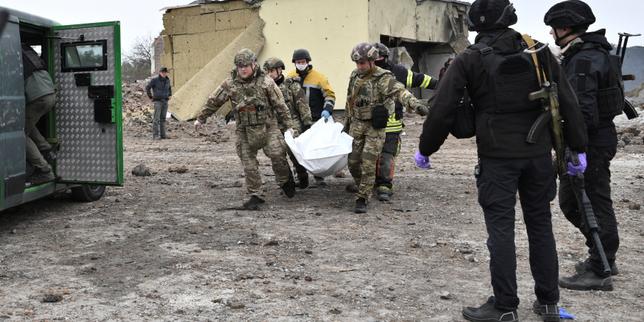
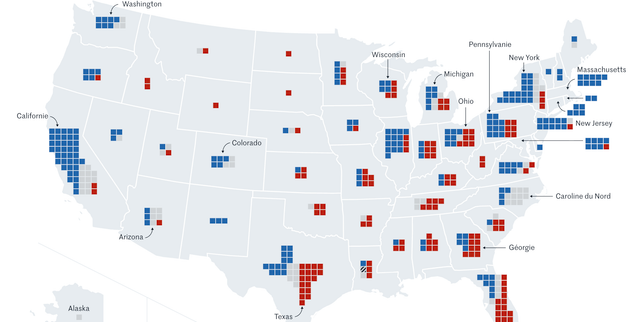
Then came the desert. Then came the Strait of Hormuz. And by the first Tuesday of November 2026, when the ballot boxes were sealed and the cable news maps bled from crimson to blue, the political autopsy didn't begin in a strategy room in Washington. It began with Vice President JD Vance stepping up to a microphone and saying the quiet part out loud.
The Iran war, Vance admitted, was the reason the Republicans lost the midterms.
It was a stunning moment of candor in a town built on deflection. Usually, after a electoral shellacking, the losing party blames messaging. They blame turnout models, redistricting quirks, or a hostile press. They rarely point a finger directly at the smoking crater in the middle of their own foreign policy. Yet there was the Vice President, looking into the cameras and naming the ghost that had haunted every Republican town hall from Pennsylvania to Arizona.
To understand why a conflict seven thousand miles away dismantled a governing coalition in the American heartland, you have to look past the troop movements and the diplomatic cables. You have to look at what happens to a marriage—political or otherwise—when one partner breaks the single vow that brought them together.
The Architecture of a Broken Promise
Politics is rarely about policy papers. It is an emotional contract.
When the Republican ticket won the White House in 2024, they did so by forging an unlikely alliance between traditional fiscal conservatives and a massive, exhausted bloc of working-class populists. These were voters who had watched their sons and daughters fight in Iraq and Afghanistan while their own towns hollowed out. They were tired of policing the world. When JD Vance campaigned across the Rust Belt, his most potent applause line wasn't about tax brackets; it was a vow that American blood and American treasure would no longer be spent on endless Middle Eastern entanglements.
Think of that coalition like a suspension bridge. On one tower sat the promise of economic nationalism—cheap energy, reshoring factories, taming inflation. On the other tower sat restraint—no new wars. The cables holding the entire roadway up were woven from trust.
When the United States became entangled in direct military conflict with Iran, it didn't just strain those cables. It took a blowtorch to the tower.
Consider what happens next when a superpower enters a shooting war in the Persian Gulf. You don't need a degree in macroeconomics to trace the shockwaves, because you feel them at the gas pump before the evening news even finishes its opening montage. The Strait of Hormuz is the jugular vein of global energy; roughly a fifth of the world's petroleum passes through that narrow stretch of water. Even the threat of mines, drone swarms, or naval blockades sends crude oil futures spiking like a fever chart.
For months leading up to the November 2026 elections, voters like our hypothetical logistics coordinator in Ohio watched the administration's domestic agenda vanish into the sand. Every dollar earmarked for infrastructure or tax relief suddenly had to compete with the staggering cost of naval deployments, missile defense interceptors, and wartime logistics. Inflation, which had begun to cool, caught a second wind from rising shipping and fuel costs.
At the kitchen table, foreign policy ceases to be abstract the moment it eats into the grocery budget.
The Anatomy of Electoral Exhaustion
I remember talking to a county party chair in western Pennsylvania during the final stretch of the campaign, a man who had spent thirty years knocking on doors in steel towns that hadn't poured molten iron since the eighties. He told me that the hardest voters to persuade aren't the ones who are angry at you. Anger means they still care. Anger means they are still engaged in the argument.
The hardest voters are the ones who just shut the door softly.
"They look at me," he said, standing on a porch where the paint was peeling like old birch bark, "and they say, We voted to fix East Palestine and Youngstown. Why are we fighting in Tehran?"
He didn't have an answer. Nobody on the trail did.
Historically, midterm elections act as a brutal referendum on the party in power. Since the Civil War, the president’s party has lost House seats in nearly every single midterm cycle—a gravitational pull so reliable that political scientists treat it like a law of physics. Yet there is a profound difference between a routine midterm correction and a revolt by your own base.
Vance’s post-election diagnosis cut straight to that distinction. The Republicans didn't merely lose independent swing voters who were spooked by geopolitical instability; they suffered a catastrophic collapse in enthusiasm among the very anti-interventionist voters who had carried them to victory two years prior.
To grasp the psychological toll of that shift, imagine hiring a contractor to fix a leaking roof on your house. He promises you he won't touch the backyard, won't dig up the plumbing, and will keep costs low. Six months later, your roof is still dripping, your backyard is a mud pit of heavy machinery, and he hands you a bill for a neighbor's fence. You don't hire his crew again in November. You stay home, or you hand the keys to someone else just to make the noise stop.
That is precisely how the Iran conflict functioned inside the American electorate. It acted as a wedge driven directly into the heart of the Republican coalition:
- The Hawks vs. The Restraint Wing: Traditional defense hawks inside the GOP cheered the muscular projection of American power, insisting that deterrence required overwhelming force. Meanwhile, the populist wing—the very movement Vance himself had championed in the Senate—watched in horror as the party drifted back toward the interventionist orthodoxy they thought they had buried.
- The Attention Deficit: A presidency only has so much oxygen. Every hour the White House spent managing escalation ladders in the Middle East was an hour stolen from border enforcement, housing affordability, and domestic manufacturing.
- The Generational Scar: For Millennials and Gen Z voters—demographics Republicans had made historic inroads with in 2024—the phrase "war in the Middle East" doesn't sound like a patriotic rally. It sounds like a recurring nightmare from their childhoods, complete with yellow ribbons, flag-draped coffins at Dover Air Force Base, and twenty years of sunk costs.
Why Vance Said It Out Loud
Washington is a city where truth usually arrives wearing a disguise, sneaking in through background briefings and anonymous leaks. So when the sitting Vice President openly attributes his own party’s midterm defeat to an ongoing war waged by his own administration, you have to ask: why break the unspoken rule of political solidarity?
The answer lies in the brutal arithmetic of political survival.
Vance is not just a member of the administration; he is the standard-bearer of its populist wing and the presumptive heir to its future. If the Republican Party misdiagnoses the 2026 losses—if they convince themselves they lost because they weren't hawkish enough, or because they didn't cut enough corporate taxes—they will double down on the very policies that alienated the working class.
By naming the Iran war as the culprit, Vance was attempting a high-wire act of political triage. He was signaling to the disillusioned base in Michigan, Wisconsin, and Pennsylvania that he heard them. He was drawing a bright, unmistakable line between the "America First" doctrine he campaigned on and the interventionist trap the administration had stumbled into.
It is a risky gamble. Admitting that a war cost you Congress invites immediate attacks from both sides. Democrats seize on the admission as proof of strategic incompetence and broken campaign pledges. Republican defense hawks view it as a dangerous signal of weakness to adversaries in Tehran, Beijing, and Moscow—arguing that a superpower cannot let domestic election cycles dictate its national security obligations.
And honestly, that tension is what makes this moment so genuinely unsettling for anyone watching from the outside. Both arguments carry a terrifying grain of truth. A nation cannot ignore genuine threats to global shipping lanes and regional allies without inviting chaos. Yet a democracy cannot sustain foreign military campaigns when its own citizens feel abandoned, impoverished, and lied to at home.
There is no clean equation to balance those two realities. Only consequences.
The Invisible Stakes of the Next Two Years
Now that the ballots are counted and a divided government prepares to take the gavel in January, the fallout from Vance’s admission will shape everything that happens in Washington—and everything that happens in the Persian Gulf.
A Democratic-controlled chamber of Congress armed with subpoena power and the power of the purse changes the calculus of war overnight. Funding bills for overseas operations will no longer glide through on bipartisan autopilot. War Powers resolutions, once treated as symbolic gestures by backbenchers, suddenly become existential battlegrounds on the House floor.
For the administration, the room for maneuver has shrunk to the width of a razor. Every naval skirmish, every retaliatory strike, every deployment order will now be weighed against the cold reality that the American public has zero appetite for escalation.
Think back to Marcus, standing in that Ohio grocery store with the four-inch receipt crumpled in his fist. He doesn't care about the internal factions of the Republican National Committee. He doesn't read white papers from Washington think tanks about regional deterrence theory or proxy warfare dynamics.
He knows what a gallon of milk costs. He knows what a gallon of gas costs. And he remembers the promise made to him in the autumn of 2024—the promise that for once, his government would look at the map, trace its fingers past the oceans and the deserts, and finally decide to stay home.
In politics, you can survive a bad economy for a season. You can survive a scandal, a gaffe, or a legislative defeat. What you cannot survive is making people feel like fools for believing you.
The fluorescent lights of the supermarket buzzed overhead as Marcus shoved the receipt into his pocket, picked up his plastic bags, and walked out into the cold November rain, the automatic doors sliding shut behind him with a soft, final sigh.