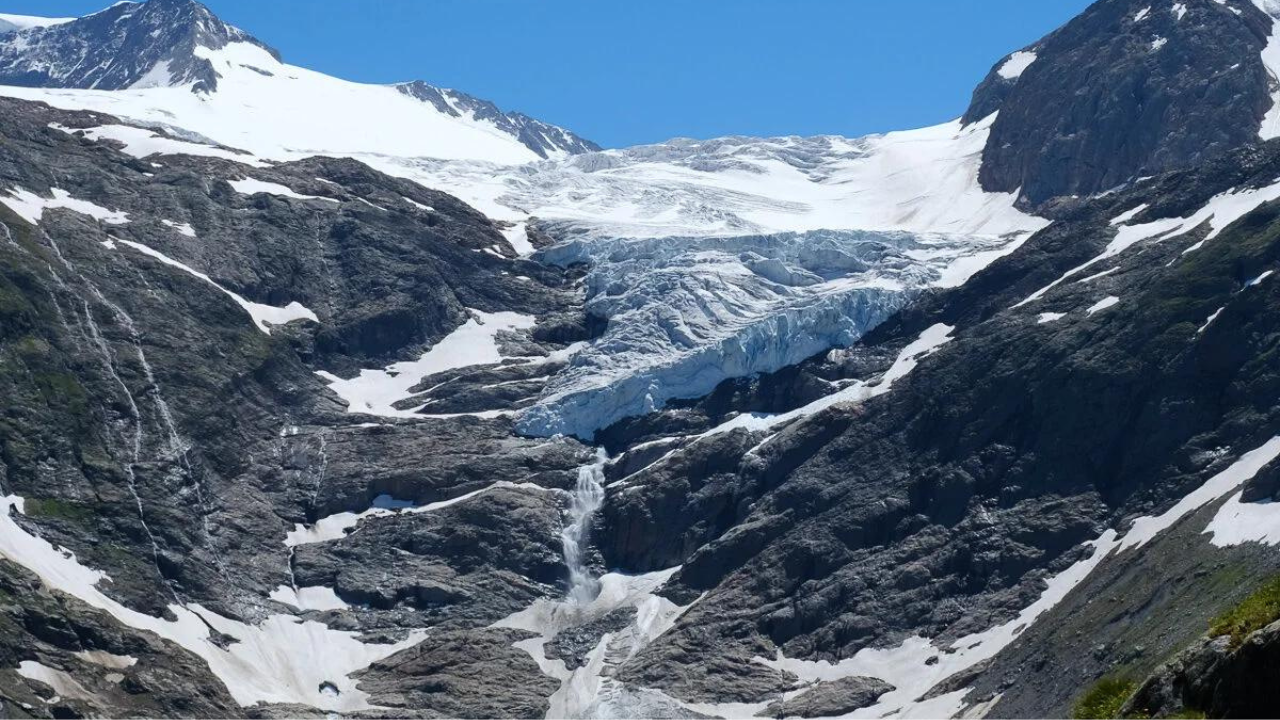
The air at high altitude does not smell like life. It smells like stone, freezing water, and old silence.
In the summer of 1992, two young Belgian climbers stepped into that silence. They were looking for a challenge, a vertical line of ice and granite that would test the limits of their lungs and their resolve. They packed light. They carried ropes, chalk, ambition, and the quiet, invincible arrogance of youth that whispers nothing bad can ever happen to you.
They did not come back down.
For thirty-four years, the mountain kept them. Oh, search parties looked, of course. Families wept into bitter cups of coffee in rain-slicked Belgian kitchens, scanning blurry photographs of crevasse fields. But a glacier is not a graveyard with a map. It is a slow, crushing river of ice, moving inches at a time, grinding everything in its path into powder, swallowing boots and bones and broken carabiners whole. The mountain absorbed them. The world moved on. Wars started and ended. Phones turned from bricks into glowing glass rectangles. Children born the year the men vanished grew up, had their own children, and grew old.
Until last week.
Climate change is an abstraction when we talk about it in degrees Celsius or graphs projected on conference screens. It becomes something entirely different when it spits out a yellowed fleece jacket and a pair of frozen hands.
Around the world, retreating ice fields are playing a grim archaeological game of show-and-tell. As the white armor of the peaks melts away under a warming sky, the dead are waking up. Climbers from the 1920s, missing aircraft from World War II, and two young men from Belgium who simply wanted to see the view from the top have begun to emerge from the blue-white depths.
Consider what happens when a glacier gives up its ghosts.
It is not a neat recovery. The ice does not hand over its secrets gently. It shears them away, battered by decades of pressure, tumbling them down terminal moraines until a hiker or a guide spots something unnatural against the grey shale. A splash of bright nylon. A glint of metal.
When the remains of the two Belgian climbers were finally recovered, forensic teams did not just look at DNA profiles or dental records. They looked at time capsules. The ice preserves things with terrifying fidelity. It keeps the fabric crisp, the leather supple, the pocket change dull but legible. To pull a body from a glacier after thirty-four years is to commit an act of time travel. You are staring at a snapshot of a morning in 1992, frozen in cellular suspension, dragged violently into a century the dead men never knew existed.
Imagine being the family.
For more than three decades, grief has no punctuation mark. It is a sentence that goes on forever, trailing off into a horrific ellipsis. There is no grave to visit. There is no stone to touch. There are only photographs in a drawer that slowly turn yellow at the edges. When the phone rings and a stranger tells you that the glacier has finally let go, the shock is not that they are dead. You knew that. The shock is that the wound has been ripped wide open again, thirty-four years after you thought it had finished bleeding.
It forces us to confront a strange relationship we have with the earth. We treat the planet as a backdrop, a stage set for our weekend hikes and our industrial expansion. We assume that what we drop, what we lose, and what we bury is gone forever. Out of sight, out of mind.
The ice teaches a harsher lesson. The earth remembers everything.
Every footprint, every lost soul, every forgotten piece of gear is tucked away into the cold pantry of the mountains, waiting for the climate to turn the page. The retreating glaciers are writing a history book in reverse. They are unspooling decades of human tragedy, exposing our fragile footprint on a changing globe.
We talk about melting ice in terms of sea level rise and lost habitats. Those are the numbers that matter for survival. But the human cost is written in these quiet, devastating recoveries. Two men who walked out of a tent on a crisp morning in 1992, laughing over camp coffee, thinking about the next pitch, unaware that they were already walking into legend.
The ice has melted. The secret is out.
The families in Belgium finally have a body to bury, a place to put their grief, a period at the end of a sentence that hung in the air for half a lifetime. But as the water runs down the rocky flanks of the peak, feeding the rivers below, the mountain stands a little leaner, a little barer, stripped of its secrets by a world that is running out of cold places to hide our history.