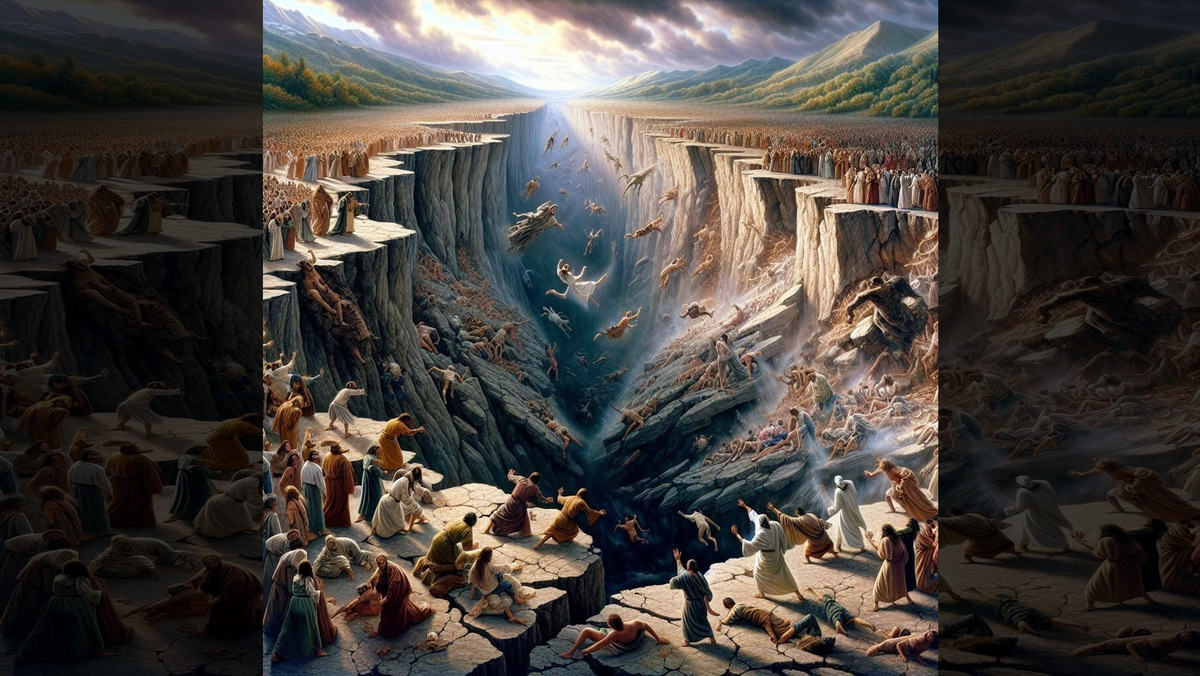
The earth does not warn you with a knock. It tears open with the sound of a falling cathedral, a deep, guttural groan that rattles the teeth in your jaw before your brain can even process what is happening.
I remember the dust. It hung in the orange air like flour, choking the morning light until noon looked like dusk.
When a major earthquake strikes a archipelago as geographically fragmented as Indonesia, the television screens flash red banners for forty-eight hours, and then the world moves on. But the people who survive do not move on. They are left standing on fractured concrete, staring at the empty space where their kitchen used to be, wondering how to feed three children when the road to the market is buried under fifty tons of mud and sheared rock.
Behind the dry reporting of aid shortages and casualty statistics lies a quiet, desperate arithmetic. Let us call a hypothetical survivor Maya. Maya is thirty-four, and yesterday she had a home, a small roadside stall selling rice and fried bananas, and a roof that kept out the monsoon rains. Today, Maya has a plastic tarp, a bruise blooming purple across her forearm, and an empty cooking pot.
The arithmetic of disaster is brutal. When roads buckle and bridges snap like dry twigs, the distance between a warehouse full of clean water and a thirsty child is no longer ten miles. It becomes an impassable chasm. Helicopters can only carry so much weight. Boats can only dock where piers remain standing.
Consider what happens next: the initial shock fades, replaced by the slow-burning panic of scarcity.
Rice bags grow damp in the coastal humidity. Canned goods dwindle. Price gougers emerge from the shadows, trading in human misery, charging triple for bottled water while infants cry in makeshift tent cities pitched on soccer fields. This is the invisible stake of every seismic disaster. The initial tremor kills with sudden violence, but the days that follow threaten with a creeping, silent erosion of hope.
Earthquakes in this part of the world are not anomalies. They are a geologic reality. Indonesia straddles the Pacific Ring of Fire, a horseshoe-shaped basin of intense seismic and volcanic activity where tectonic plates grind against each other with relentless, terrifying force. The Indo-Australian plate subducts beneath the Eurasian plate, locking, straining, and finally snapping free in cataclysmic releases of energy.
History teaches us this pattern with cruel regularity. Aceh, Yogyakarta, Lombok, Sulawesi, Cianjur. Different names, same script. The earth trembles, infrastructure collapses, supply chains shatter, and thousands find themselves sleeping under the open sky, praying the aftershocks will stop long enough for help to arrive.
Yet, numbers on a map fail to capture the sensory reality of survival.
The smell of pulverized concrete mixed with stagnant ditch water. The damp chill of sleeping on bare earth when the tropical downpour arrives unannounced. The heavy silence of a neighborhood where every third house is a mound of timber and corrugated iron.
When aid shortages loom, the fear of starvation is not an abstract policy failure. It is a knot in the stomach that tightens with every passing hour. It is a mother diluting a single packet of instant noodles with twice as much water so three children can share a warm, cloudy broth. It is an elderly man walking five miles in bare feet past crumbled storefronts just to find a functioning well, only to discover the water is brown and smells of sulfur.
We look at these crises from thousands of miles away through flat glass screens, scrolling past headlines between emails and meetings. We tell ourselves that logistics are complicated, that red tape slows delivery, that governments are trying their best. And sometimes, that is true. Supply chain management in a disaster zone is an administrative nightmare of staggering proportions.
But logistics are run by humans. Food is grown by humans. And hunger is felt by humans.
When the machinery of international relief stalls, the human cost is immediate. It is measured in lost pounds on a toddler's frame, in infections spreading through overcrowded camps where sanitation systems were pulverized in seconds, and in the quiet despair of families watching their entire lives turn to dust.
The ground beneath our feet feels permanent. We build our cities, our routines, and our certainties upon it, forgetting that we live on a fragile crust floating over molten fire. When that crust cracks, it takes more than buildings down with it. It takes the illusion of safety.
The rain starts again, drumming a heavy, rhythmic tattoo against the blue plastic sheet overhead. Maya pulls the damp blanket tighter around her shoulders, staring out into the dark where the road used to be, waiting for a truck that may not come until morning.