The first morning of kindergarten smells like floor wax, bruised apples, and quiet panic.
Parents stand along the linoleum wall with their hands shoved deep into coat pockets, watching four- and five-year-olds try to wrestle heavy backpacks onto narrow shoulders. One boy refuses to sit on the alphabet rug. Another girl stares at a wooden puzzle as if it were a locked vault. Across the room, a teacher kneels beside a child whose bottom lip is trembling, speaking in a voice so gentle it barely cuts through the hum of fluorescent lights.
We tend to talk about early education as if it were a line item on a household budget or a political slogan recycled every four years. We toss around phrases like school readiness and early intervention until the words lose their pulse. Eight months ahead in math. Eleven months ahead in reading. Put on paper, those numbers look like neat little trophies on a shelf.
Living beside those numbers feels entirely different. It feels like watching a child who used to shrink away from letters suddenly lean forward, trace a crooked "s" with a sticky finger, and whisper the sound aloud with fierce, unguarded pride.
For years, I doubted the fuss. When my own nieces and nephews were small, I watched well-meaning adults turn playdates into flashcards drills and wondered whether we were stealing hours of cloud-gazing and mud-pie making just to win a race nobody entered. Pushing toddlers to read before they could tie their shoes sounded less like care and more like anxiety wearing sensible loafers.
I was wrong about the mechanism, even if I was right to suspect joyless drilling.
The research behind preschool and transitional kindergarten points to something far deeper than early test prep. When children spend structured, language-rich, socially alive months in preschool or transitional kindergarten—the bridge year designed for young learners who turn five right around the kindergarten cutoff or need extra runway before formal schooling—their gains do not merely flicker for a single semester. Studies tracking these cohorts show children pulling ahead by roughly eleven months in reading and eight months in math.
Think about what eleven months actually means when you are six years old. That is nearly an entire year of life. For a child growing up in a household stretched thin by two jobs, long commutes, or language barriers, an eleven-month head start in reading can be the difference between feeling like a stranger in the classroom and feeling like you belong there.
The Quiet Math of an Early Start
Numbers are stubborn things. They sit quietly in tables and charts, waiting for someone to ask what they cost when ignored.
To make sense of what an eight-month lead in math or an eleven-month lead in reading looks like on the ground, let me sketch a hypothetical scenario—a composite picture drawn from real classroom patterns rather than any single real family.
Picture a hypothetical four-year-old named Mateo. His mother works the afternoon shift at a regional hospital, leaving the house before the neighborhood wakes and returning after dark. Mateo’s grandmother steps in whenever her knees allow, cooking warm tortillas and humming old songs, yet there are only so many hours in a day and only so many books on the low shelf. When Mateo enters a quality preschool classroom—and later steps into transitional kindergarten because his late-summer birthday puts him right on the edge of the traditional kindergarten crowd—his world expands in small, steady increments.
Morning circle is not just singing songs. It is learning to wait two seconds before speaking so another child can finish a thought. Counting wooden blocks is not just reciting numbers from one to ten in a sing-song rush; it is noticing that three blocks plus two blocks stay five even when you push them apart. Sorting buttons by size and color is the quiet ancestor of algebraic thinking, even though nobody uses a word like algebra within earshot of a four-year-old.
In a hypothetical scenario like Mateo’s, the stakes are invisible until they suddenly aren't. A child who struggles to decode basic letter sounds in first grade often starts believing a quiet, devastating lie: I am not smart. Once that belief takes root, school stops feeling like a playground of ideas and starts feeling like a courtroom where you are constantly being judged.
Consider what happens next:
When a child enters primary school already comfortable with phonemic awareness, vocabulary rhythm, and basic number sense, the cognitive load shifts. Instead of spending every ounce of mental energy decoding c-a-t or counting on ten fingers just to figure out seven minus three, that child has brainpower left over for comprehension, curiosity, and connection.
The gap between early-start peers and late-start peers rarely stays small by accident. Because reading fuels almost every other subject—science stories, word problems, history, instructions—falling behind early creates a snowball effect. Getting ahead early creates momentum of a very different kind.
Why Transitional Kindergarten Changed the Conversation
Traditional preschool has long been a patchwork affair in many places. Some families pay steep tuition for half-day programs; others rely on community centers, faith-based rooms, or family members; many go without altogether because the price tag rivals a mortgage payment or spots simply do not exist in their zip code.
Transitional kindergarten arrived to mend a specific seam in that quilt.
For decades, arbitrary cutoff dates—September 1, December 2, or whatever date a state or district picked—decided whether a four-year-old was "old enough" for kindergarten. A child born in late autumn might be placed beside classmates nearly a full year older. At age five, twelve months of neurological and emotional growth is a canyon. One child can hold a pencil with steady control, regulate frustration after a knocked-over tower, and follow multi-step directions; another is still building basic stamina just to make it through lunch without tears.
Transitional kindergarten gives those younger children—and others who benefit from a developmental bridge—a full year tailored to where they actually are rather than forcing them into a mold built for older kids.
Let me use a metaphor here, because abstract policy terms have a way of putting people to sleep. Imagine two runners lining up for a mile race. One has been stretching and jogging lightly on the track for months; the other just stepped out of a car with stiff calves and untied laces. You do not fix that mismatch by shouting louder at the starting line. You fix it by giving the second runner time to warm up.
That is what transitional kindergarten does when it is done well. It respects developmental timing. It pairs play and inquiry with intentional instruction in language, early literacy, and numeracy. And crucially, it often lowers or removes the financial barrier for families during that critical year before standard kindergarten.
Yet even strong programs face real friction. A seat on paper does not guarantee a calm morning at home. Buses run late. Staffing shortages force administrators to juggle aides and substitutes. Teachers carry emotional weight that rarely shows up on a district spreadsheet—comforting a child whose parents are going through a rough separation, noticing subtle speech delays, keeping a restless six-year-old safe near a busy parking lot.
Admitting those messier realities matters. If we pretend early childhood classrooms run like clockwork without strain, families who hit real-world hurdles feel blamed rather than supported. The evidence for preschool and transitional kindergarten is compelling, not because magic dust falls from the ceiling, but because consistent, high-quality human attention compounds over time.
The Classroom Moments Behind the Metrics
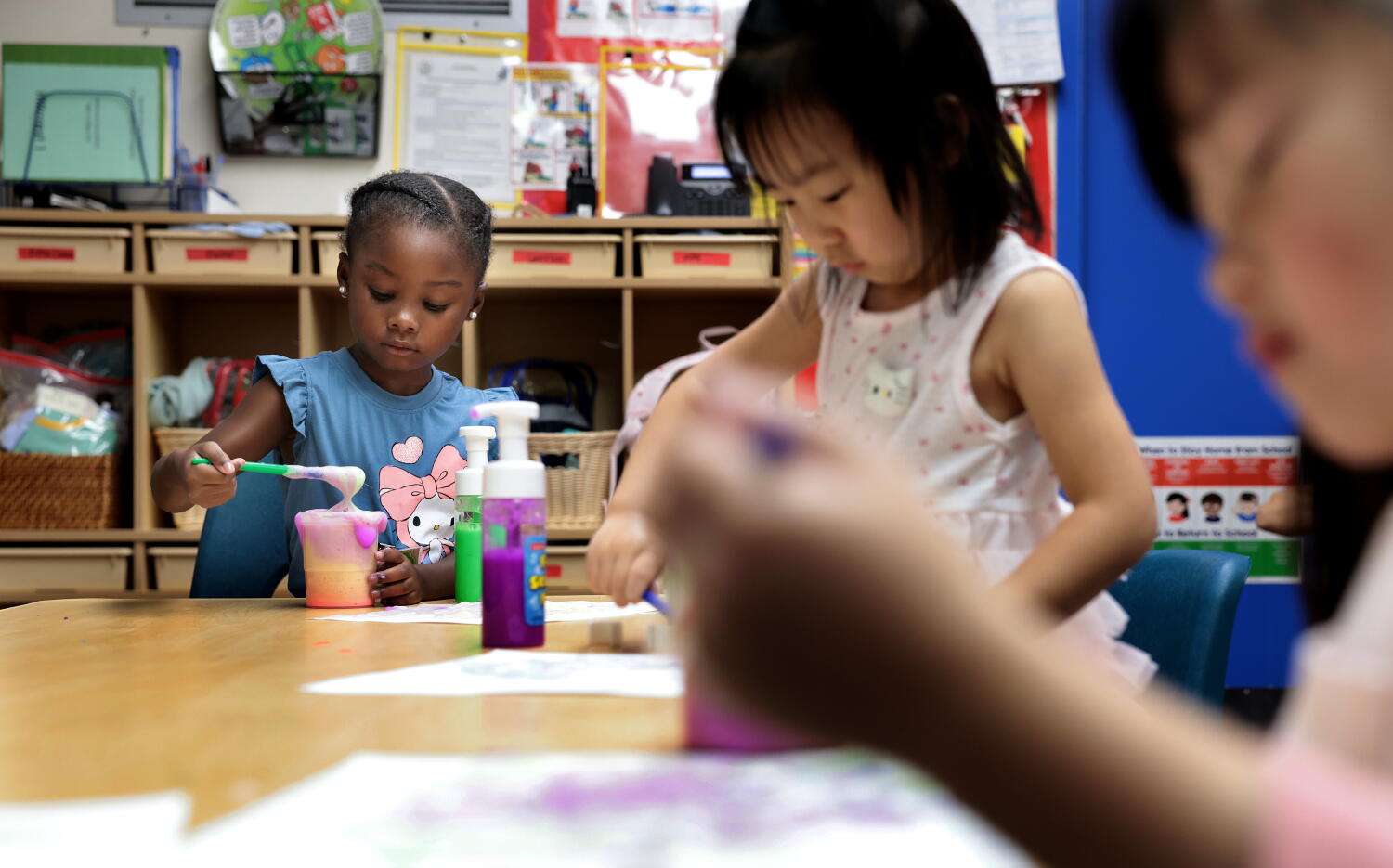
If you ever walk past an early childhood room and see children lying flat on their stomachs with clipboards, or arguing passionately over whether a wet sponge sinks or floats, you are watching the engine of those test gains turn over.
Good early education looks deceptively simple from the hallway. Adults get down on child-level chairs. They ask open questions instead of barking commands. When a child says, "The tower fell down 'cause the wind blew," a skilled teacher might reply, "It leaned to the left before it crashed. What if we put wider blocks at the bottom?"
That single exchange touches vocabulary, cause and effect, spatial reasoning, and emotional resilience—all in fifteen seconds.
Let’s introduce another hypothetical character to see how this plays out across a wider lens. Suppose there is a teacher named Hannah who has spent fourteen years in early classrooms. She has seen trends sweep through districts like weather fronts: rigid worksheets one decade, overly loose free-for-alls the next. What Hannah knows in her bones—from thousands of scraped knees, breakthrough moments, and parent-teacher conferences held at tiny plastic tables—is that young children learn best when curiosity and structure walk hand in hand.
When a four- or five-year-old has access to rich conversation, songs, stories, puzzles, and collaborative play every day, their vocabulary explodes. Words are the hooks we use to hang ideas on. A child who knows the words observe, predict, compare, and half has tools for thinking that a child with a narrower daily word bank has to work much harder to assemble on the fly.
Eight months ahead in math does not come from memorizing multiplication tables at age five. It comes from spatial play, pattern recognition, counting real objects, comparing quantities ("Do we have more crackers or more grapes?"), and solving small everyday puzzles together.
Eleven months ahead in reading does not come from forcing a toddler to sit still for an hour staring at printed pages. It comes from hearing stories read aloud with expression, playing with rhyming sounds, learning how letters map onto speech sounds, and seeing print treated as something meaningful and alive rather than a chore.
Still, parents wrestle with legitimate questions. Will my quiet child get swallowed up in a bigger group? Will a full-day schedule exhaust a four-year-old who still needs downtime? What if the local program feels too rigid, or not structured enough?
Those worries come from love, not indifference. Handing your small child over to any institution requires trust, and trust has to be earned room by room, day by day. Checking a classroom’s warmth, asking how teachers handle conflict and rest, and paying attention to how your own child responds after a few weeks are practical ways to ground hope in reality.
What We Risk When We Treat Early Years as Optional
Step back from individual classrooms and look at the broader arc of a life.
Most of us spend our adult lives trying to catch up on habits, confidence, or skills we wish we had built earlier. We buy books on focus, download language apps, take evening classes, and tell ourselves it is never too late to learn. And it isn't—human brains stay adaptable far longer than old myths claimed.
Still, timing shapes effort. Learning to swim when you are six feels very different from learning when you are thirty-six and acutely aware of deep water. Early childhood is not a magic eraser for every social or economic challenge a family faces, nor is it a substitute for safe housing, nutritious food, or loving caregivers at home.
It is a foundation.
When communities invest seriously in preschool and transitional kindergarten—paying educators wages that reflect the skill the work demands, keeping group sizes sane, and making access fair rather than lucky—the payoff ripples outward. Fewer children need intensive catch-up interventions later just to read a third-grade passage. More families can plan work and care with steadier footing. Classrooms become places where children start on closer footing rather than sorting themselves into winners and strugglers before their milk teeth are even gone.
Think again about that first morning of kindergarten.
Picture a child walking through those doors not with hunched shoulders and a knot in the stomach, but with eyes bright enough to spot the letter magnets on the magnetic board, eager to show a new friend how to stack the blocks so they don't topple.
Eleven months in reading. Eight months in math.
Behind every statistic is a small human being discovering that words have meaning, numbers make sense of the world, and their own voice matters inside a room full of peers. That is not just an early academic advantage. That is a quieter, steadier beginning to a life.