Walk down the National Mall on a humid summer evening, and you can usually hear the quiet weight of history. The marble statues of Lincoln and Jefferson stare into the reflecting pool, frozen in moments of profound national crisis and triumph. But this summer, as the United States reaches its quarter-millennium milestone, the soundtrack to our history is getting an unexpected rewrite.
Imagine standing on that same grass while the bassline of Ice Ice Baby rattles the windows of the Smithsonian.
The official lineup for the Freedom 250 celebration has just dropped, and it feels less like a grand historical summation and more like a late-night infomercial for a cassette compilation. Billed as the "Great American State Fair," the 16-day festival running from June 25 to July 10 aims to celebrate America’s 250th birthday.
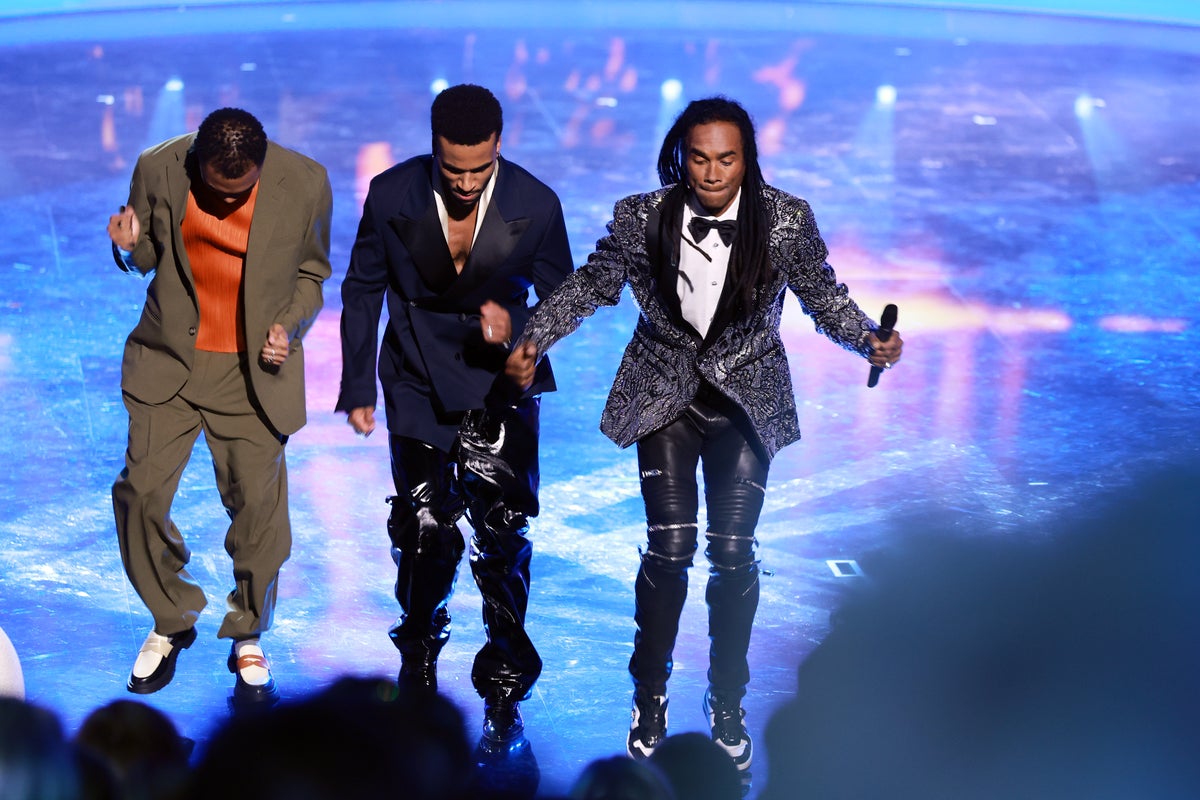
The headliners? Vanilla Ice. Bret Michaels of Poison. Young MC. C+C Music Factory. And, in a twist that defies both geopolitical logic and musical history, Milli Vanilli.
It is easy to laugh. The internet already is. Within hours of the announcement, funk legend Morris Day took to Instagram with a blunt message, complete with sunglasses emoji: "Contrary to rumor, Morris Day & The Time will not be performing... It’s A No For Me."
When the actual booked acts include a duo famous for not singing their own songs, and another whose entire career rests on a lifted Queen bassline, you have to ask a deeper question. How did we get here? How did the 250th anniversary of the greatest experiment in modern democracy become a 1990s time machine?
The answer lies in the invisible friction between power, culture, and pure survival.
A national bicentennial or semiquincentennial is supposed to be a cultural mirror. In 1976, America celebrated its 200th birthday by looking forward and backward simultaneously, balancing the pain of the Vietnam War and Watergate with a shared, forward-looking optimism. The country invited its greatest living artists to thread that needle.
Today, the cultural landscape is fractured by design. The current administration’s relationship with mainstream American art is not just cold; it is nonexistent. The icons who define the modern American songbook—from Bruce Springsteen to Beyoncé, Taylor Swift to Stevie Wonder—are not coming to this party. They would not be caught dead on a stage sponsored by this White House.
When you cannot book the present, you are forced to weaponize the past.
But you cannot just weaponize any past. You need an era that feels safe. You need a moment before the algorithms divided us into echo chambers, back when everyone listened to the same top-40 radio stations while driving to the mall. Enter the dawn of the 1990s.
Consider the psychological comfort of that specific musical era. It was a time of cheap neon, oversized blazers, and beats that forced you to dance whether you liked the song or not. It was the era of the first Gulf War, a moment when American triumphalism was at an all-time high and the complexities of the internet age were still a distant cloud on the horizon. By filling the National Mall with the sounds of Bust a Move and Gonna Make You Sweat, the organizers are trying to manufacture a collective memory of a simpler, less exhausted America.
It is a strategy built entirely on the mechanics of nostalgia. Nostalgia is a powerful narcotic. It smooths over the rough edges of reality, replacing genuine historical reflection with a warm, fuzzy glow.
But look closer at the marquee. The irony thickens until it is almost unbreathable.
Milli Vanilli is scheduled to perform on the National Mall to celebrate American independence. Let that sink in. The group was famously unmasked as a German-produced lip-sync act that stripped two young men of their dignity and forced a Grammy return. More importantly, they were never even American. While their studio session singers hailed from the States, the faces of the brand were European.
Then there is C+C Music Factory, a group that similarly ran into a wall of reality when the powerhouse vocals of Martha Wash were replaced in the music video by a lip-syncing model.
These acts do not represent the triumph of American exceptionalism. They represent the triumph of the veneer. They are symbols of an era where presentation mattered infinitely more than substance, where the track running in the background did the heavy lifting while the people on stage just tried to keep up with the choreography.
Perhaps that is why they fit this specific celebration so perfectly.
The Great American State Fair is not just about the music. The broader Freedom 250 calendar reads like a fever dream of populist spectacle, featuring a 110-foot Ferris wheel, military flyovers, a proposed Grand Prix race through the streets of Washington, D.C., and even a UFC fight venue constructed on the White House lawn. It is an intentional demolition of traditional civic decorum, replacing the solemnity of a national birthday with the sticky, fried-dough energy of a county carnival.
There is a strange vulnerability hidden beneath this bravado. The administration is betting that the public prefers bread and circuses over high art, that a free concert featuring Flo Rida and Martina McBride will draw a crowd regardless of the political baggage attached to the stage. And they are probably right. People will show up. They will sing along to Every Rose Has Its Thorn. They will eat the funnel cake.
But as the fireworks explode over the Washington Monument this July, the silence between the songs will tell the real story.
A nation’s 250th birthday should be a moment to confront who we are, where we failed, and where we are going. It requires an artistic voice that can hold the grief, the beauty, and the chaotic diversity of the American experience. Instead, we are getting a carefully curated playlist of corporate pop ghosts, performing sets where half the original members are missing, singing songs about an America that only ever existed on MTV.
The music will eventually stop. The Ferris wheel will be dismantled. The hum of the bass will fade from the National Mall, leaving only the quiet marble statues staring back out into the dark, waiting for an anthem that actually belongs to the future.