Donald Trump is currently projecting an image of absolute dominance over the Strait of Hormuz, declaring the vital energy chokepoint a "new US territory" and asserting total control through a naval blockade. This aggressive posturing, amplified by doctored maps and confident social media proclamations, serves as the centerpiece of his administration's messaging on the ongoing war with Iran. Yet, beneath the rhetoric of a "wall of steel" and claims of a defeated adversary, the reality of the situation on the water is far more complex, fragile, and dangerous than the White House admits.
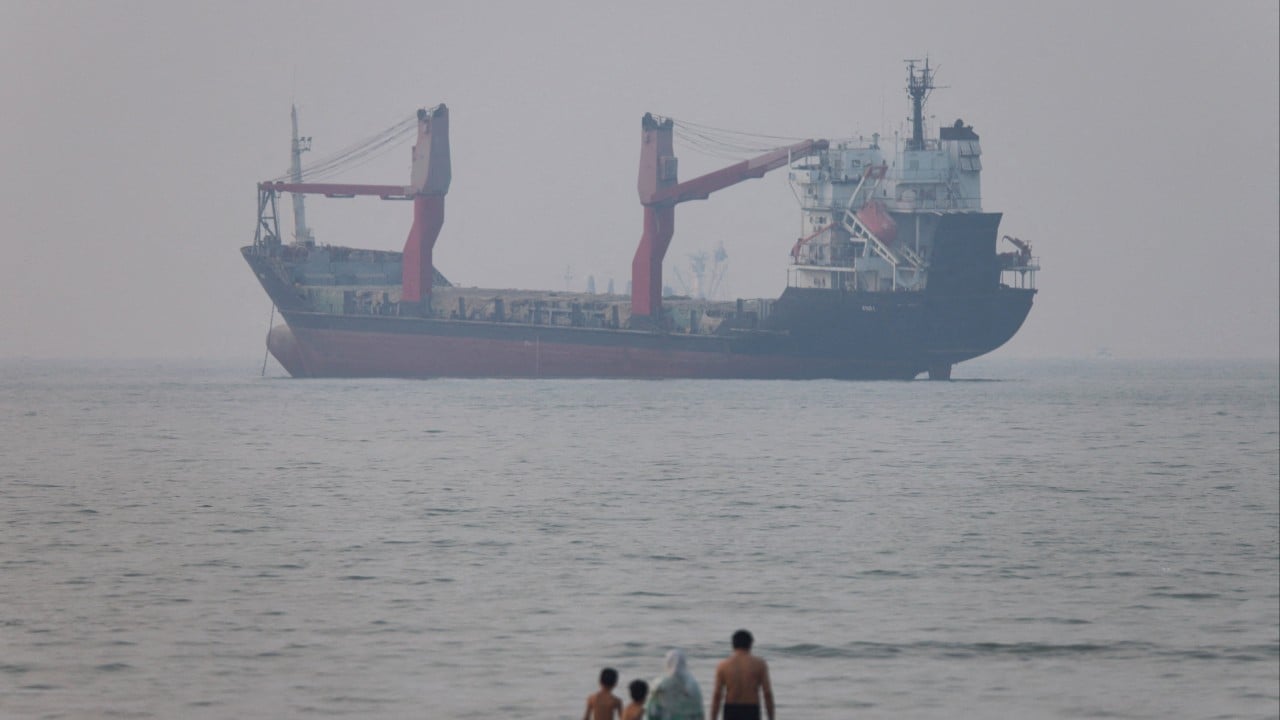
The Strait of Hormuz remains one of the most significant maritime arteries on the planet, historically accounting for roughly one-fifth of the world’s seaborne oil and gas. Since the escalation of the conflict in February, the passage has shifted from a bustling commercial transit route to a stalled, heavily militarized zone. When the President claims total control, he is referring to the efficacy of the current naval blockade intended to throttle the Iranian economy. By interdicting vessels and forcing ships to navigate according to American dictates, Washington has effectively turned a global commons into a theater of forced compliance.
However, labeling international waters as "US territory" is a move that lacks standing under established maritime law and historical precedent. Sovereignty over such a passage is not something one simply declares at a rally or via a social media post. It requires international recognition, physical occupation, and a legal framework that does not exist in this instance. By ignoring these constraints, the administration is venturing into uncharted diplomatic territory, betting that the sheer weight of naval force will override the need for legal or international consensus. This is a gamble that carries enormous risks for regional stability.
The disconnect between official rhetoric and the situation on the ground is stark. While the White House insists that the waterway is "open and operating" and that Iranian oil exports have been successfully choked off, tanker traffic trackers provide a different view. Daily transit numbers have plummeted to mere fractions of their pre-war levels. Furthermore, the persistent threat of asymmetric warfare—drones, mines, and rapid-response vessels—means that the blockade is not the serene "wall of steel" described in press releases. It is a high-tension standoff where every transit is a potential flashpoint.
Tehran, for its part, has leveraged the impasse to its own advantage. By maintaining a refusal to open the strait until specific conditions—including the lifting of sanctions and financial compensation—are met, the Iranian government has transformed the physical closure of the waterway into a primary bargaining chip. They are betting that the global economic pressure caused by restricted energy flow will eventually fracture the international coalition supporting the US-led blockade. The irony is that both sides have effectively weaponized the same piece of ocean, with the global economy serving as the unwilling casualty of their stalemate.
Consider a hypothetical scenario regarding the long-term implications of this territorial claim. If a major power were to successfully annex or claim exclusive jurisdiction over a global transit corridor, it would set a precedent that renders international maritime law effectively obsolete. Other nations with significant naval capabilities would undoubtedly view this as a green light to exert unilateral control over other chokepoints, such as the Malacca Strait or the Suez Canal. The resulting fragmentation of global shipping lanes would not only increase the cost of energy but would also fundamentally alter the nature of maritime trade from a rules-based system to one defined by localized naval superiority.
Behind the scenes, the administration’s focus on the Strait of Hormuz is a double-edged sword. It provides a tangible metric of "success" that can be presented to the domestic electorate—the idea that the President is taking direct, forceful action against a primary antagonist. However, it also limits his diplomatic flexibility. By tying his reputation to the absolute control of the strait, he makes it increasingly difficult to pursue a negotiated settlement that does not involve a full capitulation from Tehran. If the blockade fails to produce a political breakthrough, or if the costs of maintaining it become unsustainable, the President will be left with few options short of further escalation.
Reliable data on the current state of energy transit remains obscured by conflicting narratives. While some officials tout levels of oil exports that defy external tracking, the reality is that the market is operating on a knife’s edge. Even a minor disruption or a misinterpreted signal in the strait could lead to a massive price surge. The global energy infrastructure is far more brittle than the confident tone emanating from the White House suggests. Investors and industry leaders know that "total control" is an illusion in an environment where a single drone strike or a stray mine can close the waterway for days or weeks at a time.
There is also the matter of regional partners. Countries like Oman, which share proximity to the strait, have found themselves in an impossible position. They are forced to engage in delicate, often clandestine talks with both Washington and Tehran to ensure their own security and economic interests are not completely destroyed. These secondary players are the true barometer of the crisis. Their nervousness is not a product of fear alone but of a realistic assessment of the long-term damage this conflict is inflicting on the regional order.
The administration’s refusal to engage in formal negotiations while doubling down on the "territory" narrative suggests a belief that the conflict can be managed indefinitely. This is a hazardous assumption. History suggests that long-standing naval blockades often lead to miscalculation. When ships are boarded, missiles are fired, and territory is claimed by fiat, the buffer zones that prevent regional flare-ups from becoming global wars begin to evaporate. The "wall of steel" is not a solution to the underlying geopolitical tension, but rather a temporary shroud covering a widening, unaddressed wound.
Moving forward, the focus must shift from the vanity of territorial declarations to the mechanics of de-escalation. The current strategy is built on the belief that pressure will eventually break the adversary, but this fails to account for the internal resilience and strategic objectives of the opposing regime. As long as both sides remain tethered to the belief that they can unilaterally control the movement of global goods, the risk of a catastrophic misstep continues to rise. The Strait of Hormuz will remain the focal point of this struggle, not because of what a map says, but because of the sheer economic gravity that dictates its importance to the world.
The ultimate measure of the administration's policy will not be found in social media engagement or rally applause. It will be found in the sustained stability of energy prices and the integrity of international shipping. On both counts, the current trajectory is unsustainable. The rhetoric of dominance is an attempt to rewrite the rules of international engagement, but the ocean remains an unforgiving arena for those who mistake control for authority. The blockade continues, the ships remain wary, and the impasse deepens with every passing day.