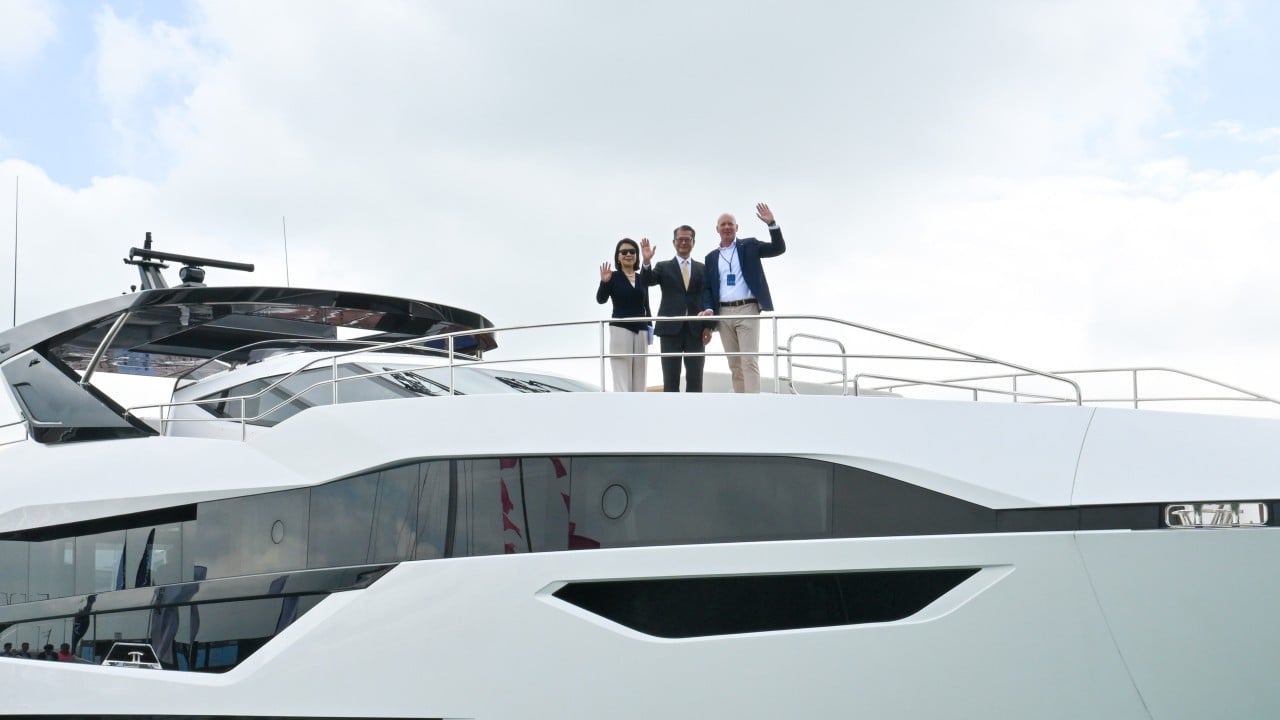
Park a superyacht next to a private jet in the Hong Kong Convention and Exhibition Centre, pour some vintage Krug, and watch the billionaires line up with their checkbooks open.
That is the lazy fantasy every trade publication sells whenever a high-net-worth expo rolls through Victoria Harbour. They frame these glossy spectacles as the premier matchmaking engines for ultra-wealthy buyers and legacy maisons. They assume that putting seventy-carat diamonds under stadium lighting next to Gulfstream mockups somehow translates into long-term customer acquisition.
It is complete nonsense.
After spending fifteen years advising European watchmakers and bespoke automotive divisions on their Asia-Pacific expansion, I have watched brands incinerate millions of dollars on velvet-roped convention booths. The premise of the luxury trade show is fundamentally broken. True ultra-high-net-worth individuals (UHNWIs)—those sitting on over $30 million in investable assets—do not shop at conventions. They do not want to be seen browsing alongside aspirational tourists, social media influencers, and mid-tier wealth managers hunting for leads.
When a heritage brand sets up a booth at a multi-category luxury expo, it is not connecting with new customers. It is signaling desperation to the exact demographic it is trying to seduce.
The Illusion of the Convention Floor
Mainstream business coverage loves a good spectacle. It is easy to write about gleaming fuselages and rare tourbillons all under one roof. The narrative writes itself: Hong Kong is bouncing back as Asia’s premier wealth hub, and luxury brands are flocking to capture the influx of family offices.
Here is the reality on the ground. Wealth in Hong Kong—and across the Greater Bay Area—has indeed consolidated at staggering levels. According to Knight Frank’s Wealth Report and analyses from Bain & Company, the concentration of family offices in the region continues to outpace almost every other global financial center.
Yet the way that capital is deployed has shifted violently away from public display.
Modern Asian wealth is hyper-discreet, deeply skeptical of overt marketing, and fiercely protective of its privacy. Putting a one-of-one timepiece or a bespoke yacht commission inside a public convention hall strips the asset of the single currency that actually matters at the top of the pyramid: asymmetric access.
If anyone with a VIP pass—which usually means anyone who bought a platinum credit card or knows a mid-level PR rep—can walk up and touch the merchandise, the product is no longer exclusive. It is just expensive. And to an actual billionaire, "expensive" without "unobtainable" is a massive turn-off.
Who Actually Attends Luxury Expos?
If the real whales are staying away, who is filling up the exhibition halls in Wan Chai? Having audited the post-event CRM data for multiple Swiss horology houses and Italian coachbuilders, the attendee breakdown usually looks something like this:
- The Aspirational Voyeurs: Upper-middle-class professionals who have zero intention of buying a Bombardier Global 7500, but want a selfie in front of the cabin mockup to post on WeChat or Instagram.
- The Intermediary Swarm: Yacht brokers, family office analysts, private bankers, and concierge fixers trying to network with other intermediaries. They spend three days trading business cards with each other while the brand ambassadors stand around checking their watches.
- The Tire-Kickers: Local collectors who already have direct relationships with the brands' regional managing directors, showing up solely to drink the free champagne and complain about allocation lists.
Notice who is missing? Net-new, self-made founders and second-generation principals ready to drop eight figures on an impulse buy.
Scarcity Versus Spectacle
To understand why these expos fail, you have to look at the mechanics of Veblen goods—items for which demand increases as the price increases, precisely because of their exclusivity.
In traditional retail, visibility drives volume. You put the product in front of as many eyeballs as possible, build desire, and convert foot traffic into sales. High-end luxury operates on the exact inverse of this rule. Visibility kills desire. When Hermès wants to sell a Himalayan Birkin, they do not put it in a glass case at a trade fair next to a booth selling custom swimming pools. They hide it in a private salon in Central, require a multi-year purchase history just to acknowledge its existence, and make the client feel privileged to wire the money.
Similarly, look at how Ferrari manages its Tailor Made program or how Lürssen handles superyacht commissions. The transaction is shrouded in non-disclosure agreements before a single sketch is ever shown.
By contrast, the multi-brand luxury expo forces disparate categories into a chaotic, flea-market proximity. You have a high-jewelry house trying to project centuries of Parisian savoir-faire while fifteen feet away, a loud, flashing booth is hawking fractional jet ownership or luxury wellness retreats in Switzerland. The brand dilution is immediate and catastrophic.
I once watched a storied British bespoke tailor spend $400,000 on a mahogany-paneled pavilion at a Hong Kong showcase. Their neighbor ended up being an aggressive crypto-wealth management firm handing out branded tote bags. By day two, the tailor’s master cutter was spending six hours a day explaining to passerby that no, they did not sell off-the-rack suits, and yes, the fabrics were real cashmere. They left the event with zero new commissions and a bruised brand image that took two years of quiet private dinners to repair.
Dismantling the "Brand Awareness" Excuse
Whenever I confront Chief Marketing Officers about the dismal return on investment from these conventions, they always retreat to the exact same defensive crouch: "We aren't there to close deals on the floor. We're there for brand awareness and top-of-funnel visibility."
Let’s dismantle that premise completely.
If you are selling $50 million Gulfstreams, $2 million Patek Philippe Grand Complications, or $80 million custom yachts, you do not have a "top of funnel." Your total addressable market in the entire Asia-Pacific region is fewer than 15,000 individuals. You do not need "awareness" among the general public. You need intimacy with a very specific list of names that any competent private wealth researcher can compile in an afternoon.
Spending seven figures on a convention booth to generate "brand awareness" among UHNWIs is like buying a billboard on a highway to sell a nuclear submarine. The people who can actually afford the product are not looking out the window, and the people looking at the billboard cannot even afford the fuel.
The Real Reason Brands Keep Showing Up
If the economics are so terrible, why do these expos keep selling out floor space?
Internal corporate politics.
Regional managing directors in Asia have to justify their budgets to headquarters in Geneva, Paris, or London. Putting together a massive, flashy presence at a high-profile Hong Kong expo gives the local team great photos to put in the Q4 board presentation. It looks like momentum. It looks like dominance. The executives back in Europe see pictures of a crowded booth, assume the Asian market is booming, and approve next year’s marketing budget.
Meanwhile, the actual sales conversion—if any happens at all—comes from the private, off-site dinners the regional director hosted the night before the expo opened, inviting only the twelve clients who already spend millions with the brand every year. The convention itself is just an expensive theatrical backdrop for internal corporate vanity.
The Architecture of True UHNW Acquisition
If you want to capture new high-net-worth buyers in Hong Kong without prostituting your brand equity on a trade show floor, you have to abandon the broadcast model entirely. You have to shift from attraction to infiltration.
Imagine a scenario where a European bespoke watchmaker wants to break into the new wave of tech and biotech founders in Hong Kong and Shenzhen. Instead of dropping $600,000 on an exhibition booth, they take that exact budget and execute a quiet, surgical strike.
First, they partner with an independent, hyper-niche art advisor—not a massive auction house like Sotheby's or Christie's, which have become too loud and corporate, but a private dealer who sources post-war Asian contemporary art for ten major collectors.
Second, they host a closed-door dinner for exactly fourteen people inside a private residence on The Peak or a restricted-access gallery space in Wong Chuk Hang. No press. No photographers. No brand banners. No sales pitches.
Third, the watchmaker flies in their head of movement restoration—not a marketing executive, not a celebrity ambassador, but the actual greasy-fingered artisan who builds the calibers. During dessert, the artisan lays out a single loupe and three historical archive pieces on the dining table.
The conversation shifts organically from art collecting to mechanical preservation. Nobody is handed a brochure. Nobody is asked for their contact details because the host already vetted every single guest before the invitations were sent. Within ninety days, four people at that table will quietly commission bespoke pieces, and two of them will introduce the brand to their business partners.
That is how real money moves in Asia. It travels through trusted, closed-loop peer networks, never through public exhibitions.
The Friction of the Contrarian Playbook
Is this closed-door, anti-expo approach flawless? Hardly. If you decide to pull out of the glossy trade show circuit, you will immediately run into three brutal operational headaches:
- It Does Not Scale: You cannot automate intimacy. Hosting twelve-person private salons requires relentless, high-touch relationship management. You cannot hand this off to a junior events coordinator or an outside PR agency. The regional CEO has to do the heavy lifting personally.
- Slow Attribution: Board members hate waiting nine months to see a return on a private dinner series. An expo gives you immediate, vanity metrics—badges scanned, press clippings generated, foot traffic counted. Whisper-network selling produces zero metrics until a massive wire transfer suddenly hits the escrow account six months later.
- The FOMO Trap: When your competitors are all splashed across the financial pages for showcasing their latest toys at the Hong Kong Convention Centre, your silence can be misinterpreted by lazy analysts as a retreat from the market. You need the nerve to let your rivals look busy while you quietly harvest their best clients behind closed doors.
How to Audit Your Luxury Strategy Right Now
If you are running a luxury division, a family office advisory, or a high-ticket bespoke service in Asia, stop letting event organizers dictate your customer acquisition strategy. Run your current marketing calendar through this filter:
- Kill the Multi-Brand Collaborations: Never share a floor with unrelated luxury categories. A yacht builder has nothing in common with a diamond miner other than high price tags. Co-branding across random sectors dilutes your heritage and confuses the buyer.
- Fire the PR Agencies Pushing "VIP Lists": If an agency promises to fill your event with "Hong Kong’s top influencers and VIPs," tear up the contract. Real billionaires do not appear on PR agency guest lists. Build your own intelligence internally through private banks, legal partners, and art advisors.
- Weaponize Access, Not Inventory: Stop bringing your most expensive products to public venues to show off. Keep your rarest pieces locked away and make the client earn the right to view them in a private, one-on-one setting.
The next time a glossy trade magazine gushes over how a convention center in Wan Chai is bringing yachts, jewels, and jets together to "connect brands with new customers," look closer at the photos. Look at the people standing behind the velvet ropes holding phones in the air.
Those aren't buyers. They're tourists. And the brands paying millions to entertain them are funding their own irrelevance.