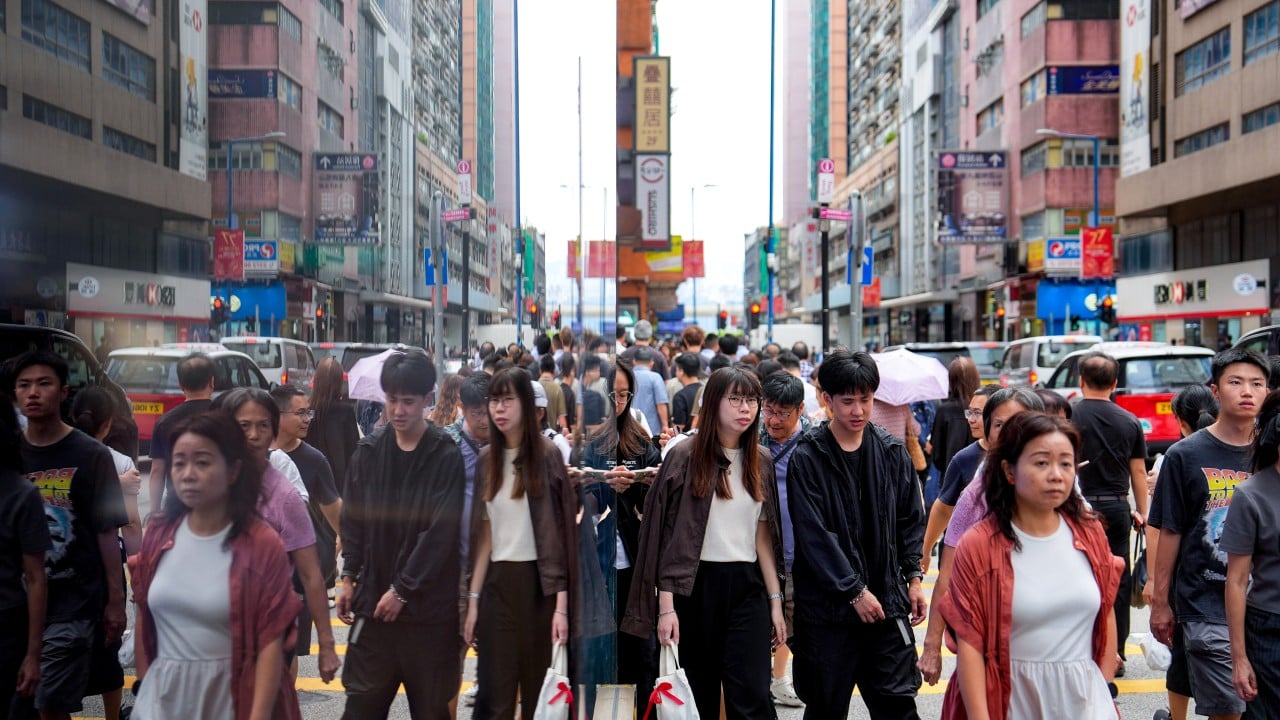
Every headline out of the former British colony follows the exact same tired script. Pick up any local broadsheet or international financial terminal, and you will find a chorus of hand-wringing over Generation Y in Hong Kong. The narrative is deafening: young people are crushed under impossible property prices, priced out of ownership forever, and trapped in perpetual economic despair by a housing market that refuses to bend. Poll after poll confirms that twenty-somethings and thirty-somethings feel profoundly unhappy, anxious, and alienated.
It is a neat story. It makes for great television, provides easy fodder for politicians seeking scapegoats, and fits nicely into the global panic about generational wealth inequality. Also making news recently: The Illusion of Savings Inside Amazon Prime Big Deal Days.
It is also completely wrong.
The lazy consensus treats Hong Kong real estate as a traditional residential market, evaluating it through the suburban lens of Western homeownership where a detached house with a white picket fence represents economic adulthood. That paradigm is dead on arrival in a vertical metropolis of seven million people packed into an impossibly tight geography. When you stop evaluating Hong Kong youth through the distorted lens of American suburbia and look at the actual mechanics of modern capital formation, liquidity, and global optionality, a radically different truth emerges: the supposed victims of this housing crisis are quietly executing the most sophisticated liquidity strategy in Asia. Further insights into this topic are explored by The Wall Street Journal.
Let us dismantle the mythology piece by piece.
The Flawed Metrics Of Misery
Start with the polls that trigger these annual panics. Researchers survey young professionals living in cramped subdivided flats, ask them how they feel about the median multiple of housing prices to annual income, and record a predictable spike in cortisol levels. Naturally, people living in tiny spaces report high stress.
But measuring economic well-being by asking twenty-four-year-olds if they are happy with real estate prices is like surveying commuters on a packed MTR train during rush hour to determine if public transit is a failure. Of course they are frustrated. Real estate is expensive. Rent is high. Space is at a premium.
The analytical error lies in equating high asset prices with generational impoverishment. In reality, sky-high property values in Hong Kong are a symptom of extreme capital concentration and deep-seated structural stability, not systemic collapse. When land supply is artificially restricted by government policy and geographical boundaries, real estate functions less like consumer housing and more like a fixed-income bond yield or a hard-currency sovereign vault.
By defining success exclusively as buying a flat in Mid-Levels or Tai Koo Shing at age twenty-eight, analysts set a trap. They measure a modern urban workforce using twentieth-century agrarian metrics.
The Renters Arbiter Advantage
Ask any traditional financial adviser what young people should do, and they will parrot the ancient dogma: stop wasting money on rent, save for a down payment, lock in a mortgage, and build equity.
In Hong Kong, following that advice in your twenties is financial suicide.
Consider the mathematics of the local property market. With price-to-income ratios sitting at astronomical multiples, saving a standard twenty percent down payment for a modest apartment requires a gargantuan pool of liquid capital. If a young professional manages to scrape together that sum, they lock themselves into a massive multi-decade debt service obligation with interest rate exposure, high management fees, and stamp duties that effectively tax liquidity to zero.
The smart cohort in Hong Kong Generation Y figured this out years ago. They are refusing to buy.
By renting small, highly efficient micro-apartments or co-living spaces close to the core central business districts, they retain absolute cash-flow agility. While their parents' generation bragged about being house-poor and drowning in mortgages while eating instant noodles to service debt, today’s savvy urbanites keep their capital deployed in global equities, private credit, digital assets, or early-stage ventures.
Renting in Hong Kong is not throwing money away. It is paying an option premium for ultimate flexibility. When an economic shock hits or a better career opportunity opens in Singapore, Tokyo, or London, the renter packs a suitcase and leaves in forty-eight hours. The owner with a leveraged flat is anchored to an illiquid concrete block, bleeding interest while trying to offload an asset in a falling market.
The Myth Of The Permanent Lockout
The common refrain claims that young people are permanently locked out of the wealth-building engine because they do not own bricks and mortar. This assumes that real estate is the only vehicle for generational enrichment.
That might have been true in 1985. It is obsolete today.
Hong Kong possesses one of the most sophisticated financial ecosystems on earth. Access to global capital markets, cross-border wealth management platforms, and international brokerages is frictionless. A twenty-five-year-old software engineer or compliance associate earning a strong salary in Central does not need to buy an overpriced flat in Kowloon to build a fortress balance sheet. They can dollar-cost average into global tech indexes, harness high-yield fixed-income instruments, or participate in private equity syndicates.
Furthermore, the pressure of high living costs has forced an unprecedented level of professional entrepreneurship and side-hustle culture among the demographic. When the baseline cost of living is punishing, complacency is fatal. This environment breeds high-performers. The individuals who survive and thrive in Hong Kong’s brutal commercial arena develop a level of operational resilience, financial literacy, and grit that their peers in subsidized European welfare states or sleepy American suburbs simply cannot replicate.
When these young operators eventually inherit family wealth—and Hong Kong boasts some of the largest intergenerational wealth transfers in human history locked up in the portfolios of older generations—they will not be burdened with obsolete suburban homes. They will inherit unencumbered liquid capital, ready to deploy into the next economic cycle.
Embracing The Volatility
I have watched corporate executives and well-meaning commentators blow millions of dollars trying to engineer social housing fixes and youth subsidy programs that treat the symptoms while ignoring the structural reality. You cannot legislate geography. You cannot magically manufacture square kilometers of flat land in a territory dominated by steep granite peaks.
Pretending that the market can be softened into affordability for every entry-level worker is a comforting fairy tale told by bureaucrats who refuse to confront supply-side economics.
The truth is that Hong Kong has always been a Darwinian arena. It rewards speed, adaptability, and capital efficiency. Those who spend their time reading polls about unhappiness and waiting for housing prices to crash so they can buy a two-bedroom box in Tseung Kwan O are playing a loser's game.
Those who drop the obsession with traditional property ownership, weaponize their cash flow, leverage global financial rails, and treat the city as an operational launchpad rather than a permanent campground are winning quietly.
Stop pitying the youth of Hong Kong. They are running circles around your outdated economic models.