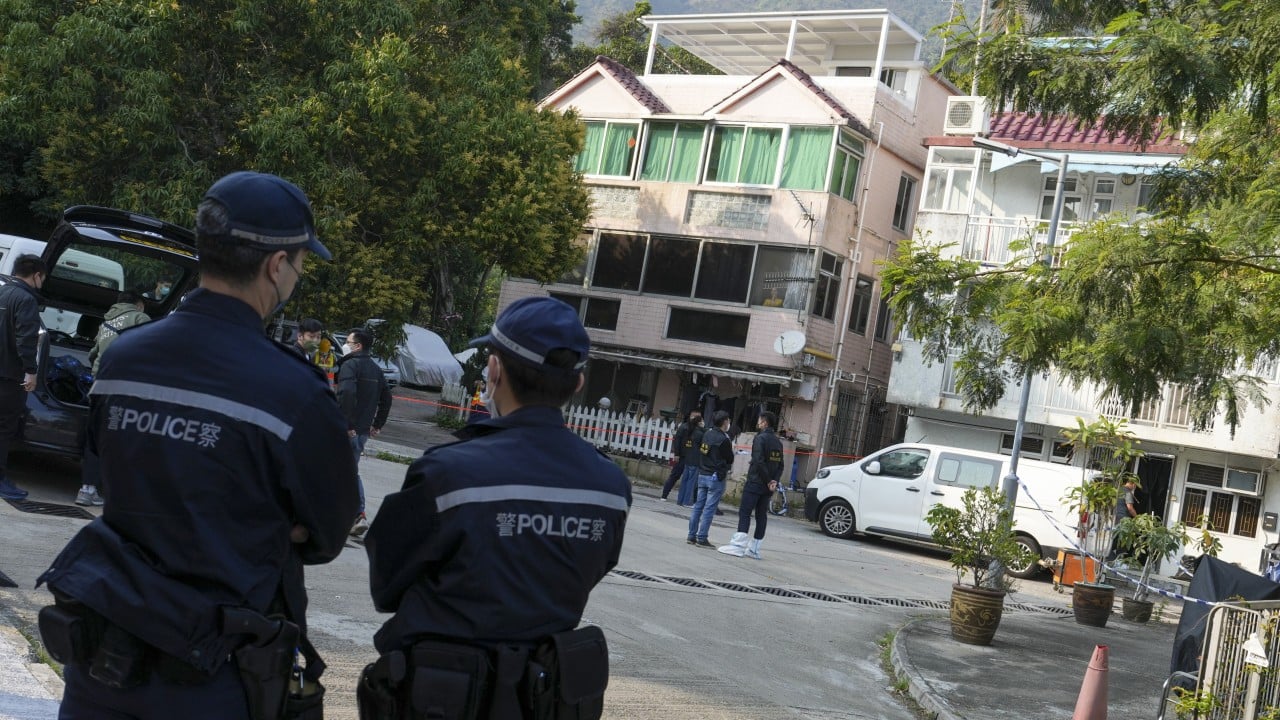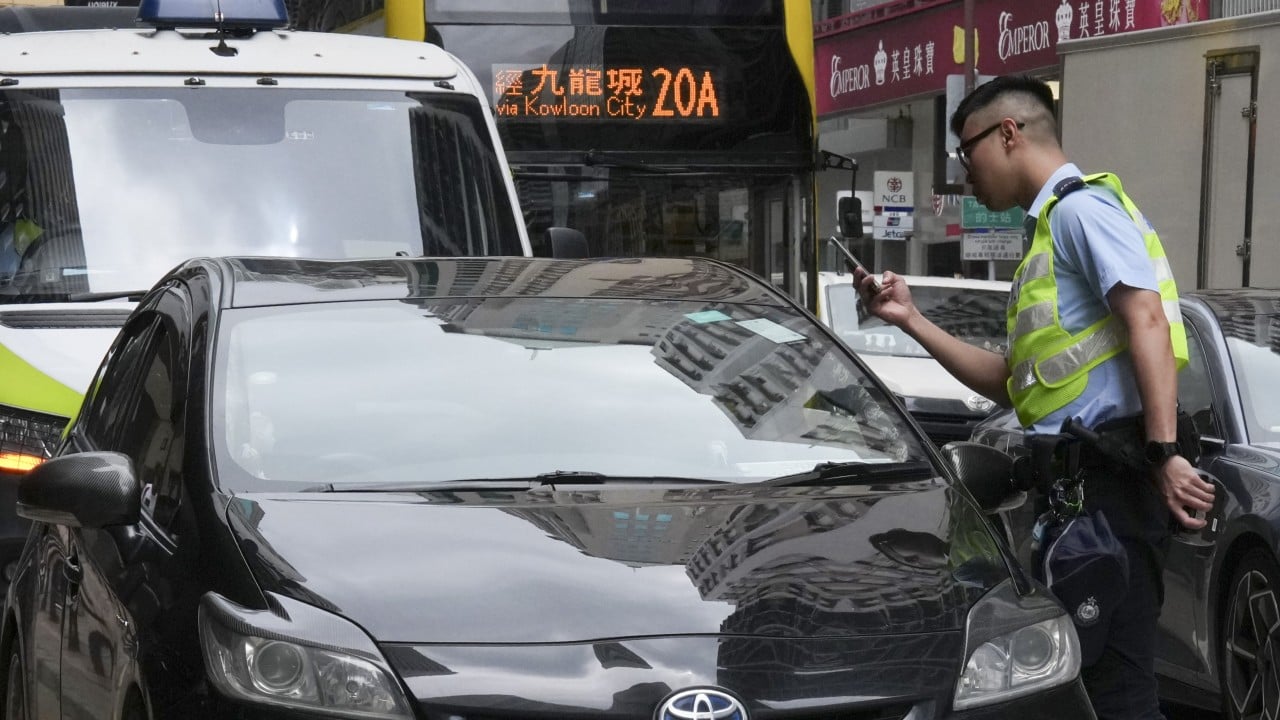
More traffic wardens will not clear a single street in Central.
Every few months, a Hong Kong Legislative Council member stands up, waves a spreadsheet showing tens of millions of dollars in annual parking fines, and demands harsher enforcement. The local press eats it up. The public nods along, furious at the double-parked delivery vans in Wan Chai and the luxury sedans idling outside malls in Tsim Sha Tsui. Recently making news in this space: What Most People Get Wrong About Flavio Bolsonaro Landing in Miami and Claiming Brazilian Leadership.
They are all looking at the wrong numbers.
When illegal parking fines cross HK$70 million a year, that figure is not proof that drivers are uniquely reckless or that the Hong Kong Police Force is slacking. It is proof that the city's curb pricing is catastrophically broken. Calling for more patrols in a city with an acute spatial deficit is like trying to stop a rising tide with a bucket. You can hire a thousand more wardens, hand out twice as many fixed penalty notices, and watch the treasury swell—and traffic will still crawl at ten kilometers per hour. Additional information into this topic are covered by The Guardian.
The Lazy Consensus of Enforcement
The standard political playbook in Hong Kong relies on a comforting fiction: that congestion and street obstruction are purely moral failures by selfish drivers, solvable through brute-force policing.
Lawmakers look at the HK$320 fixed penalty notice—or the proposals to hike it—and assume deterrence is simply a matter of raising the probability of getting caught. In urban economics, this is known as the enforcement fallacy. It ignores the fundamental supply-and-demand math governing physical space in one of the densest cities on earth.
Consider the reality on the ground. Hong Kong has roughly 800,000 licensed vehicles competing for a fraction of that number in legal parking spaces. In commercial districts like Mong Kok, Causeway Bay, and Kwun Tong, the ratio of vehicles to metered or commercial bays isn't just tight; it is mathematically impossible.
When a commercial van driver needs to drop off forty crates of restaurant supplies on a narrow street in Sheung Wan, there is often zero legal loading space within a three-block radius. If the driver circles the block for twenty minutes looking for a bay, they burn fuel, add directly to moving congestion, and miss their delivery window. If they stop on a double yellow line for eight minutes, they risk a HK$320 ticket.
To a logistics operator, that HK$320 fine isn't a deterrent. It is an operating expense. A predictable, tax-deductible cost of doing business in a city that forgot to build loading zones.
Donald Shoup and the High Cost of Underpriced Curbs
If you want to understand why Hong Kong's streets are choked, stop listening to local politicians and read Donald Shoup, the late UCLA urban planning professor whose work The High Cost of Free Parking dismantled decades of municipal transport dogma.
Shoup proved a simple, brutal truth: when on-street parking is priced below market value—or unavailable at any dynamic price—drivers behave like rational economic actors and exploit the gap.
In Hong Kong, metered parking spaces are wildly underpriced relative to surrounding commercial real estate and private garage rates. A private car park in Central or Tsim Sha Tsui routinely charges HK$35 to HK$50 per hour. Meanwhile, an on-street meter a hundred meters away costs a fraction of that, capped at rigid, outdated rates.
What happens when a scarce asset is sold far below its clearing price? Hoarding, cruising, and black-market behavior.
- Cruising for gold: Drivers circle blocks endlessly waiting for a cheap metered bay to open up. Studies across global cities show that cruising for underpriced parking accounts for up to 30 percent of downtown traffic congestion.
- Meter feeding: Drivers or their chauffeurs sit in cars feeding coins or tapping Octopus cards every two hours to lock down prime real estate all day, starving turnover.
- Spillover illegality: Because the few cheap bays are permanently occupied, everyone else dumps their car on the curb and gambles against the traffic warden.
When lawmakers demand more police checks without fixing curb pricing, they are subsidizing the exact behavior they claim to hate. They keep the legal option artificially scarce and cheap, then act shocked when the overflow spills into active traffic lanes.
Why HK$70 Million Is a Symptom, Not a Solution
I have spent years analyzing urban mobility bottlenecks across Asian financial hubs, and I have watched municipal governments burn millions on enforcement surges that collapse the moment the overtime budget runs out.
Here is what happens during a typical Hong Kong police blitz:
- The first 48 hours: Wardens flood a target district like Sham Shui Po or Jordan. Drivers scatter. Streets look miraculously clear for two news cycles. Cameras capture orderly lanes, and the lawmaker claims victory.
- Week two: Commercial deliveries haven't stopped; people still need groceries, parcels, and building materials. Vans now park two streets over in residential alleys, blocking emergency access routes where patrols are thinner.
- Month two: Enforcement returns to baseline levels because police resources are finite and needed for actual crime. Every single double-parked car returns, except now drivers are more aggressive about blocking intersections to make quick escapes.
Fines topping HK$70 million a year actually reveal a massive revenue collection failure disguised as success. Divide HK$70 million by the standard HK$320 penalty, and you get roughly 218,750 tickets. Spread across 365 days and eighteen districts, that is fewer than 35 tickets per district per day.
In a city of 7.5 million people, 35 tickets a day per district is background noise. It is a rounding error. Raising the number of checks by 20 or 30 percent won't alter driver calculus; it will just push the fine total to HK$90 million while leaving Nathan Road just as gridlocked.
Dismantling the Common Myths About Hong Kong Traffic
Public debate around illegal parking in Hong Kong is trapped in repetitive, unproductive loops. Most of the questions people ask start from false premises.
Does raising parking fines actually reduce illegal parking?
Only temporarily, and mostly among casual private drivers. Commercial vehicles—taxis, minibuses, goods vans, and cross-border trucks—absorb higher fines directly into their pricing models or pass them onto consumers. Unless a fine approaches the cost of immediate vehicle impoundment, a logistics company will always choose a guaranteed delivery over circling for an hour.
Are private car owners the main culprits blocking roads?
No, though they make the easiest political targets. Walk down Lockhart Road or Des Voeux Road at 11:00 AM on a Tuesday. The vehicles choking the curb are overwhelmingly commercial: courier vans, construction trucks, and corporate Alphards waiting for executives. Private commuters largely leave their cars in residential estates or corporate towers because daytime parking in business districts is already prohibitively expensive.
Why doesn't the government just build more underground car parks?
Because building underground parking in Hong Kong's granite bedrock and utility-choked subsoil costs upwards of HK$1 million to HK$2 million per bay. Even if the government spent billions digging new caverns, adding parking supply in dense urban cores induces more driving—a phenomenon traffic engineers call induced demand. More spaces simply attract more cars until the roads jam up again.
The Counter-Intuitive Fix Nobody Wants to Run On
If police sweeps fail and building more garages backfires, what actually clears a congested street?
You turn the curb into a dynamic, high-turnover marketplace—and you stop treating all vehicles the same.
Imagine a scenario where Hong Kong scraps flat-rate street meters in commercial zones and replaces them with demand-responsive pricing, similar to the SFpark model piloted in San Francisco. Sensors embedded in the asphalt track occupancy in real time. The city sets a single target: keep 15 percent of spaces on every block open at all times.
If a block in Causeway Bay is 95 percent full, the hourly rate automatically climbs—to HK$60, HK$80, or whatever it takes until one or two spaces open up. If a block is half empty, the price drops to HK$10. Suddenly, any driver who genuinely needs to park can find a spot immediately without circling, and no one dares camp in a space all day because the escalating cost destroys their wallet.
At the same time, you convert 40 percent of existing metered bays in commercial districts into strict 15-minute loading zones enforced by automated curb cameras, not human wardens walking a beat with handheld printers.
First 15 minutes? Free for registered commercial vehicles. Minute 16? An automatic HK$500 charge hits the vehicle's HKeToll account. Minute 30? HK$1,500.
This flips the entire incentive structure overnight:
- Delivery drivers get guaranteed space to unload quickly without blocking live traffic lanes.
- Hoarders get priced out within half an hour, forcing rapid turnover.
- Police wardens are freed up from acting as glorified meter maids in high-visibility vests.
The Uncomfortable Downsides of Market-Driven Curbs
No policy comes without political blood on the floor, and dynamic curb pricing carries real trade-offs that politicians hate admitting.
First, it hits working-class drivers harder than wealthy ones. A billionaire in a Rolls-Royce won't flinch at a HK$100-per-hour curb rate, whereas a self-employed tradesperson carrying heavy tools will feel the squeeze immediately. Without targeted exemptions or commercial rebates, pure market pricing turns public asphalt into a playground for the rich.
Second, automated camera enforcement feels dystopian to a public already weary of surveillance. Replacing human discretion with algorithmic billing means zero grace periods for a driver dealing with a genuine emergency, a stalled engine, or an elderly passenger who needs extra time getting out of a cab.
Third, small retail shopkeepers will scream bloody murder. Store owners across Hong Kong cling to the illusion that cheap street parking brings customers to their doors, despite decades of retail data showing that over 85 percent of shoppers in dense transit cities arrive by MTR, bus, or foot.
Stop Counting Tickets and Start Measuring Flow
The metric of success for Hong Kong's Transport Department should never be how many millions of dollars it extracts from motorists. A city that collects HK$70 million in parking fines isn't winning; it is admitting that its street design has failed 200,000 times in a single year.
Every time a politician calls for more traffic wardens, they are asking taxpayers to fund a permanent game of whack-a-mole while leaving the underlying pricing failure untouched. You cannot ticket your way out of a supply-and-demand mismatch.
Price the curb dynamically, automate turnover for commercial loading, and let the market clear the lanes that police whistles never will.