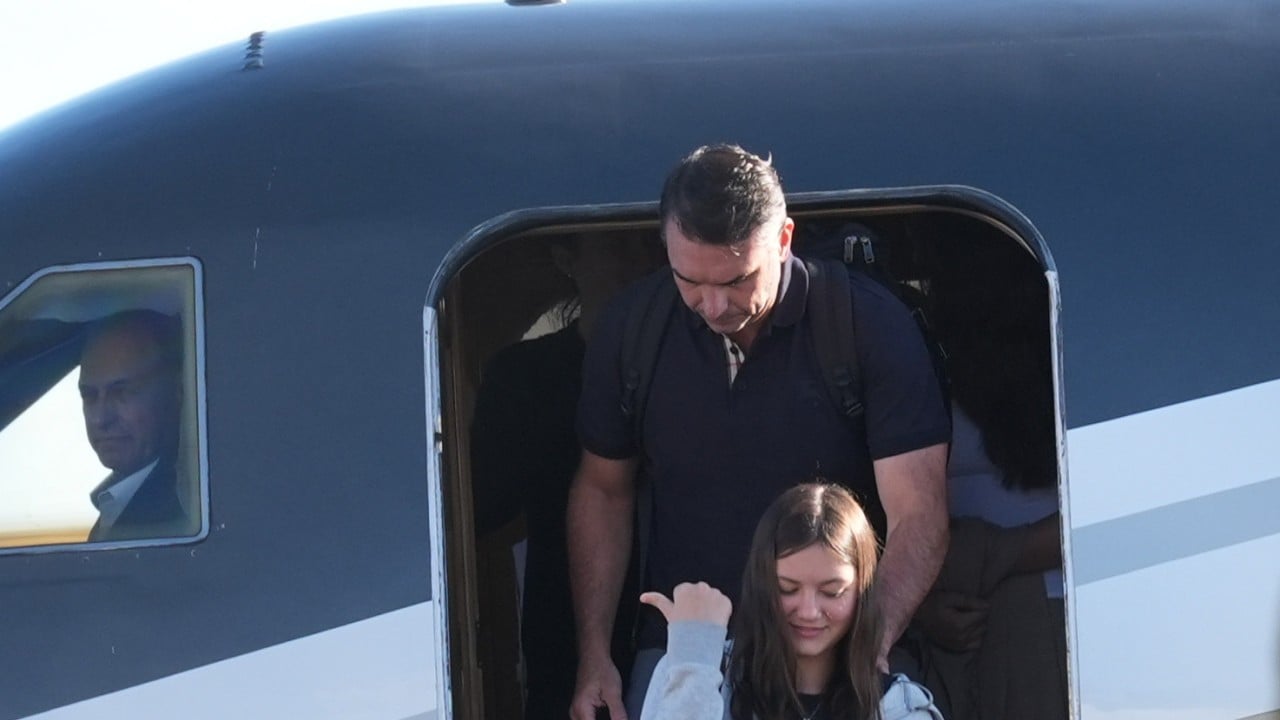
Political theater rarely subtle, and watching Flavio Bolsonaro touch down in Miami only to declare himself the rightful leader of Brazil feels like a script we've seen before. Honestly, if you've followed South American politics over the past few years, this move shouldn't shock you. It's a calculated play designed to rally a fractured base, dominate international headlines, and keep the Bolsonaro family name at the center of global power dynamics.
Yet most observers miss the actual mechanics behind this trip. They get caught up in the sensationalism of a Brazilian senator making sweeping leadership claims on American soil, completely ignoring the legal, electoral, and financial realities back home in Brasilia. Let's break down what's actually happening here, why Miami serves as the ultimate stage for this kind of political messaging, and what this means for Brazil's immediate future.
Why Miami Remains the Hub for Latin American Political Posturing
You can't separate the message from the location. When Flavio Bolsonaro steps off a plane in South Florida and starts talking about rightful leadership in Brazil, he isn't accidentally picking a vacation spot. Miami has functioned as the de facto offshore capital for Latin American conservative movements for decades.
Think about the audience on the ground. South Florida houses one of the largest, wealthiest, and most politically active Brazilian diaspora communities in the world. Back during the 2022 Brazilian presidential election, voting precincts in Miami-Dade and Broward counties went overwhelmingly for Jair Bolsonaro, often by margins exceeding 80 percent.
When a high-profile figure like Flavio arrives in Miami, he isn't walking into hostile territory or facing tough cross-examination from skeptical journalists in Sao Paulo. He's walking into a friendly echo chamber.
- Fundraising access happens far more smoothly among wealthy expatriates who feel disconnected from the current administration in Brasilia.
- Media amplification gets an immediate boost when events happen in the United States, where international wire services and conservative American media outlets pick up the soundbites instantly.
- Symbolic distance allows a politician to frame themselves as an exile or a resistance leader rather than just another opposition senator grinding through committee hearings.
I've watched this exact playbook unfold with politicians from Venezuela, Nicaragua, and Colombia. By stepping outside national borders, a politician attempts to elevate a domestic power struggle into an international ideological crusade. It's smart branding. Whether it actually translates into votes back in Minas Gerais or Rio de Janeiro is an entirely different question.
The Reality Behind the Rightful Leader Claim
Let's get straight to the facts. Declaring yourself the "rightful leader" of a constitutional republic doesn't carry any legal weight. Brazil operates under a strict presidential system governed by its 1988 Constitution, overseen by the Superior Electoral Court (TSE) and the Supreme Federal Court (STF).
In Brazil, leadership isn't inherited, and it isn't claimed via press conferences in Florida.
So why use that specific phrasing? Because in modern populist politics, legitimacy isn't treated as a legal status—it's treated as a moral narrative. When Jair Bolsonaro was declared ineligible to run for public office until 2030 by the Superior Electoral Court following rulings on his attacks against Brazil's electronic voting system, it created a massive vacuum on the Brazilian right.
Someone had to step up. And within the Bolsonaro family, the succession question has been messy, public, and occasionally contradictory.
The Internal Tug-of-War Inside the Bolsonaro Camp
If you think the Brazilian right operates as a unified monolith, you aren't paying close enough attention. While Flavio Bolsonaro holds a Senate seat representing Rio de Janeiro and carries the family name, he isn't the only contender vying to carry the torch.
Consider the other heavyweights currently maneuvering for position:
- Tarcisio de Freitas, the Governor of Sao Paulo, commands the economic powerhouse of Brazil and appeals to moderate conservatives and Wall Street investors who want pro-market policies without constant institutional warfare.
- Michelle Bolsonaro, the former First Lady, possesses massive grassroots appeal among evangelical voters, a demographic that forms the absolute bedrock of conservative support in Brazil.
- Eduardo Bolsonaro, Flavio's brother and a federal deputy, has spent years cultivating direct ties with the MAGA movement in the United States, often acting as the family's international liaison.
- Romeu Zema and Ronaldo Caiado, governors of Minas Gerais and Goias respectively, represent traditional regional power brokers who believe the post-Bolsonaro era belongs to experienced administrators rather than family dynasties.
When Flavio claims the mantle of rightful leadership in Miami, he isn't just sending a message to President Luiz Inacio Lula da Silva or the Supreme Court. He's sending a direct warning shot to Tarcisio de Freitas and every other ambitious governor in Brazil. He's reminding them that the Bolsonaro brand still belongs to the bloodline.
What Most Commentators Miss About Flavio Bolsonaro's Legal Baggage
Here's where Western media coverage usually falls flat. International outlets love a punchy headline about a foreign politician making bold claims in Miami, yet they routinely gloss over the domestic vulnerabilities that dictate Flavio's every move.
Flavio Bolsonaro isn't operating from a position of untouchable strength. For years, his political career has been shadowed by the rachadinha scandal—allegations dating back to his time as a state deputy in Rio de Janeiro, involving the diversion of public salaries from legislative aides. While legal battles, jurisdictional rulings, and procedural annulments by higher courts stalled major parts of the prosecution, the political scar tissue remains very real.
In Brazilian politics, surviving a scandal doesn't mean erasing it from the public memory. Swing voters in critical battleground states remember those headlines.
More importantly, Flavio's political temperament differs sharply from his father's. Jair Bolsonaro built his career on raw, unfiltered confrontation. Flavio has historically operated more like a traditional establishment politician—cutting deals in Senate hallways, negotiating with the Centrao (Brazil's notoriously pragmatic bloc of centrist parties), and trying to lower the temperature when institutional crises threaten to boil over.
Watching him adopt maximalist rhetoric in Miami tells you something crucial. He knows that playing the quiet Senate insider won't keep the hardcore base loyal. If he wants to control the movement, he has to talk like a movement leader, even if his actual legislative record looks much more conventional.
How Washington and Brasilia React to Offshore Declarations
Diplomatic circles don't panic over statements made during trips to South Florida, largely because both Washington and Brasilia understand the difference between campaign rhetoric and statecraft.
The U.S. government maintains formal diplomatic relations with the sitting administration in Brasilia. Regardless of who occupies the White House, American foreign policy toward Brazil prioritizes trade, regional stability, environmental cooperation in the Amazon, and counterbalancing Chinese influence in South America. A Brazilian senator holding rallies in Florida doesn't alter bilateral trade agreements or embassy protocols.
Back in Brazil, however, the reaction splits cleanly down partisan lines.
Supporters view the Miami trip as proof that their movement remains alive, internationally connected, and unbowed by judicial pressure from the Supreme Federal Court. They share clips on WhatsApp and Telegram, using the footage to argue that the current government lacks true popular mandate.
Critics, meanwhile, seize on the exact same footage as evidence of political detachment. To an average worker in Recife or Curitiba dealing with inflation, grocery prices, and local infrastructure issues, watching a senator fly to Miami to declare himself the rightful leader of the country can look tone-deaf. You don't win municipal elections or build governing coalitions from a hotel ballroom in Florida.
The Real Stakes for Brazil's Political Landscape
Strip away the noise, the social media clips, and the dramatic headlines. What actually matters here?
First, the battle for the conservative nomination is officially wide open. By planting his flag so aggressively, Flavio Bolsonaro is forcing every other right-wing figure in Brazil to either bend the knee or publicly break with the family. That tension will define Brazilian legislative politics for the foreseeable future.
Second, internationalization is now a permanent tactic. Brazilian politicians have realized that domestic legal pressure can be countered—at least in the court of public opinion—by taking their grievances to sympathetic audiences in the United States and Europe. Expect more trips, more English-language interviews, and more cross-border political alliances.
Third, institutional friction isn't going away. Every time a prominent figure questions the legitimacy of Brazil's current leadership, it widens the gap between the executive branch, the judiciary, and the opposition in Congress. Governing becomes harder. Passing tax reforms, budget bills, and infrastructure packages slows to a crawl when every session turns into a referendum on political legitimacy.
If you're trying to track where Brazil is actually heading rather than getting distracted by daily outrage cycles, stop watching the press conferences in Miami. Watch three concrete indicators instead. Keep your eyes on how the Centrao parties vote on key economic bills in Brasilia, track municipal approval ratings for Sao Paulo Governor Tarcisio de Freitas, and monitor formal rulings from the Superior Electoral Court regarding candidate eligibility. Those metrics—not speeches made thousands of miles away—will tell you who actually holds power in Brazil.