The House Budget Committee just cleared a $95 billion legislative package designed to fund the ongoing war against Iran, hand emergency cash to American farmers, and implement strict new voter registration rules. Superficially, it looks like a major legislative victory for Speaker Mike Johnson and the House GOP.
It isn't.
Behind the party-line 20-14 vote on July 16, 2026, lies a fragile coalition, a looming revolt by fiscal conservatives, and an icy reception in the Senate. This package is the legislative equivalent of a house of cards built on a windy day. If you want to understand what's actually happening on Capitol Hill, you need to look past the talking points and see the internal warfare ripping through the Republican conference.
What is in the $95 Billion Package?
Speaker Mike Johnson is trying to use a fast-track legislative maneuver called budget reconciliation. This tool lets the majority bypass the 60-vote filibuster threshold in the Senate, allowing them to pass massive spending measures with a simple majority. Republicans have already used it twice this Congress for tax cuts and border security funding.
Now, they're attempting a third bite at the apple with a 47-page budget resolution. The $95 billion package outlines funding targets for four specific committees:
- Defense and Intelligence ($73 billion total): The Armed Services Committee is directed to craft up to $60 billion in spending, while the Intelligence Committee gets $13 billion. Most of this is meant to replenish depleted U.S. military stockpiles and fund classified programs as the U.S.-led war against Iran drags past its fourth month.
- Agriculture ($12 billion): Aimed at helping American farmers cope with soaring fuel and fertilizer prices, a crucial political sweetener ahead of the upcoming midterm elections.
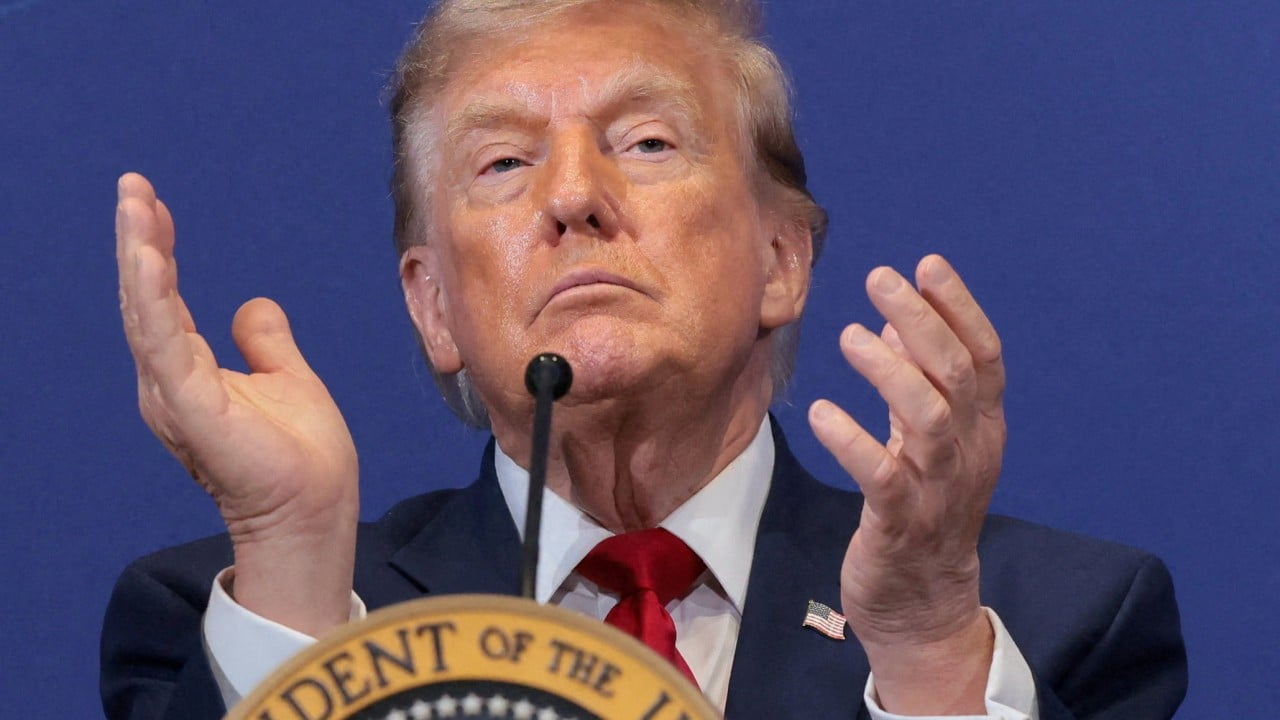
- Administration ($10 billion): This is the political payload. It funds strict new voter registration mandates, heavily pushed by Donald Trump, requiring proof of citizenship to register to vote—essentially a vehicle for the controversial SAVE America Act.
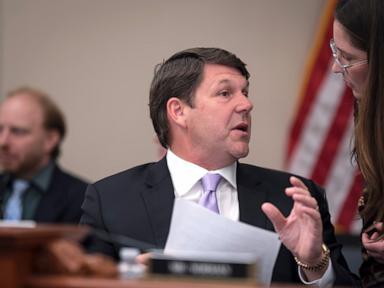
House Budget Committee Chairman Jodey Arrington pitched this as a pragmatic necessity. He argues the military money isn't about debating why the U.S. is fighting in Iran, but simply providing "bombs, bullets, and battlefield readiness" to get troops home safely.
The Deficit Dilemma and the GOP Civil War
The real story isn't the committee vote; it's the math.
House Republicans hold a razor-thin majority. Speaker Johnson can only afford to lose a handful of votes on the floor. Right now, he doesn't have the numbers.
Fiscal hawks are furious that this $95 billion is entirely un-offset. The U.S. is already staring down an annual deficit approaching $2 trillion. Adding nearly $100 billion to the national debt without matching spending cuts is a non-starter for conservative purists like Representative Chip Roy and other members of the House Freedom Caucus.
Initially, leadership toyed with cutting social safety net programs to offset the bill's cost. They eventually abandoned those plans, fearing a moderate Republican revolt. By attempting to please everyone, Johnson has pleased no one. Conservatives want cuts; moderates want a clean bill; and the deficit continues to soar.
The Voting Rights Battleground
While the defense spending dominates the dollar amount, the $10 billion carve-out for election administration is the true partisan lightning rod.
The funds are earmarked to enforce proof-of-citizenship requirements for voting. Republicans claim this is about securing the ballot box and ensuring election integrity. Democrats argue it's a blatant voter suppression tactic.
Representative Brendan Boyle, the top Democrat on the Budget Committee, pointed out that the massive GOP document completely ignores the biggest worry of ordinary Americans: basic affordability. Democrats spent hours offering amendments to strip the voting provisions, restore food stamp funding, and reverse healthcare cuts, all of which were predictably voted down.
This ensures that the final package will receive zero Democratic votes on the House floor. Johnson is flying completely solo, relying entirely on his own fractured caucus.
Dead on Arrival in the Senate?
Even if Speaker Johnson manages to bribe, cajole, or pressure enough House Republicans to pass this resolution next week, it faces a brick wall in the Senate.
To kick off the reconciliation process, both chambers must pass the exact same budget resolution. Senate Republicans have already expressed deep skepticism. Some are defense hawks who believe the $60 billion military allocation is far too small. Others are deficit hawks who refuse to sign off on more unpaid-for spending.
Senate Majority Leader John Thune didn't mince words, noting that senators have "a lot of questions" and calling the bill's path "very uneven". Without Senate cooperation, the entire reconciliation effort dies.
What Happens Next
The House is scheduled to vote on this budget resolution next week before heading out for the August recess.
If you're tracking this legislative drama, keep your eyes on the whip counts over the next few days. Watch if Johnson offers last-minute concessions to the Freedom Caucus, or if Donald Trump uses his influence to drag reluctant conservatives across the finish line.
If the resolution fails on the House floor next week, it's a devastating blow to Johnson's speakership and a clear sign that the GOP cannot govern with its current majority. If it passes, the fight simply moves to a hostile Senate, where the odds of survival are even slimmer. Either way, the $95 billion package is a long shot that faces an incredibly steep climb.