Tens of thousands of young Indians are filling the streets again, and New Delhi's heavy-handed police force is struggling to contain them. This isn't just another localized student grievance or a passing flash of campus anger. Following a summer of high-stakes demonstrations that successfully forced the resignation of the education minister, youth-led groups like the decentralized "Cockroach" movement have set their sights much higher. They are targeting the heart of India's democratic machinery, demanding the resignation and prosecution of Chief Election Commissioner Gyanesh Kumar over massive, controversial voter roll purges.
Prime Minister Narendra Modi’s administration faces a stark reality. The massive demographic dividend of 371 million young citizens aged 15 to 29, long touted as the bedrock of economic growth and political stability, is growing openly hostile to a system they believe is rigging their future.
The Spark That Lit the Fire
The current wave of fury exploded onto national headlines following aggressive implementation of the Special Intensive Revision (SIR) of electoral rolls. Under the banner of clearing out duplicate entries, deceased voters, and undocumented immigrants, the Election Commission of India scrubbed more than 130 million names from voter lists nationwide. In cities like New Delhi alone, nearly a third of the local electorate vanished from the rolls overnight.
Critics, opposition leaders, and grassroots youth organizations argue that these systemic deletions disproportionately target marginalized communities, urban working-class populations, and demographics traditionally inclined to vote against the ruling Bharatiya Janata Party (BJP). When internal dissent reports leaked showing objections raised by fellow election commissioners against the rapid revision process, public trust plummeted.
Young Indians looked at the numbers and saw a creeping erasure of their political agency. They didn't wait for traditional political parties to organize them. They mobilized themselves.
From Exam Papers to Electoral Integrity
To understand why today’s youth protests pose such a unique threat to Modi’s government, you have to look back at the trajectory of 2026. Earlier this summer, students paralyzed parts of the country over widespread cheating scandals and leaked national medical and civil service entrance exam papers. Operating without a formal hierarchy or permanent headquarters, the student-led networks proved impervious to standard police infiltration or negotiation tactics.
Their persistence paid off when Education Minister Dharmendra Pradhan was forced to resign. That single victory changed the psychological landscape for a generation that had felt politically invisible.
Instead of disbanding after their summer success, the movement pivoted directly to electoral integrity. They realized that fixing entrance exams means little if the ballot box itself is compromised. Marches spanning from Delhi to southern hubs like Kochi have unified under a single demand: reverse the voter purges and hold the election commission accountable.
The State Crackdown and the Cost of Dissent
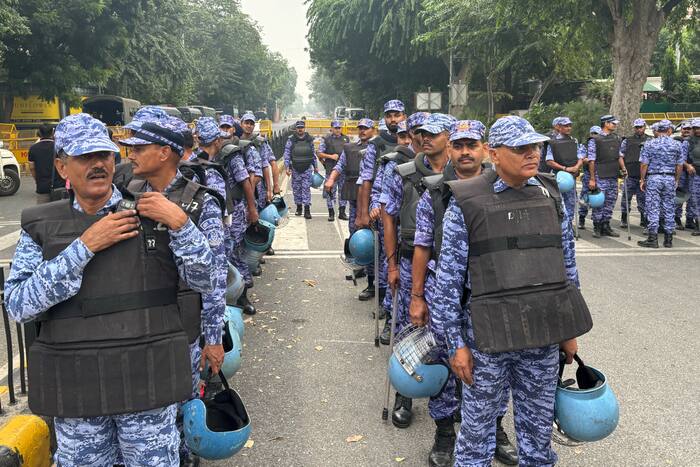
The government's response has been swift and unforgiving. More than 7,000 protesters have been detained across major metropolitan areas since the anti-CEC demonstrations intensified. Heavily armed police barricades, preemptive house arrests, and strict curfews have turned central Delhi into a security fortress. High-profile opposition lawmakers and student organizers have been hauled away by law enforcement for attempting to march toward regulatory offices.
Government officials have dismissed the protests as coordinated stunts orchestrated by desperate opposition parties aiming to destabilize the nation. Union ministers have labeled the demonstrations childish and anarchic, insisting that the election commission operates with absolute constitutional independence.
Yet, the heavy police response communicates deep anxiety within the establishment. When a government relies on mass preventative detentions to suppress street-level dissent, it signals fear of momentum.
What This Means for the Political Horizon
As India looks toward upcoming state assembly elections, the friction between an entrenched executive power and an awakened youth demographic creates deep volatility. The convergence of organized political opposition led by figures like Rahul Gandhi with leaderless youth street networks has created an unusual pressure cooker.
The administration can attempt to arrest its way out of immediate street rallies, but it cannot legislate away the underlying disillusionment. Millions of young voters entered adulthood expecting economic mobility and institutional fairness. Instead, they are finding that basic civic rights require physical defense in the streets.
The movement refuses to fade quietly. As long as questions surrounding the integrity of the voter rolls remain unanswered, the streets of India will stay hot.
Watch PBS News coverage of India's Gen Z voter roll protests
This short video clip provides an overview of how the youth-led movement transitioned from fighting exam leaks to confronting the election commission over massive voter roll purges in New Delhi.