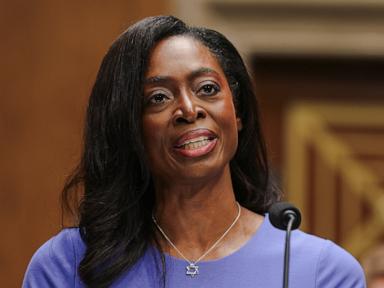
On a strict 51-44 vote, the United States Senate confirmed Dr. Erica Schwartz as the director of the Centers for Disease Control and Prevention, finally ending an extraordinary year-long leadership vacuum at the nation's premier public health institution. Schwartz steps into the role as the agency's permanent head following a turbulent stretch marked by the ouster of her short-lived predecessor and intense political battles over vaccine policy, institutional independence, and scientific integrity. Her confirmation arrives precisely when public health agencies are wrestling with infectious outbreaks like cyclosporiasis and persistent friction between career civil servants and political appointees at the Department of Health and Human Services.
The road to her confirmation was anything but straightforward. Schwartz represents the administration's third attempt to install a permanent director after months of vacancy and acting leadership. The agency had gone without a Senate-confirmed leader since the departure of former director Susan Monarez, who was dismissed after refusing demands to preapprove alterations to vaccine policy. This historical friction cast a long shadow over Schwartz's committee hearings, where lawmakers on both sides of the aisle scrutinized her willingness to maintain agency independence against mounting political pressures.
The Anatomy of an Institutional Standstill
Institutions like the CDC derive their operational power not merely from statutory authority, but from public trust. When an agency operates without a permanent, confirmed leader for nearly twelve months, internal paralysis becomes an inevitable side effect. Career researchers find themselves navigating shifting directives from acting leadership, while state and local health departments lose the stable federal coordination required to combat localized outbreaks.
This vacancy was not an administrative accident. It was the byproduct of a fundamental ideological collision between traditional public health administration and external political agendas. When the previous permanent director was ousted over disputes concerning vaccine schedules and scientific advisory panels, the message sent through the ranks was unambiguous. Bureaucratic survival often demands compliance, while adherence to empirical consensus risks professional termination.
[Image of US Capitol building exterior]
Schwartz enters this fractured environment armed with an extensive resume inside the federal health apparatus. A retired rear admiral in the U.S. Public Health Service Commissioned Corps, she spent decades navigating complex military and civilian health structures, including a tenure as deputy surgeon general during the first Trump administration. That background provides her with institutional fluency that few political outsiders possess. Yet, fluency alone does not insulate a director from systemic pressure.
Navigating the Political Crossfire
During her confirmation hearings, senators pressed Schwartz on the core vulnerability of modern public health leadership. How does a director protect scientific integrity when executive appointees demand alignment with broader political goals?
Her responses struck a pragmatic, albeit guarded, tone. She pledged fidelity to empirical science while maintaining that she did not anticipate direct conflict with Health and Human Services Secretary Robert F. Kennedy Jr. This tightrope walk satisfied enough skeptical lawmakers—most notably committee chair Bill Cassidy, who provided a crucial endorsement—to clear her path to the floor. Senator Tim Kaine of Virginia stood as the sole Democrat to cross party lines in her favor, illustrating just how deeply polarized public health appointments have become.
Critics remain wary. Several legislators pointed out that Schwartz appeared unfamiliar with recent administrative changes to agency web pages concerning vaccines and autism, raising concerns about how tightly she will control her own agency's communications. Public health advocacy groups argue that an effective director must do more than avoid conflict; they must actively push back against misinformation, regardless of its source within the executive branch.
The Operational Reality on the Ground
Beyond Washington politics, the CDC that Schwartz inherits is facing immediate, concrete operational hurdles. A sprawling, multistate outbreak of cyclosporiasis is currently demanding coordinated epidemiological investigation across multiple state lines. Concurrently, public health officials are monitoring persistent measles flare-ups and managing the fallout from broader federal downsizing initiatives that have strained laboratory capacities.
The director of the CDC does more than manage headlines. They sign off on the recommendations issued by the Advisory Committee on Immunization Practices. These recommendations dictate everything from commercial health insurance coverage rules to the operational scope of the federal Vaccines for Children program. For primary care practices nationwide, the stability of this schedule determines whether millions of families maintain barrier-free access to preventative immunizations.
When that sign-off mechanism stalls, the entire preventative healthcare pipeline stutters. Private insurers can shift coverage policies, state health departments lose standardized guidance, and vulnerable populations bear the brunt of administrative inaction. Schwartz now controls a lever that sat idle while courts and political actors contested the very nature of childhood vaccination schedules.
Restoring Faith in the Machinery
Rebuilding an agency battered by years of pandemic-era politicization and internal purges requires immense institutional grit. Morale among career epidemiologists and biostatisticians remains fragile. Many veterans of the agency have quietly departed for academic or private sectors, tired of serving as political footballs in a hyper-partisan capital.
To reverse this brain drain, Schwartz must establish a clear boundary between rigorous scientific evaluation and political directives. If the rank-and-file perceive that public health data is being molded to fit predetermined conclusions, institutional credibility will degrade further. Conversely, if she uses her statutory independence to defend evidence-based policy, she risks ongoing friction with the very political masters who installed her.
The next few months will reveal whether her administrative background equips her to manage this delicate balancing act. Public health crises do not wait for bureaucratic consensus, and the pathogens currently circulating across the country will test the rehabilitated leadership of the CDC far more severely than any congressional hearing room ever could.