For decades, oncology operated under an unwritten contract of age. Malignant disease was framed as an actuarial penalty of time, an accumulation of genetic typos worn into human tissue after six or seven decades of biological friction. Doctors expected grey hair in the waiting room.
That contract is quietly breaking. Across industrialized nations, epidemiological data confirms a persistent, unsettling climb in cancer diagnoses among adults under the age of fifty. This is not merely an artifact of aggressive screening or population growth. Rates for specific malignancies—most notably colorectal, breast, and uterine tumors—have been creeping upward across successive birth cohorts born since the 1970s.
Yet the medical establishment remains caught in a frustrating diagnostic blind spot. Younger patients presenting with persistent symptoms are routinely misdiagnosed, brushed off by practitioners who view their age as an effective biological shield against malignancy. By the time the truth is uncovered through biopsies and advanced imaging, the disease has often progressed to an advanced stage.
The Anatomy of a Generation Shift
To understand the scale of the issue, one must look past headline-grabbing averages and examine cohort dynamics. Large-scale analyses tracking decades
The Early Onset Cancer Epidemic They Refused to See
health, news
For decades, oncology departments operated under a rigid, unwritten contract. Cancer was a tax levied on aging. You lived long enough, your cellular machinery accumulated enough copying errors, and the bill came due in your sixties, seventies, or eighties. That contract has been torn apart.
Over the past thirty years, a quiet mutation has taken root in global epidemiology. Cancer rates in adults under fifty are climbing at a velocity that has shaken oncologists, epidemiologists, and public health statisticians. This is not a statistical illusion driven by better screening protocols or over-diagnosis. We are seeing advanced, aggressive malignancies strike people in their thirties and forties with a frequency that defies the traditional risk curves. Colorectal, breast, uterine, and pancreatic tumors are appearing in populations that historical registries suggest should be functionally immune to them.
Yet, the institutional response has been marked by hesitation. Bureaucracies move at the speed of committees while young adults fill infusion centers. To understand why this shift is happening, we have to look past the standard risk factors and examine how modern industrial life has altered the baseline biology of a generation.
The Generation Caught in the Shift
People born since 1970 carry a distinct epidemiological fingerprint. Each successive birth cohort faces a progressively higher risk of developing early-onset cancers than the cohort immediately preceding it. This phenomenon, known as the birth-cohort effect, points directly away from static genetic explanations. Genes do not shift their evolutionary trajectory across three decades. Environment, diet, metabolism, and chemical exposure do.
Take colorectal cancer, once considered a disease of retirement communities. It is now the leading cause of cancer death in men under fifty and the second in women under fifty in the same age bracket. Patients are presenting with late-stage disease, tumors that have silently breached the bowel wall and metastasized to the liver before anyone thought to look. When a thirty-five-year-old complains of rectal bleeding or abdominal cramping, the clinical instinct too often defaults to hemorrhoids or irritable bowel syndrome. That delay is fatal.
The medical establishment built its diagnostic guardrails for an older population. Insurance guidelines block routine colonoscopies until age forty-five, and even then, doctors must fight for authorization. By the time a younger patient clears those administrative hurdles, a curable stage-one tumor may have advanced past redemption.
Dissecting the Driver Pool
Pinpointing a single culprit is comforting, but it is also scientifically illiterate. Cancer is a multi-step failure of cellular repair, and early-onset malignancy is likely the product of a cumulative, low-dose assault on the human body that begins early in life.
Consider the profound shift in human metabolism. The global rise in childhood and adolescent obesity runs parallel to the rise in early-onset gastrointestinal cancers. Adipose tissue is not an inert storage depot; it is an active endocrine organ. Chronic, low-grade inflammation driven by visceral fat alters insulin signaling, floods the bloodstream with growth factors, and creates a microenvironment where rogue cells can evade immune surveillance.
At the same time, the dietary landscape transformed entirely. The ubiquity of ultra-processed foods introduced a novel biochemical load to the human digestive tract. Emulsifiers, artificial sweeteners, refined seed oils, and chemical preservatives alter the gut microbiome in ways we are only beginning to quantify. The gut microbiome acts as a metabolic gatekeeper, training the immune system and producing short-chain fatty acids that suppress inflammation. When that ecosystem is systematically degraded by chemical additives and a lack of dietary fiber, the intestinal lining becomes permeable, chronic inflammation takes hold, and the cellular repair mechanisms begin to fray.
We must also confront the chemical burden. The modern world is saturated with synthetic compounds that did not exist a century ago. Endocrine-disrupting chemicals found in plastics, flame retardants, and personal care products mimic human hormones, interfering with reproductive and metabolic pathways. While regulatory agencies test individual chemicals for acute toxicity, they rarely evaluate the cumulative, cocktail effect of hundreds of synthetic compounds interacting within human tissue over decades.
The Diagnostic Dead Zones
The tragedy of early-onset cancer is compounded by a systemic failure of validation. Young people are routinely dismissed by healthcare providers who view them through the prism of statistical improbability.
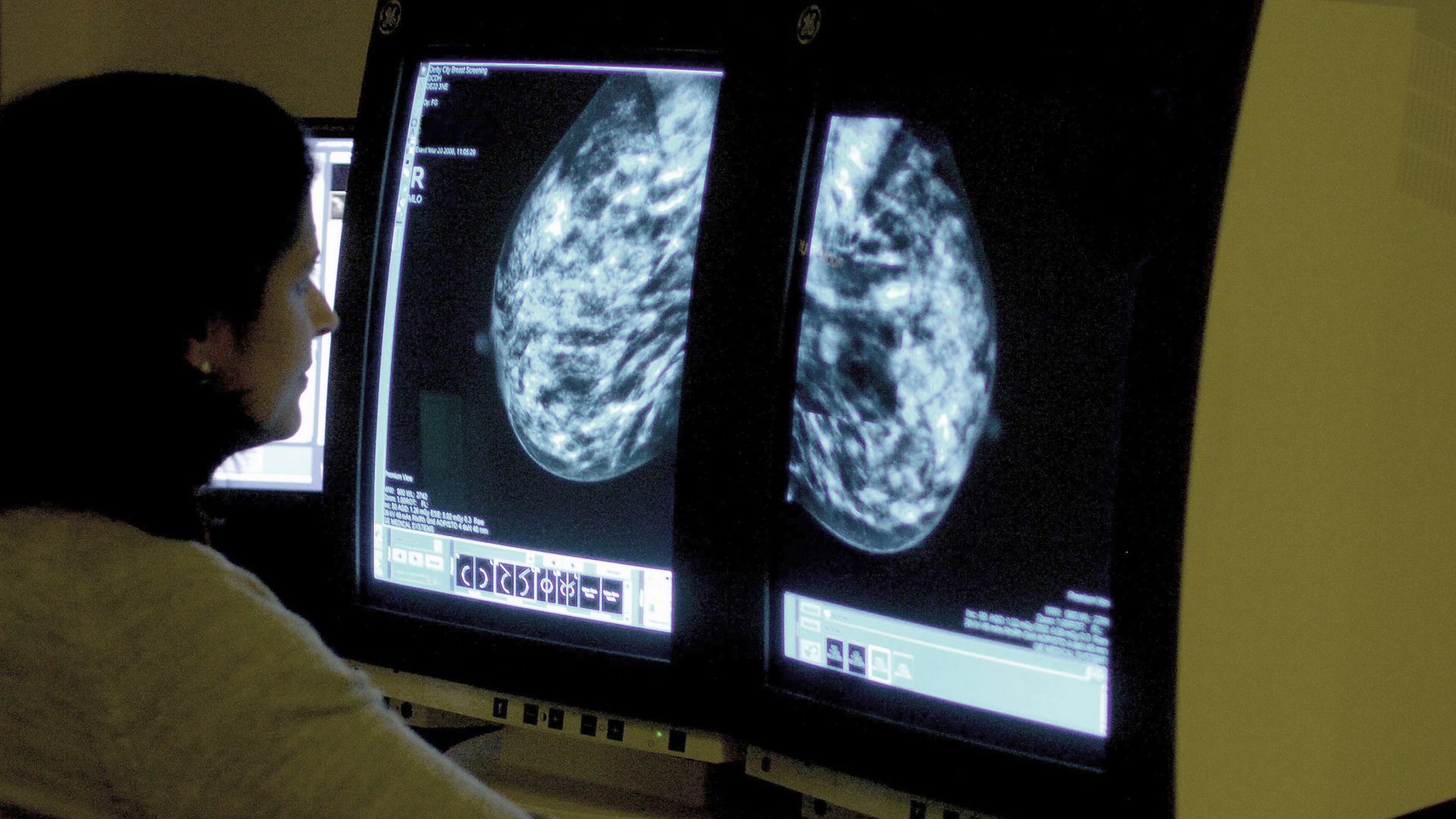
A thirty-year-old woman finds a lump in her breast. She is told it is dense fibrous tissue related to hormonal fluctuations. She is sent home with reassurance and no imaging. Six months later, the lump has doubled in size, and the pathology report reveals an aggressive triple-negative tumor. The doctor did not commit malpractice in the legal sense; they played the odds. But the odds are changing, and clinical intuition has not caught up to the new math.
Medical training embeds the idea that cancer is a disease of senescence. When symptoms appear in youth, they are filtered through alternative diagnoses until the disease forces its way into the open. Overcoming this inertia requires an aggressive rewrite of clinical guidelines. Primary care physicians must unlearn the habit of ruling out cancer based solely on a patient's birth date. Unexplained weight loss, persistent fatigue, changes in bowel habits, or persistent pain in anyone under fifty must trigger immediate, comprehensive diagnostic workups, not wait-and-see monitoring.
The Economic and Human Toll
When a septuagenarian receives a cancer diagnosis, the disruption, while devastating, aligns with the expected arc of human mortality. When a thirty-two-year-old parent of two is diagnosed with stage-four pancreatic cancer, the shockwave shatters an entire economic and social ecosystem.
These patients are in the prime of their earning years, raising children, paying mortgages, and building enterprises. The financial toxicity of cancer treatment compounds the physical trauma. Loss of income, staggering out-of-pocket drug costs, and the inability to secure adequate disability coverage trap families in a spiral of ruin.
Clinical trials, too, are poorly designed for this demographic. Most oncology trials recruit older patients with multiple comorbidities. Young adults with early-onset cancers often have robust physiological reserves that allow them to tolerate aggressive treatment regimens, yet they are treated with protocols derived from data collected on patients thirty years their senior. Tailored, aggressive therapies are required for a demographic whose bodies can withstand intensive intervention, yet drug development pipelines remain anchored to older populations.
Rewriting the Protocol
We are past the point where public health agencies can treat early-onset cancer as an anomaly or a statistical blip. It is a structural crisis that demands an urgent redirection of research funding and clinical priorities.
Epidemiologists need to track early-life exposures with the same rigor currently applied to adult lifestyle factors. We need longitudinal studies that follow individuals from childhood, tracking their exposure to ultra-processed foods, environmental toxins, antibiotic overuse, and metabolic shifts. Without this granular data, we are shadow-boxing with an enemy whose movements we refuse to illuminate.
The institutions charged with protecting public health must drop their institutional defensiveness. Admitting that something in our environment, our food supply, or our lifestyle is driving a generation toward early mortality is an indictment of modern progress. It is an uncomfortable admission, but the alternative is watching the oncology wards fill up with people who should have had decades left to live.
The baseline has shifted. The medical world has no choice but to shift with it, or watch an entire generation pay the price for institutional denial.