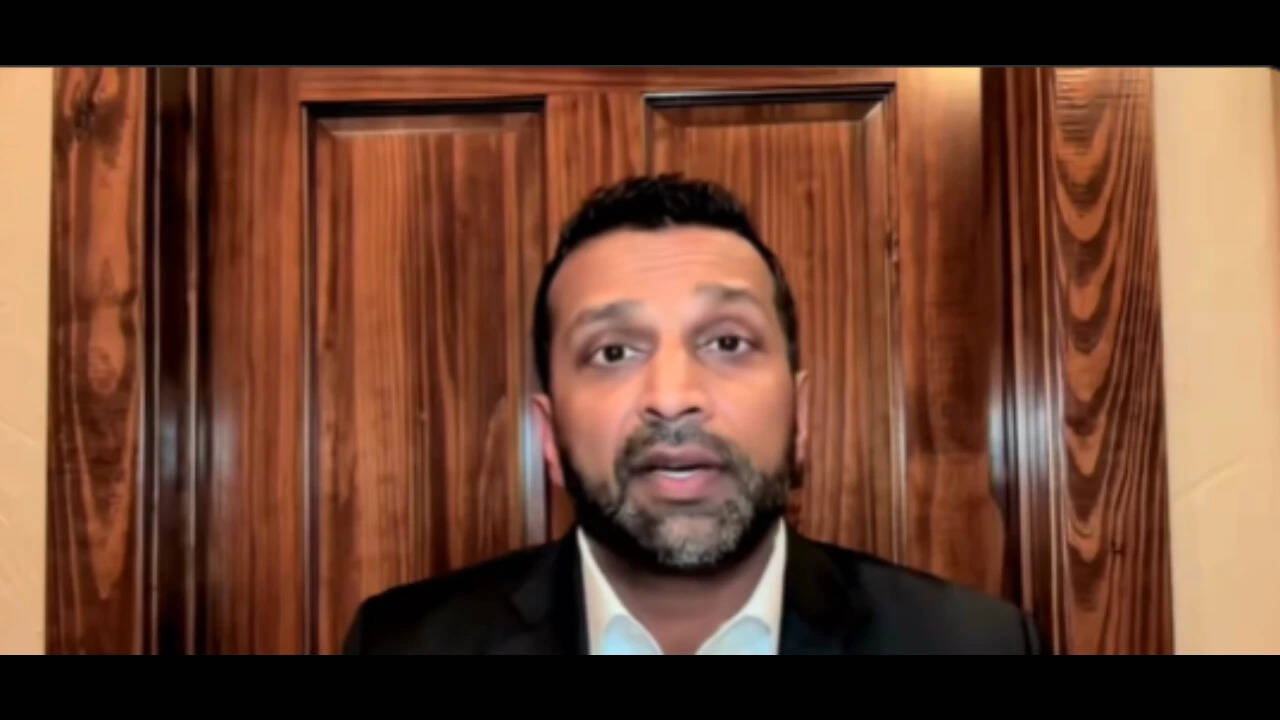
Two hundred arrests. Seven hundred fifty corporate warnings. When FBI Director Kash Patel announced the results of Operation Winter SHIELD and Operation Riptide, Washington framed the twin campaigns as a decisive turn in American cyber defense.
The numbers look impressive on a press release. Behind closed doors in corporate boardrooms and federal field offices, however, those figures point to a far messier reality about how vulnerable American infrastructure remains—and why the federal government is suddenly knocking on private-sector doors before the ransom notes arrive.
Winter SHIELD and Riptide represent a dual-track strategy by the Bureau. One track focuses on proactive victim notification, warning roughly 750 companies that their networks were either compromised or directly in the crosshairs of active threat groups. The other track, Riptide, targets the criminal supply chain directly, resulting in roughly 200 arrests tied to cybercrime networks, initial access brokers, and illicit financial infrastructure. Together, they mark an aggressive operational shift from post-breach forensics to preemptive disruption.
The Anatomy of a Dual-Track Crackdown
For years, the standard federal response to corporate cyberattacks followed a predictable, frustrating script. A company got hit. Systems locked up. Executives panicked, called legal counsel, and eventually notified the FBI—often days or weeks after attackers had already exfiltrated sensitive databases and vanished into encrypted chat channels. By the time federal agents arrived on the scene, they were essentially sweeping up digital ash.
Operation Winter SHIELD and Operation Riptide invert that sequence.
Rather than waiting for corporate general counsels to admit a breach, investigators used intelligence gathered from seized servers, compromised criminal forums, and international law enforcement partnerships to identify victims before those victims even knew they were bleeding data. When the Bureau says it contacted 750 companies, it means federal agents had actionable evidence that threat actors held valid credentials, active web shells, or mapped network pathways inside those organizations.
Operation Riptide supplied the offensive teeth. Law enforcement agencies have increasingly realized that chasing individual ransomware affiliates is a losing game of whack-a-mole. Arrest one twenty-something operator in Eastern Europe, and three more take their place by Monday morning. Riptide went after the plumbing instead—targeting the infrastructure providers, money launderers, and access brokers who make modern cybercrime scalable.
Consider how a modern intrusion actually works in a typical hypothetical scenario. A mid-sized logistics firm leaves an unpatched virtual private network appliance exposed to the internet. An initial access broker scans the web, compromises the device, and sells the login credentials on an underground forum for a few thousand dollars. A ransomware affiliate buys that access, spends two weeks moving laterally across the company's internal network, disables backups, and triggers encryption on a Friday night. Meanwhile, a separate laundering network converts the resulting cryptocurrency ransom into fiat currency.
Riptide aimed to break that assembly line at multiple points simultaneously. By arresting 200 individuals across the ecosystem, investigators sought to introduce friction and distrust into underground markets where anonymity is the only currency that matters.
Why 750 Warnings Should Worry Every Chief Information Security Officer
If you sit in a chief information security officer's chair, the news that the FBI contacted 750 companies carries an uncomfortable subtext. Those 750 organizations were not random mom-and-pop shops running outdated accounting software on a single office desktop. Major federal notifications almost always prioritize enterprises with significant economic footprints, supply chain dependencies, or critical infrastructure ties.
And yet, all 750 needed the federal government to tell them their house was on fire.
This gap exposes a persistent blind spot in modern enterprise security. Over the past decade, corporations have poured billions of dollars into endpoint detection tools, cloud security platforms, and compliance audits. On paper, many of these organizations look heavily fortified. In practice, attackers routinely bypass expensive monitoring stacks by logging in through valid credentials stolen via infostealer malware or exploiting edge devices that sit outside traditional visibility.
When an attacker uses legitimate administrative credentials to move through a network, standard security alerts often stay quiet. There is no noisy malware binary triggering alarms. There is just an administrator account logging in at an unusual hour or querying an internal database. To an overworked security operations center drowning in thousands of low-level alerts every day, a quiet intrusion looks indistinguishable from routine IT maintenance.
Federal intelligence, by contrast, sees the attack from the outside in. When the FBI seizes a command-and-control server or infiltrates a criminal broker's database, agents do not see suspicious network traffic. They see a neat spreadsheet listing corporate domains, active IP addresses, and working passwords.
That asymmetry explains why proactive notification has become one of the Bureau's most valuable tools. It also highlights an uncomfortable truth for private industry: compliance checklists do not stop determined adversaries, and internal telemetry still misses quiet compromises at an alarming rate.
The Geopolitical Reality Behind the Arrest Numbers
Headlines celebrating 200 arrests always invite scrutiny from veteran cyber analysts. Who, exactly, got handcuffed?
In major international cyber operations, arrest figures typically span several distinct tiers of criminal activity. At the bottom sit money mules, low-level carders, and domestic facilitators who cash out stolen funds or rent server space using stolen identities. In the middle sit technical operators, malware developers, and initial access brokers operating across North America, Western Europe, and cooperating jurisdictions. At the very top sit core ransomware developers and state-tolerated syndicates—many of whom reside safely inside countries without extradition treaties with the United States.
This geographic divide remains the single biggest constraint on American cyber enforcement.
Federal agents can dismantle servers in Virginia, seize domains registered through American providers, and arrest operators who make the mistake of vacationing in Europe. What they cannot easily do is execute search warrants in Moscow, Minsk, or Pyongyang. When core developers remain beyond physical reach, arrests of mid-level affiliates and infrastructure providers act as a temporary tax on criminal operations rather than a permanent eradication.
Yet dismissing the 200 arrests under Riptide as mere window dressing misses how underground economies actually function. Cybercrime relies heavily on trust between anonymous strangers. When an access broker disappears and their communications channels fall into law enforcement hands, every buyer who ever transacted with that broker has to wonder whether their own operational security is compromised.
Paranoia is a powerful weapon. By disrupting payment rails, burning established aliases, and flipping arrested facilitators into cooperating witnesses, operations like Riptide force criminal groups to spend time and money rebuilding basic infrastructure instead of launching new intrusions.
The Friction Between Federal Agents and Corporate Boardrooms
Even when the FBI shows up with hard evidence of an active breach, cooperation between government investigators and private companies is rarely smooth.
When Kash Patel emphasized outreach to 750 companies, he touched on a relationship historically plagued by mutual suspicion. For years, corporate legal teams viewed the FBI not as a protective shield, but as a regulatory liability. Executives worried that sharing breach details with federal agents would trigger mandatory disclosure deadlines, invite class-action lawsuits, or leak sensitive operational details to competitors and the press.
On the other side of the table, FBI cyber squads grew frustrated with companies that quietly paid seven-figure ransoms to restore operations without ever preserving forensic evidence or reporting the incident. Paying a ransom might solve a board's immediate operational crisis, but it directly funds the next wave of attacks against other American businesses.
What Happens When the FBI Calls
When a field office reaches out under an initiative like Winter SHIELD, the interaction typically follows a specific pattern that catches unprepared executives off guard:
- Specific technical indicators: Agents rarely offer vague warnings. They usually provide exact compromised IP addresses, stolen account usernames, or timestamps showing unauthorized access.
- Strict limits on attribution: The Bureau will tell a company what is broken, but they will rarely reveal how they obtained the intelligence, protecting ongoing undercover operations and classified sources.
- Immediate pressure to act: Once a company receives formal federal notice of a compromise, plausible deniability evaporates. Failing to remediate an officially reported vulnerability creates massive legal exposure if a major data breach subsequently occurs.
That last point is critical. A warning from the FBI is both a lifeline and a ticking clock. Security teams suddenly have the exact intelligence they need to evict an intruder, while corporate lawyers realize that every move they make from that moment forward will be scrutinized if customer data eventually surfaces on a leak site.
Why Winter SHIELD Signals a Shift in Doctrine
To understand where American cyber defense is heading, look closely at how the Bureau's posture has evolved over the past five years.
Historically, federal law enforcement treated cybercrime much like traditional bank robbery: wait for the crime to happen, gather evidence, identify the suspects, and build a case for prosecution years down the road. That model collapsed under the weight of industrial-scale ransomware and state-backed espionage. Prosecuting three hackers four years after they crippled a hospital system does nothing to keep emergency rooms open today.
Under Patel's leadership, the Bureau is leaning harder into disruption over pure prosecution. Disruption means prioritizing speed—getting intelligence into the hands of network defenders immediately, seizing criminal infrastructure before a campaign reaches its peak, and coordinating simultaneous takedowns with foreign police forces even if the primary suspects never stand trial in a federal courtroom.
This approach carries real trade-offs. Burning an intelligence source to warn 750 companies means investigators might lose long-term visibility into a criminal network's upper echelons. Arresting 200 mid-tier operators sweeps up the catch early rather than waiting years to reel in a single kingpin.
In an environment where attackers can weaponize a newly disclosed software vulnerability within hours, waiting years for the perfect indictment is no longer viable.
The Uncomfortable Truth About Defensive Readiness
Operation Winter SHIELD and Operation Riptide prove that federal intelligence capabilities have grown remarkably sharp. Investigators can penetrate encrypted criminal infrastructure, map victim lists at scale, and coordinate hundreds of arrests across multiple jurisdictions.
None of that solves the underlying structural weakness inside private networks.
Every single one of the 750 companies contacted during Winter SHIELD had a front door that an attacker managed to unlock. In most cases, those doors were opened through basic, preventable failures: single-factor authentication on remote access portals, unpatched edge appliances, over-privileged service accounts, and flat internal networks that allowed an intruder to move effortlessly from a low-level workstation to a core domain controller.
Federal agents cannot patch corporate firewalls. They cannot enforce phishing-resistant multifactor authentication across hundreds of thousands of employee accounts, nor can they segment legacy manufacturing networks that have run untouched for fifteen years.
Law enforcement can arrest 200 cybercriminals today, and another 200 will step into the void tomorrow as long as the return on investment remains high and corporate attack surfaces remain wide open. Until private enterprises treat basic architectural hygiene with the same urgency they reserve for an emergency call from the FBI, Winter SHIELD will not be the last time federal agents have to warn hundreds of companies that someone else already holds the keys to their building.


