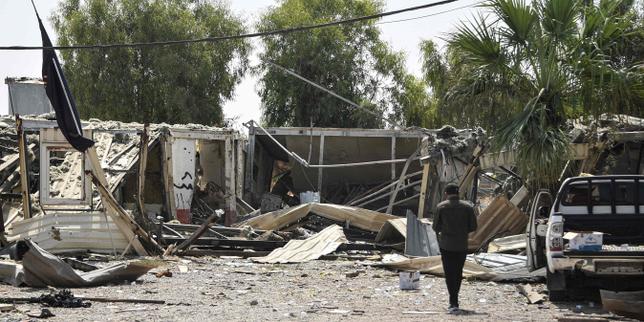
Eleven police officers died when heavily armed militants overran a remote security post in northwestern Pakistan's Khyber Pakhtunkhwa province. The pre-dawn assault underscores a relentless deterioration of security along the porous border with Afghanistan, where state infrastructure has increasingly become a stationary target for well-equipped insurgents.
Standard news coverage stops at the casualty count and offers predictable statements of condemnation from Islamabad. That superficial reporting misses the systemic structural failures rotting the local security apparatus from the inside. This was not merely an isolated firefight. It was the predictable outcome of chronic underfunding, tactical isolation, and a complete strategic vacuum that leaves frontline constables exposed in unfortified outposts.
The Anatomy of an Overrun Post
Remote police posts across Khyber Pakhtunkhwa share a fatal architectural DNA. Built hastily over the past two decades to project state authority into rugged terrain, these stations function as little more than concrete boxes surrounded by sandbags. They lack advanced surveillance capabilities, secure communication lines resistant to modern jamming, and heavy defensive perimeters capable of withstanding synchronized rocket-propelled grenade attacks.
When dozens of armed fighters descended on the post in the dead of night, the defenders faced a catastrophic logistical failure before the first shot was fired. Reinforcements could not arrive in time because the local district headquarters lacked rapid-reaction vehicles capable of navigating treacherous, unpaved mountain roads. Communication equipment was outdated, relying on civilian cellular networks that were easily jammed or disabled by the attackers.
Officers stationed in these high-risk zones report that ammunition stockpiles are frequently rationed during peacetime training to preserve supplies, leaving them ill-prepared for a sustained, multi-hour siege. The state demands that these men hold the line against hardened insurgent networks, yet refuses to supply them with the basic defensive architecture required to survive a coordinated onslaught.
The Regional Power Vacuum
To understand why northwestern Pakistan has devolved into a killing field for law enforcement, one must look beyond tactical errors and examine the broader geopolitical collapse. Following the Taliban takeover of Kabul, regional militant factions operating under various banners gained unprecedented operational depth. Safe havens just across the border provide sanctuary, logistical support, and a steady stream of advanced weaponry left behind by retreating foreign forces.
Local militant networks have successfully shifted their strategy from high-profile urban bombings to a war of attrition against rural police outposts. By systematically targeting the lowest tier of the state security apparatus, insurgents aim to break the morale of the provincial force. When a police constable realizes his post is structurally indefensible, retention plummets, and entire districts begin to view cooperation with state security as a death sentence.
Intelligence sharing between federal agencies and provincial police remains fragmented. Information regarding impending threats often sits in bureaucratic bottlenecks in Peshawar or Islamabad, failing to reach the squad leaders sleeping on cots in vulnerable border districts. This bureaucratic inertia transforms frontline officers into unwitting human tripwires.
Beyond the Official Response
The immediate aftermath of such attacks follows a rigid script. Condemnations are issued, compensation packages are promised to grieving families, and vows are made to bring the perpetrators to justice. Within days, the news cycle moves on, leaving the surviving officers to man the exact same crumbling outposts with the exact same obsolete equipment.
Real reform requires dismantling the entrenched hierarchies that treat provincial police as expendable auxiliary units rather than the primary shield of the state. It demands massive capital investment in fortified infrastructure, drone surveillance for remote outposts, and secure satellite communications that cannot be severed by local threat actors.
Until Islamabad and provincial authorities treat the security of rural police posts with the same urgency applied to military cantonments, the death toll will continue to climb. Eleven families are now mourning men who were sent to guard a desolate frontier with inadequate tools and zero margin for error. As long as structural reform is delayed, the next outpost is already waiting in the crosshairs.