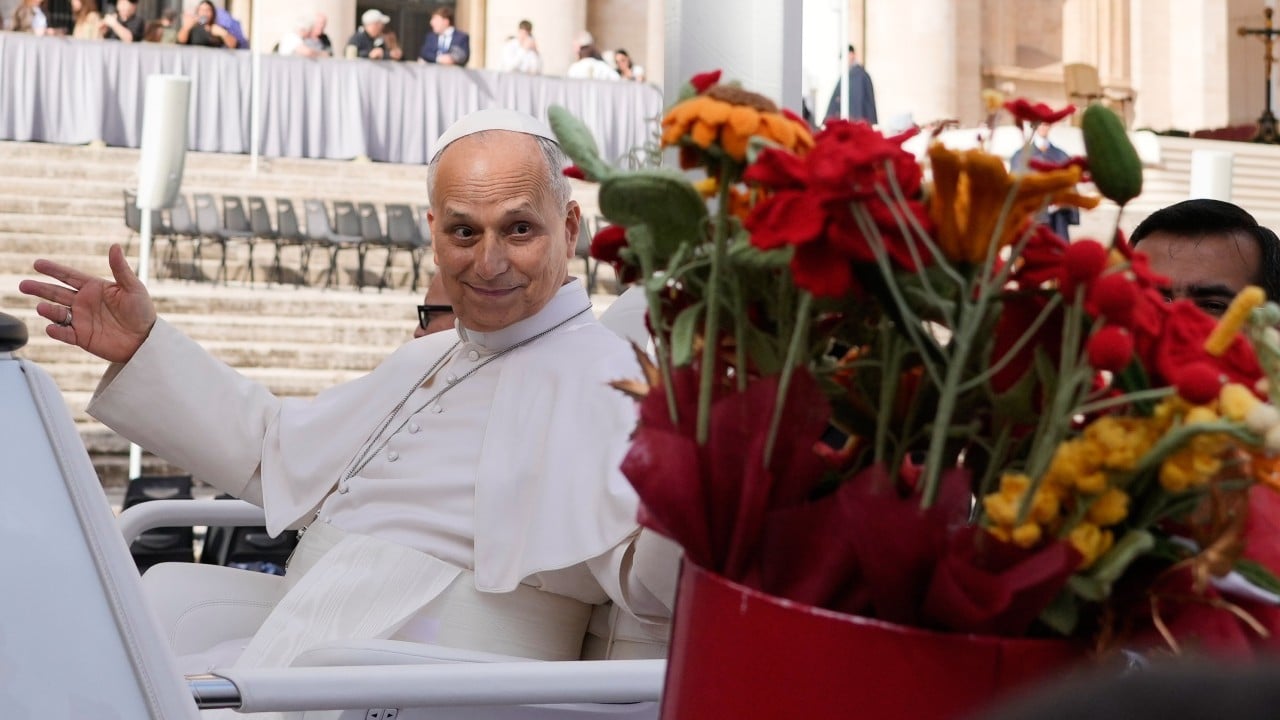
Pope Leo XIV will not need further cancer treatment following the surgical removal of a malignant nodule from his right lung, according to his medical team. The 71-year-old pontiff underwent a lobectomy removing the lower lobe of his right lung at Rome's Gemelli Hospital in mid-October 2026. Subsequent oncological evaluations cleared him of requiring chemotherapy, radiation, or adjuvant systemic therapy, and he went on to complete an arduous South American tour across Uruguay, Argentina, and Peru in November.
A routine health bulletin sounds reassuring on paper. In papal medicine, reassuring bulletins deserve closer scrutiny.
For decades, the Vatican operated under an unwritten rule captured by the Roman adage that the pope is fine until he is dead. Diagnoses were delayed, softened, or withheld until circumstances made secrecy impossible. Leo XIV has broken with parts of that tradition by speaking candidly about how the tumor was spotted during a routine checkup while he felt completely asymptomatic. Still, the announcement that Pope Leo cancer treatment ends at surgery leaves critical clinical and institutional questions hanging in the air.
What Surgery Actually Settled and What It Left Open
When doctors remove a lobe of the lung to treat pulmonary adenocarcinoma, the immediate goal is complete local control. If pathology shows that the tumor was localized—typically characteristic of early-stage disease—and sampled lymph nodes show no spread, oncologists often conclude that additional therapies add toxicity without clear survival benefit.
Lead surgeon Stefano Margaritora and personal physician Luigi Carbone stated that post-operative oncological review found no need for further therapy. That is a major clinical milestone for a man in his early seventies. Removing a lung lobe is major thoracic surgery that taxes pulmonary reserve, requires respiratory physiotherapy, and carries real risks of pneumonia, arrhythmias, or prolonged fatigue even in a physically active patient known for swimming and tennis.
Yet "no further treatment" does not mean "cured forever." In oncology, surveillance becomes the next phase of care. Even when a localized lung nodule is excised cleanly, clinicians monitor patients with periodic imaging and clinical exams to watch for local recurrence or new nodules. Leo himself acknowledged that he will continue routine checkups as a precaution.
The Hidden Math of Early Detection
Catching a lung tumor before symptoms appear changes the odds dramatically. Lung cancer rarely causes pain or shortness of breath while confined to a small spot in the lung parenchyma. Most symptomatic lung cancers are already locally advanced or metastatic by the time a patient seeks care.
Finding a suspicious shadow during an annual checkup gave Leo's team a window to operate promptly on October 13. Early detection also creates a statistical trap that commentators routinely gloss over. Screening and incidental imaging pick up slow-growing lesions earlier, which extends the calendar time from diagnosis to any future event without always guaranteeing that every microscopic cell was eliminated.
Clinicians who study non-small cell lung cancer in nonsmokers point out that environmental exposures—air pollution, secondhand smoke, radon, asbestos, or occupational particulates—alongside age and genetic susceptibility play significant roles. Age alone increases cumulative cellular mutations. At 71, Leo sits squarely in the demographic bracket where incidental pulmonary nodules are frequently discovered during chest scans.
Why Vatican Medicine Never Happens in a Vacuum
Treating a head of state who leads roughly 1.4 billion Catholics is never purely a medical exercise. Every scan, discharge date, and flight clearance carries geopolitical and theological weight.
Consider the timing of Leo's recovery. Surgery occurred on October 13. By early November, he was boarding flights, riding in open vehicles, visiting high-altitude stops, and delivering dozens of speeches across three South American nations. Thoracic specialists often advise caution with air travel and physical strain in the first few weeks after lobectomy, though individual clearance depends on lung function, pain control, and healing progress.
The Politics of Projected Strength
A pope who looks frail invites speculation about succession, governance, and institutional drift. A pope who travels relentlessly and speaks with a firm voice projects continuity.
During his South American journey, Leo made it clear that he was not altering his agenda, rushing to appoint new cardinals, or drafting a provisional letter of resignation ahead of time. Some canon lawyers and church watchers have long argued that clear contingency instructions are prudent for any aging pontiff in case of sudden incapacitation. Leo pushed that off, signaling confidence in his stamina and a long view of his pontificate.
That posture is understandable from a leadership standpoint. A leader cannot govern effectively while acting like a caretaker waiting for the next medical crisis. At the same time, projecting total invulnerability after thoracic surgery creates its own hazard: it can pressure a patient—even a papal one—to push past normal post-surgical fatigue to meet grueling diplomatic schedules.
| Factor | Clinical Reality After Lobectomy | Institutional Pressure in the Papacy |
|---|---|---|
| Post-Op Recovery | Typically takes weeks to rebuild stamina and lung capacity; fatigue is common. | High demand for public appearances, travel, and visible vigor. |
| Oncology Follow-Up | Requires ongoing surveillance scans and checkups despite no active therapy. | Public messaging favors finality and "all clear" reassurance. |
| Succession Planning | Age 71 carries baseline medical risks regardless of current prognosis. | Raising resignation contingencies can look like weakness or loss of nerve. |
| Schedule Pace | Rest and paced exertion protect healing tissue. | Major international trips carry symbolic weight for church unity. |
What Most Coverage Misses About Lung Lobectomy
Most news summaries treat the phrase "no further treatment needed" as a finish line. In thoracic oncology, it is closer to a halftime report.
Removing the lower lobe of the right lung permanently reduces total lung volume by a fraction. Healthy lungs have substantial reserve capacity, so an active older adult can often resume normal daily activities and moderate exercise without feeling winded during routine tasks. Yet extreme exertion, thin air at high elevation, respiratory infections, or lingering chest wall discomfort can remind a patient that their anatomy has changed.
There is also the emotional and psychological shift that follows an unexpected cancer diagnosis. Even when caught early and removed cleanly, hearing the word cancer alters how a person views routine aches, coughs, and fatigue. Every minor symptom can trigger a quiet question: is that nothing, or is that something?
A Hypothetical Illustration of Surveillance Logic
Suppose, purely as a hypothetical example to illustrate how follow-up care works, a 71-year-old patient has a small stage I pulmonary adenocarcinoma removed cleanly with clear margins and negative lymph nodes. No chemotherapy is ordered because clinical trials show minimal benefit and real side effects in that setting. Six months later, a routine low-dose chest CT shows a tiny, stable scar at the surgical staple line. The patient feels fine and continues normal routines, knowing that periodic scans over several years are standard practice rather than a sign that treatment failed.
Real-world oncology works much like that hypothetical example. The absence of chemotherapy or radiation is good news—it means the medical team judged the localized excision sufficient. It does not mean biology stops sending false alarms or real challenges.
Church Unity and the Weight of Expectations
Leo's health update matters beyond hospital walls because he has tied his papacy closely to healing divisions inside the Catholic Church. Debates over liturgical traditions, priestly shortages in remote regions like the Amazon, and governance reform have left deep fault lines.
By declining immediate changes on contentious issues like married priests or restrictions on the older Latin Mass, Leo has staked his credibility on steady, unhurried leadership aimed at church unity. Health scares complicate that strategy. If a pontiff appears fragile, factions inside and outside Rome inevitably read political meaning into every cough, canceled meeting, or travel adjustment.
Conversely, completing a demanding South American itinerary after lung surgery gives Leo tangible proof of resilience. Supporters see a leader who refuses to be defined by illness. Skeptics—and seasoned medical observers—know that resilience on a two-week trip does not erase long-term actuarial realities.
Practical Takeaways for Readers Watching the Story
Anyone following coverage of Pope Leo XIV and his recovery should read future medical bulletins with a sharper eye than standard wire summaries encourage.
- Distinguish absence of adjuvant therapy from zero future risk. Avoiding chemotherapy or radiation is a favorable sign after surgery, not a guarantee against recurrence.
- Watch how recovery is measured. Public appearances and speeches show stamina and voice projection, while ongoing surveillance scans determine long-term oncological status.
- Separate institutional confidence from clinical certainty. Vatican optimism serves clear diplomatic and pastoral purposes, even when doctors remain cautious behind closed doors.
The strongest takeaway from Leo's ordeal has nothing to do with palace intrigue. Getting an incidental lung spot checked and treated without delay turned a silent threat into a manageable surgical event—a reminder to keep up with routine screenings even when you feel completely well.
Pope Leo's doctors say he no longer needs cancer treatment after surgery offers a brief news broadcast overview of the medical team's post-surgery assessment and ongoing monitoring plans.