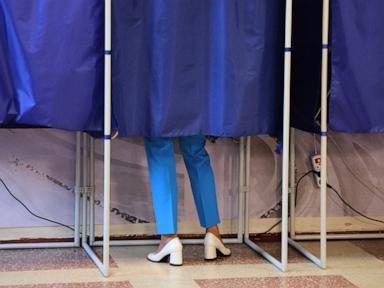
Elections in contemporary Russia have long ceased to be exercises in political competition. Instead, they function as high-stakes stress tests for the ruling apparatus, designed to measure bureaucratic compliance, elite loyalty, and the internal stability of the state. When the Central Election Commission declared that the ruling United Russia party had secured another sweeping supermajority in the State Duma, foreign observers focused primarily on the predictable mechanics of exclusion and control. Independent opposition figures were barred from the ballot, critical voices were silenced, and the outcome was engineered long before the first voter stepped into a booth.
Yet viewing this political theater merely as a foregone conclusion misses the deeper operational reality of the regime. The primary audience for these multi-day ballots is not the international community, nor is it the fragmented domestic opposition. The real examinees are the regional governors, municipal bureaucrats, enterprise directors, and party functionaries tasked with delivering the required numbers.
For the Kremlin, the core objective of a parliamentary election is administrative mobilization. Governors and local authorities are judged by their ability to manage populations, suppress dissent, and produce orderly statistical returns. A failure to deliver high turnout or sufficient support for the party of power is interpreted not as a public preference, but as administrative incompetence or disloyalty. Consequently, local officials deploy an array of administrative resources, ranging from compulsory voting directives for public-sector employees to sophisticated digital controls, ensuring that the final output matches the expectations of the presidential administration.
The introduction of remote electronic voting has further altered the dynamics of control. Digital voting platforms provide the state with immense flexibility, creating distinct voting patterns that starkly separate public-sector compliance from independent civic participation. While traditional polling stations allow for old-fashioned bureaucratic pressure, remote systems introduce automated efficiency to the management of state-dependent populations. Workers in state enterprises, hospitals, and educational institutions find themselves subtly or overtly nudged to register and cast their ballots under the watchful eye of management, transforming employment into an instrument of electoral conformity.
Beyond bureaucratic discipline, the electoral cycle serves to integrate a new political class forged by the ongoing war in Ukraine. The inclusion of military veterans and figures associated with the conflict onto party lists marks a deliberate shift in the composition of the ruling elite. By bringing these individuals into the legislature, the regime signals to the broader administrative and security apparatus that loyalty during a period of national friction is rewarded with institutional status. This restructuring ensures that the parliament remains not a forum for legislative debate, but a disciplined sounding board for executive policy.
The suppression of alternative political vectors was systematic. Major anti-war and democratic voices were systematically removed from the ballot through technical disqualifications, leaving only systemically loyal opposition parties to occupy the remaining seats. Parties such as the Communists, the Liberal Democrats, and New People operate within strictly defined boundaries, offering token opposition on minor domestic issues while remaining aligned with the core imperatives of foreign and security policy. This managed pluralism creates the illusion of political choice while entirely neutralizing any systemic threat to executive authority.
Ultimately, the ritual of voting provides the regime with a veneer of popular validation. Even in a tightly controlled political ecosystem, leaders prefer the optics of a public mandate over naked coercion. By converting manufactured participation into official percentages and televised victory maps, the state attempts to normalize its trajectory and project internal invulnerability.
The new legislative term begins with the ruling apparatus more centralized than ever, its internal hierarchies reinforced by the demands of wartime governance. The numbers recorded by election officials are less a reflection of public enthusiasm than a precise measurement of state control over the machinery of society. As long as the administrative vertical remains intact and capable of enforcing discipline from top to bottom, the structural outcome of any domestic vote in Russia will remain entirely insulated from genuine political surprise.