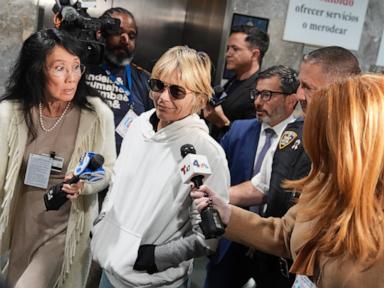
When Selma Blair stepped onto a cross-country flight from Los Angeles to New York on October 11, 2026, she entered a high-altitude pressure cooker that would end in handcuffs, hospital evaluation, state assault charges, a federal summons, and an immediate PR firefight. Within days, her representatives rushed to set a simple narrative, insisting that Selma Blair experienced a medical emergency and did not intend to hurt anyone on the flight that led to her arrest.
In aviation law and criminal procedure, intent is not a magic shield. Meanwhile, you can explore related developments here: When the Sky Breaks Over the Pampas.
A publicist's press release can frame sympathy, calm a fanbase, and push back against wild rumors swirling online. It cannot rewrite flight deck audio, erase physical injuries reported by cabin crew, or automatically dissolve overlapping state and federal jurisdictions. Watching how this story has been covered reveals a familiar media reflex: treating a celebrity's statement of non-intent as if it settles the matter. It does not. It barely opens the real investigation.
What Happened on Delta Flight 938
Accounts from law enforcement sources, air traffic control audio, court filings, and public statements paint a chaotic picture rather than a neat one-line headline. According to reporting on the October 11 incident aboard Delta Air Lines Flight 938 from Los Angeles to John F. Kennedy International Airport, a disturbance broke out in the cabin after an earlier argument between passengers escalated. Flight attendants stepped in, and crew members had to restrain the 54-year-old actress. To see the bigger picture, check out the detailed analysis by USA Today.
Authorities alleged that Selma Blair punched one flight attendant and bit another during the altercation. Some early reports claimed she tried to open an aircraft door mid-flight, though a Delta spokesperson said the airline did not have evidence to confirm that detail, and her publicist later flatly denied any attempt to open the door. Pilot audio captured on air traffic control feeds noted that the disruptive passenger appeared to have hit or bashed her head against a bulkhead and called for medical personnel to meet the aircraft.
The trouble did not stop at the gate. Law enforcement sources and prosecutors alleged that after landing, while being transported by ambulance to Jamaica Hospital for evaluation, Selma Blair kicked a Port Authority police officer, and that once at the hospital, she assaulted a nurse. Following her hospital release and booking in Queens, she was arraigned on October 12 on two counts of second-degree assault tied to the post-flight incidents, pleaded not guilty, and was released on bail set at $20,000 cash or $60,000 bond. Prosecutors and outlets also reported a separate federal summons or violation notice from the FBI connected to the flight itself.
Why Lack of Intent Rarely Ends an Aviation Case
Defense lawyers and publicists reach for "no intent" immediately because it humanizes a client who faces severe public backlash. After the arrest, attorney Shawn Barnes told a court that Selma Blair had boarded in Los Angeles following a heavy workload, hit her head during the flight, and suffered severe confusion and disorientation compounded by cabin altitude. Weeks later, on October 30, she posted an apology video saying she had stayed quiet on legal advice, felt deep remorse toward anyone hurt or frightened, and never meant to harm anyone.
Anyone who has covered federal aviation enforcement knows how steep that climb still is. Cabin crews operate under strict federal rules, and interference with flight crew members or attendants is treated aggressively because a cabin brawl at 35,000 feet threatens everyone aboard. Even when a defendant argues medical disorientation or head trauma, prosecutors look at objective evidence: witness accounts, injury records, restraint logs, hospital charts, and body-worn or surveillance footage where available.
There is also a crucial legal distinction between what happened in the air and what happened on the ground. The state assault charges in Queens center on allegations involving a police officer and a nurse after the plane landed, while the federal matter addresses conduct aboard the aircraft. Showing that a passenger was confused or medically distressed can matter enormously in plea negotiations, sentencing, or whether a jury doubts specific mental states on certain charges. It does not force prosecutors to drop a case on day one.
The Medical Reality and the Altitude Factor
To understand why Selma Blair's camp leaned so heavily on a medical explanation, look at her public health history. Diagnosed with multiple sclerosis in 2018 and open about undergoing intensive treatment and managing neurological challenges over the years, she has long lived under a microscope whenever her physical appearance or mobility draws attention. When her publicist addressed the October flight, the statement pushed back hard not only on claims of intentional harm, but also on online suggestions questioning whether she even has multiple sclerosis.
Cabin air adds another layer that casual commentary routinely overlooks. Commercial airliners are pressurized to an equivalent altitude typically between 6,000 and 8,000 feet, meaning slightly lower oxygen levels and dry air. Pair that environment with exhaustion from a grueling schedule, dehydration, medication effects, or a blow to the head—as her attorney and air traffic audio referenced—and sudden cognitive disorientation or agitation becomes a plausible medical thread to examine.
Yet medical vulnerability is a double-edged sword in court. A head injury or neurological episode can help explain erratic behavior or panic, which is why medical evaluations are standard practice when a distressed passenger is pulled from a plane. At the same time, medical records are scrutinized closely by both sides; a judge or jury will ask what caused the state of confusion, whether warning signs were visible earlier, and whether alleged physical strikes went beyond involuntary flailing during a medical crisis.
The PR Playbook Behind the Statement
Watch how celebrity crisis management works in real time. First comes containment: a brief statement from a representative asserting a medical emergency, denying the most alarming rumor—in this case, trying to open an airplane door—and insisting there was no malice. Second comes the silence window while lawyers review charging documents and evidence. Third comes the direct-to-camera apology once counsel clears a carefully worded message, blending contrition for the emotional impact on others with a pledge to respect the legal process.
That playbook is smart public relations. It gives supporters a reason to stay loyal and gives sympathetic outlets a clean headline.
It also leaves tough questions hanging. Why did an argument among passengers escalate to the point where crew members had to restrain Selma Blair? If she hit her head, did that happen before or during the struggle? How do the accounts of injured crew members, the police officer, and the hospital nurse square with her claim of unintentional conduct? Those questions will not be answered in a press release; they will be tested in discovery and court appearances stretching into 2027.
What to Watch Next
With her next court date set for January 19, 2027, in Queens and federal proceedings moving on a separate track, the real story of Selma Blair's arrest is only entering its evidentiary phase. Watch whether prosecutors pursue full trials or negotiate dispositions that account for medical evaluation and lack of prior criminal intent, and watch how airlines and courts balance passenger health crises against zero-tolerance cabin safety rules. Until the court record speaks in full, a claim of no intent remains what it has always been in high-stakes cases like this: an opening argument, not the verdict.