Power in Tehran has never been shared comfortably. Behind the austere marble facades of the presidential palace and the fortified compounds of the clerical hierarchy lies a permanent friction that defines Iranian governance. Recent public acknowledgments from the executive branch regarding the severe difficulties of interacting with Supreme Leader Mojtaba Khamenei have blown open a window into a system built on institutionalized distrust. This is not merely a bureaucratic turf war. It is a structural design meant to prevent any single official from consolidating enough authority to challenge the clerical establishment.
When the presidency and the office of the Supreme Leader lock horns, the friction ripples across regional diplomacy, economic policy, and domestic security. Understanding this dynamic requires looking past official rhetoric and examining the actual distribution of authority within the Islamic Republic. For a more detailed analysis into this area, we recommend: this related article.
The Architectural Flaw of Dual Governance
The Iranian constitution creates an inherent administrative paradox. On one side stands the president, elected through a tightly managed popular vote, tasked with managing the day-to-day operations of the state, foreign trade, and ministries. On the other stands the Supreme Leader, holding absolute veto power over all strategic decisions, commanding the armed forces, and controlling the judiciary and state media.
This structure guarantees friction. When an elected official attempts to implement reforms, negotiate international treaties, or adjust economic subsidies, they must constantly run the gauntlet of unelected oversight bodies. For broader details on this development, extensive analysis can be read at The New York Times.
History shows that this tension escalates whenever a president misreads their mandate. Mohammad Khatami tried to open political space in the late 1990s and ran directly into a wall of judicial crackdowns orchestrated by the conservative establishment. Hassan Rouhani spent years fighting hardliners over the 2015 nuclear agreement, only to watch his political capital evaporate when the subsequent administration tore it up.
The executive office is designed to absorb public anger while possessing only fractional control over the levers of power. When a president publicly admits that dealing with the Supreme Leader is difficult, they are usually signaling to their domestic constituency that their hands are tied. They are attempting to deflect blame for failing promises while walking a razor-thin line between insubordination and self-preservation.
The Succession Factor and Mojtaba Khamenei
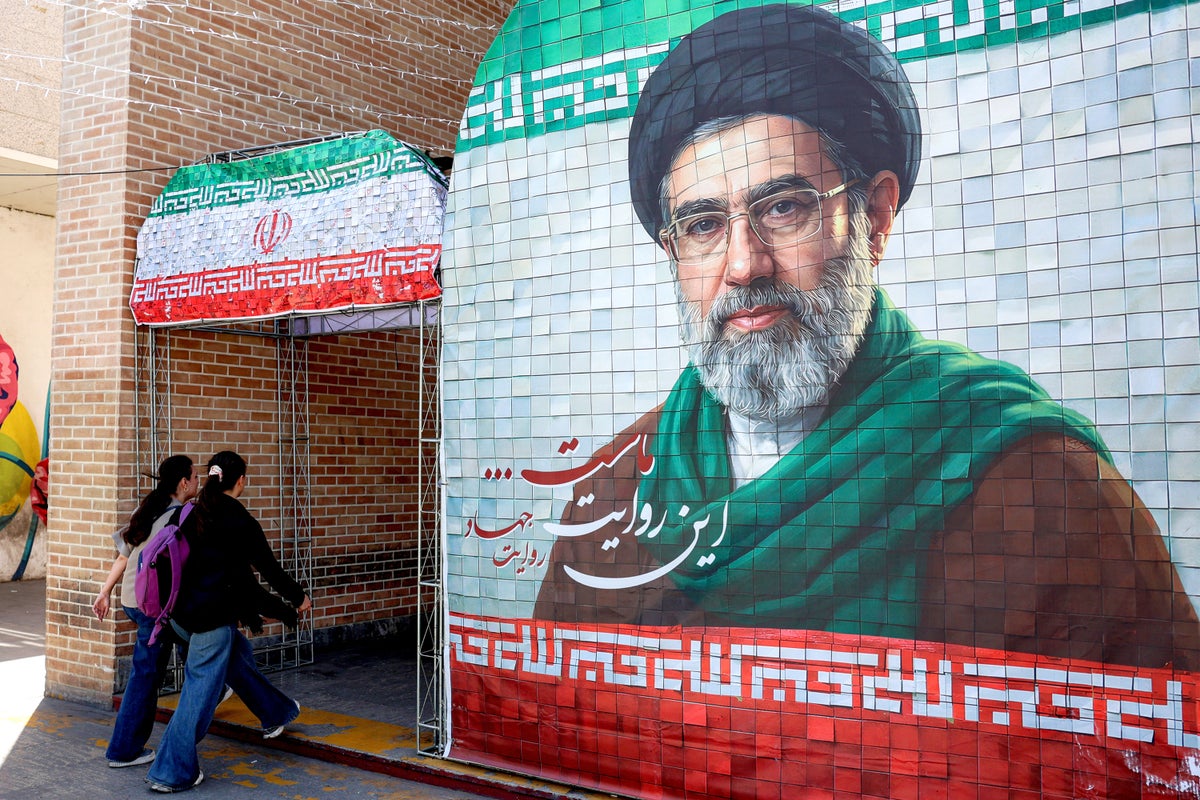
The elevation of Mojtaba Khamenei into the inner sanctum of supreme authority marks a critical inflection point for the Islamic Republic. Unlike his father, Ali Khamenei, who rose through the revolutionary hierarchy with established clerical credentials, Mojtaba’s power base has historically been tied to the security apparatus, specifically the Islamic Revolutionary Guard Corps.
This security-first pedigree changes the internal calculus of the regime. Clerical authority in Iran has traditionally relied on a mix of religious legitimacy and political balancing among various factions. A leader whose primary backing comes from men with guns rather than seminaries operates differently. The lines between state administration and military command blur further.
For a sitting president, navigating this reality is an exercise in high-stakes survival. Every cabinet appointment, every intelligence briefing, and every diplomatic overture must be weighed against the priorities of the security elite.
Intelligence analysts note that Mojtaba Khamenei’s influence has long operated behind a veil of operational opacity. He does not need a formal title to block a policy or sideline a minister. His network extends deep into the foundations of state-owned enterprises, intelligence directorates, and paramilitary wings. When the executive branch attempts to chart an independent economic course, it hits invisible walls constructed by financial cartels tied directly to the security state.
The Economic Cost of Institutional Paralysis
Iran’s economy is staggering under the weight of systemic corruption, international sanctions, and domestic mismanagement. Yet the root of the crisis is political.
When the government cannot form a coherent policy because the presidency and the supreme leadership pull in opposite directions, foreign investors stay away and domestic capital flees. Basic infrastructural decisions stall for months while factions debate ideological purity.
Inflation climbs unchecked. The national currency loses value against the dollar with alarming regularity. Protests erupt over water scarcity, fuel prices, and basic living costs, only to be met with immediate suppression.
The presidency takes the blame for high food prices and currency depreciation. Yet the policies driving these crises—such as heavy military spending, regional proxy funding, and resistance to international financial transparency standards—are dictated from above the executive branch. This creates a dangerous disconnect. The public directs its fury at the ballot box choices, while the actual decision-makers remain insulated behind layers of clerical immunity.
Managing the Dissident Undercurrent
Public frustration in Iran is no longer hidden behind closed doors. It spills into the streets with regularity, crossing class and ethnic lines.
The regime responds with a predictable playbook: targeted arrests, internet blackouts, and heavy security deployments. But brute force does not solve structural exhaustion. The ideological cohesion that fueled the 1979 revolution has worn thin among a younger population that has known nothing other than economic stagnation and international isolation.
Inside the halls of power, this disconnect triggers paranoia. Hardline factions view any proposal for structural reform as a Trojan horse for Western subversion. Consequently, the circle of trust narrows. Decision-making becomes concentrated in fewer hands, increasing the likelihood of catastrophic miscalculations.
The Myth of Smooth Transitions
Observers often talk about authoritarian regimes as monolithic blocks where orders cascade effortlessly from top to bottom. That perception is false. Autocracies are frequently defined by intense internal rivalries, backstabbing, and bureaucratic sabotage.
Iran is a prime example of this phenomenon. The friction between the administrative state and the clerical-security core is a feature of the system, not a temporary glitch. It prevents any single faction from growing too strong, but it also paralyzes the nation’s ability to adapt to modern crises.
As external pressures mount and domestic demands grow louder, the margin for error shrinks. The public admissions of difficulty coming from the executive branch are not signs of reformist courage. They are stress fractures in a governance model that is running out of time to fix itself.
The machinery of the Islamic Republic continues to grind forward, sustained by patronage, coercion, and oil revenue. But the friction at the top is palpable, and the cost of maintaining this fragile balance grows heavier with every passing year.