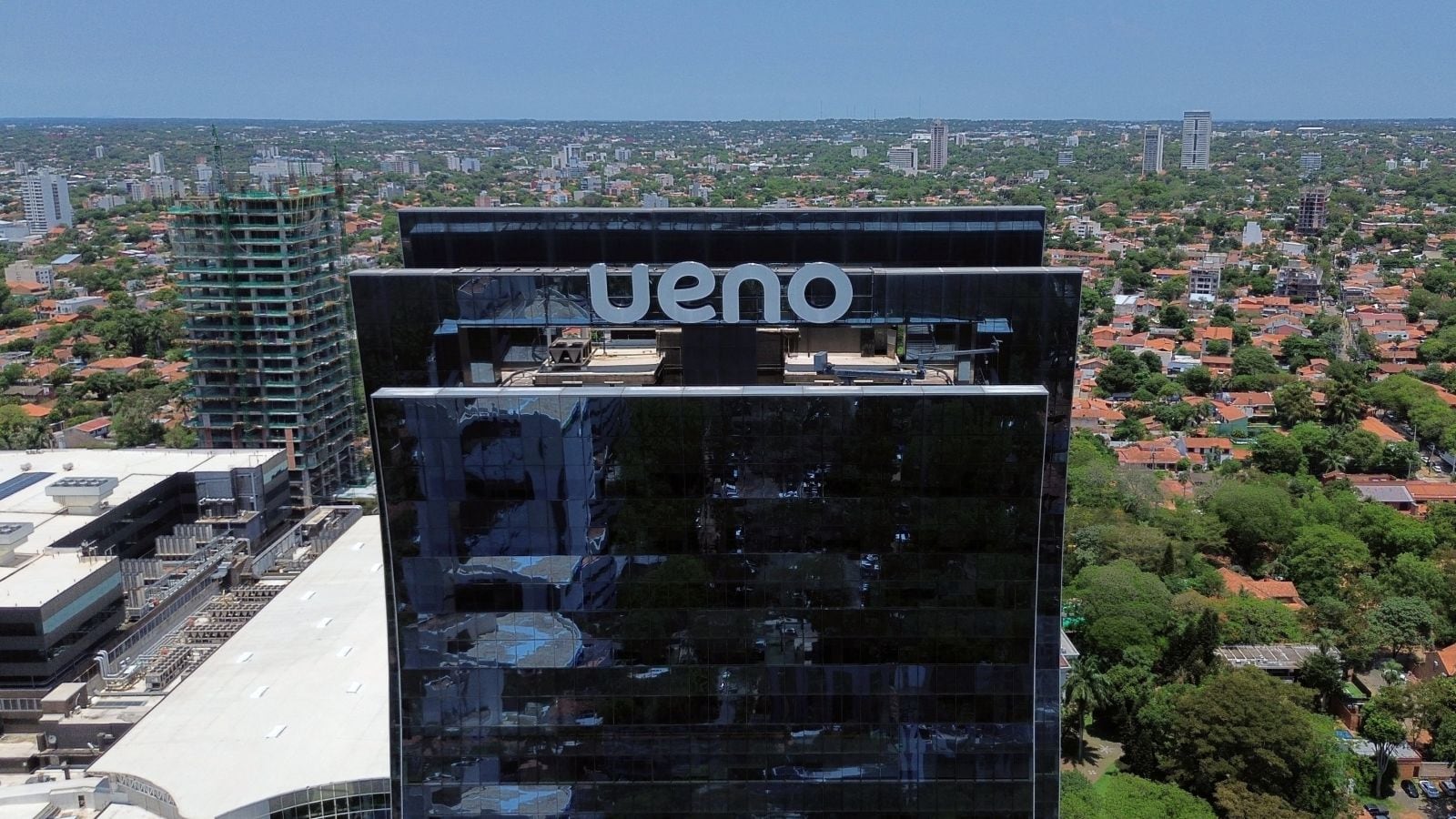
The crisis surrounding Paraguay's Ueno Bank did not start with a balance sheet collapse, nor did it begin with a run on customer deposits. It exploded because of who holds the keys to the vault. When a rapidly growing digital lender became the primary financial engine for state agencies, public pension funds, and the ruling political establishment within a matter of months, what looked like a fintech success story rapidly morphed into a full-blown institutional crisis over conflict of interest, state capture, and regulatory favoritism.
In Asunción, money and politics rarely walk separate paths. Anyone who has covered Latin American banking over the last thirty years knows that sudden, meteoric rises in lightly regulated markets usually carry a political tailwind. Yet the sheer velocity of Ueno Bank's ascent—and the fierce backlash from opposition lawmakers, rival bankers, and civil society—crossed an invisible line. It forced an uncomfortable national reckoning over where the private business interests of President Santiago Peña end and the public treasury of Paraguay begins.
Anatomy of an Overnight Giant
To understand why the Ueno Bank controversy detonated across the Paraguayan political spectrum, you first have to look at the timeline. Traditional commercial banks in South America take decades to build a dominant deposit base, acquire a massive retail footprint, and win lucrative government payroll contracts. Ueno did it in a fraction of that time.
Originally operating as Financiera Ueno, a mid-sized finance company, the institution underwent a dramatic transformation. It secured a full commercial banking license from the Central Bank of Paraguay, rebranded as a sleek, app-first digital bank, and absorbed Visión Banco—one of the country's largest and most established microfinance lenders. Overnight, an aggressive newcomer possessed the customer base, physical branch network, and capital structure of a heavyweight incumbent.
Growth like that requires massive capital injections and regulatory blessings. Both arrived right on schedule.
Critics immediately pointed to the bank's ownership structure under Grupo Vázquez, a sprawling corporate conglomerate with deep ties to Paraguay's political elite. More specifically, scrutiny zeroed in on the financial links between the conglomerate's network and President Santiago Peña himself. Before assuming the presidency in August 2023, Peña held stakes and maintained close professional relationships within the corporate orbit connected to Ueno's backers—ties that included investments in itti, the technology firm providing the core software infrastructure for the bank.
When Peña took office, his asset declarations and subsequent business divestments became the subject of intense journalistic and legislative investigation. Even when shares are transferred or placed at arm's length, perception in high-level finance is everything. And the perception in Asunción was unmistakable. The president's former business associates were suddenly running the fastest-growing bank in the country, right as state money began flowing into its coffers at an unprecedented clip.
The State Deposit Pipeline
A commercial bank cannot survive on sleek mobile interfaces and cashback promotions alone. It needs cheap, sticky liquidity. In developing economies, the cheapest and stickiest liquidity of all belongs to the state.
Public institutions—ranging from state-owned utilities and binational hydroelectric entities to municipal governments and social security funds—hold billions of dollars in operational cash and long-term reserves. Historically, those deposits were spread across a handful of legacy banks or held in state-run institutions like the Banco Nacional de Fomento.
Then the tide shifted.
Investigative reports and congressional inquiries began tracking a massive migration of public funds toward Ueno Bank. State agencies opened accounts. Public-sector payrolls shifted. Most explosively, the Instituto de Previsión Social (IPS)—Paraguay's embattled public pension and healthcare agency—became a focal point of public outrage.
Consider the mechanics of a pension fund deposit. When an agency like IPS places hundreds of millions of dollars in certificates of deposit or checking accounts at a private commercial bank, that bank gains an immediate, low-cost funding advantage. It can lend that money out at steep retail rates, capture a wide net interest margin, and fund aggressive customer acquisition campaigns that smaller competitors simply cannot match.
For ordinary Paraguayans struggling with long wait times and medicine shortages at IPS clinics, seeing their retirement funds used to supercharge the liquidity of a politically connected bank felt like a slap in the face. Opposition senators demanded to know why IPS and other state bodies were concentrating risk in a newly minted commercial bank rather than diversifying across older, more battle-tested institutions.
The administration's defense relied on market logic. Officials argued that Ueno offered competitive interest rates, superior digital infrastructure, and modern payment rails that helped formalize Paraguay's heavily cash-based economy. On paper, those arguments hold water. Digitizing state disbursements reduces petty corruption and lowers administrative friction.
Yet in institutional finance, process matters just as much as outcome. When bidding criteria appear tailored to a single vendor, or when state fund managers shift billions without transparent, public risk-scoring matrices, market logic collapses into political suspicion.
Regulatory Blind Spots and the Central Bank
Every major banking controversy eventually lands on the doorstep of the regulator. In Paraguay, that means the Banco Central del Paraguay (BCP) and the Superintendency of Banks.
Central banks operate on a currency more fragile than the guaraní. They run on credibility. If market participants believe the regulator applies one set of rules to politically favored entities and another to everyone else, systemic trust erodes.
During Ueno's rapid expansion and its absorption of Visión Banco, rival bankers quietly complained about what they saw as an uneven playing field. Mergers of that magnitude require exhaustive due diligence, capital adequacy stress tests, and anti-monopoly reviews. Competitors questioned how quickly approvals moved and whether standard concentration limits on public-sector deposits were being enforced with the usual rigor.
To be fair, consolidating a fragmented banking sector is a standard goal for central bankers across Latin America. Paraguay has long suffered from high operating costs across too many small lenders, and merging a legacy microfinance player with a tech-heavy bank makes strategic sense on a spreadsheet. Visión Banco had been grappling with asset quality pressures following the pandemic, making a merger an attractive way to avoid a messy intervention down the road.
That is the gray area that makes this crisis so combustible. Two contradictory truths exist simultaneously. First, consolidating Visión Banco into a well-capitalized digital entity likely stabilized a vulnerable segment of the local financial system. Second, the way the transaction intersected with the executive branch's personal financial history created an undeniable conflict of interest that the regulatory framework failed to insulate against.
How a Banking Story Became a Political Weapon
In Paraguay, political battles are rarely fought solely over ideology. They are fought over control of state apparatus and economic rents, often within the dominant Colorado Party itself.
For decades, the Colorado Party has maintained a near-monopoly on executive power, divided into fierce internal factions. Santiago Peña rose to power backed by former president Horacio Cartes, a billionaire businessman whose own financial empire has faced severe sanctions from the United States government over corruption allegations.
Because of that lineage, every financial move made by the Peña administration is viewed through a geopolitical and factional lens. When the Ueno Bank controversy gained steam, it instantly handed ammunition to three distinct groups:
- Opposition Lawmakers: Senators and deputies from minority parties seized on the bank's state contracts as proof of systemic cronyism, launching formal requests for information and threatening congressional investigations.
- Internal Party Rivals: Factions within the Colorado Party sidelined from the current administration used the media coverage to weaken Peña's political capital ahead of municipal and legislative cycles.
- Legacy Economic Elites: Established business families who had dominated Paraguayan banking and commerce for generations suddenly faced an aggressive disruptor backed by state liquidity and presidential proximity.
The flashpoint reached international proportions when the U.S. government signaled heightened scrutiny over financial transparency and anti-money laundering controls in Paraguay. While no direct sanctions targeted Ueno Bank, the mere shadow of Washington's interest sent tremors through correspondent banking networks in New York and Miami.
In international finance, you do not need an indictment to suffer damage. Compliance officers at global correspondent banks operate on a zero-tolerance basis. When political scandals swirl around a domestic lender's state ties, foreign banks tighten due diligence, slow down wire clearances, and raise risk premiums. A local political fight suddenly threatens real operational friction for cross-border trade.
The Marketing Blitz Versus Street Reality
Walk through Asunción or check any Paraguayan social media feed, and Ueno Bank is impossible to miss. The bank spent heavily on sponsorships, concert venues, sports teams, and aggressive cashback rewards that hooked hundreds of thousands of young consumers.
From a pure product standpoint, Ueno genuinely disrupted a sleepy, fee-heavy retail banking market. For years, traditional Paraguayan banks charged exorbitant fees for basic transfers, required mountains of paperwork to open an account, and treated small depositors as an afterthought. Ueno stripped away friction. You could open an account on your phone in minutes and immediately get discounts at supermarkets and gas stations.
That consumer goodwill served as the bank's strongest shield during the height of the political storm. It is hard to convince a 24-year-old user that a bank is an instrument of state capture when that very bank just saved them twenty percent on their weekly groceries.
Yet seasoned financial analysts look past customer acquisition subsidies to examine unit economics. Cashback programs burn capital. Digital marketing blitzes burn capital. Integrating a massive, branch-heavy institution like Visión Banco—with thousands of employees and legacy IT systems—burns even more capital.
Let's use a hypothetical example to illustrate the structural risk here. Imagine a rapidly growing digital bank that acquires one million retail customers by offering generous cash rebates funded largely by cheap, short-term deposits from state agencies. As long as those public deposits remain parked in the bank, the net interest spread easily subsidizes the retail giveaways. However, if a political shift occurs—or if public outrage forces state agencies to pull those funds—the bank's cost of funding spikes overnight. Suddenly, the retail business model becomes unprofitable, forcing the bank to slash rewards, raise fees, or shrink its loan book.
This dependency loop is precisely why sophisticated institutional investors grow nervous when a commercial bank's growth trajectory is tightly coupled with the political cycle.
Information Warfare and Institutional Pushback
As investigative outlets published deeper dives into corporate registries, software contracts, and public deposit logs, the reaction from the political and corporate establishment revealed just how high the stakes had become.
Instead of offering radical transparency—such as publishing full, independent audits of all state deposit tenders and releasing complete beneficial ownership histories—officials often met criticism with deflection. Journalists covering the story faced intense legal pressure, smear campaigns on social media, and accusations of serving rival business interests.
Meanwhile, legislative attempts to mandate stricter rules on how public institutions select commercial banks ran into a wall in Congress, where the ruling party commands solid majorities. Bills proposing caps on the percentage of public pension funds that can be held in a single private bank stalled or were watered down.
This institutional resistance only deepened the crisis. In democracies with fragile checks and balances, covering up a perceived conflict of interest usually inflicts more long-term damage than the conflict itself. Had the administration established an independent, transparent bidding clearinghouse for all state deposits on day one, much of the political oxygen fueling the scandal would have evaporated.
What the Crisis Reveals About Emerging Market Finance
The Ueno Bank saga is not an isolated Paraguayan anomaly. It is a textbook case study in the collision between modern fintech disruption and traditional crony capitalism across emerging markets.
Across Latin America, Africa, and Southeast Asia, digital banking is rightly hailed as the ultimate tool for financial inclusion. Bringing unbanked populations into the formal economy lowers borrowing costs, boosts tax collection, and spurs small business growth. International development banks and foreign venture funds pour billions into these platforms under the banner of social progress.
Yet technology does not automatically sanitize governance. When an agile fintech layer is grafted onto an opaque political economy without ironclad institutional guardrails, the technology simply accelerates the concentration of power. Digital rails move money faster. If those rails are wired directly into the public treasury without independent oversight, they move political patronage faster too.
Paraguay now sits at a structural crossroads. The country recently achieved investment-grade credit ratings from major international agencies—a hard-won milestone built on decades of macroeconomic stability, low debt-to-GDP ratios, and disciplined monetary policy. Foreign direct investors are looking closely at Asunción as a stable, low-tax manufacturing and energy hub in South America.
Foreign capital, however, demands predictability and the rule of law. Institutional investors do not mind aggressive local competition, nor do they object to presidents having prior careers in business. What spooks global capital is the suspicion that state contracts, pension reserves, and regulatory approvals are distributed based on proximity to the presidential palace rather than transparent rules.
The deposits may stay in the vault, the mobile app may continue processing millions of transactions, and the political majority in Congress may hold firm against every opposition inquiry—yet until Paraguay separates the mechanics of state liquidity from the balance sheets of the ruling circle, every transaction at Ueno Bank will remain a political referendum.