The sea does not care about borders.
Water is relentless. It rolls in from the horizon, indifferent to lines drawn on maps by politicians who have never stood on a rocky shore in the dark, wondering where the next breath is coming from.
Seventy-five.
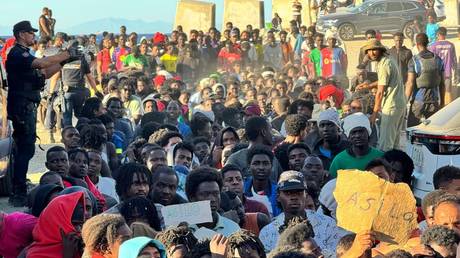
That is the number recorded by local authorities in Ceuta. Seventy-five lives extinguished at the fragile margin where European soil meets the African coast. Not abstract figures in a spreadsheet. Not temporary statistics destined for a morning briefing. People. Mothers, fathers, sons, and daughters. Each carrying a life once filled with ordinary routines—drinking morning tea, fixing a broken bicycle chain, arguing about football, or dreaming of a different tomorrow.
Consider what happens next: the news alert flashes across a screen for three seconds. A notification tone chips away at our attention. Then, silence. We scroll past.
We forget how cold the Atlantic can be at midnight.
To understand Ceuta is to understand the geography of desperation. This Spanish enclave on the northern tip of Morocco is a geographic anomaly. A fence. A wall. Razor wire gleaming under harsh floodlights. It is a tiny patch of the European Union physically attached to the African continent, separated by mere meters of land or cold, unpredictable currents of water. For anyone standing on the other side, looking across that barrier, Ceuta represents the closest door to an entirely different reality. Safety. Stability. Opportunity.
The distance looks short. That is the cruelest trick of geography.
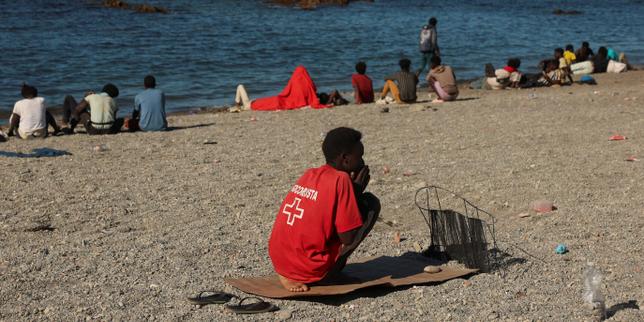
When you stand on the beach at Tarifa or near Fnideq on a clear day, you can almost see the houses on the other side. It looks like a swim. It looks like a simple crossing. But water deceives. Hypothermia sets in within minutes. Strong undertows pull swimmers away from safety with terrifying ease. And when human desperation meets reinforced steel and armed patrols, the tragedy compounds.
History teaches us a harsh lesson. Walls do not stop movement; they merely change the path of the water. They make the crossing more dangerous. They push people into darker waters, into the hands of smugglers who trade in human vulnerability, charging exorbitant fees for rickety rubber boats that have no business venturing past the surf.
Think about the calculus of risk.
What drives a person to step into a freezing sea in the dead of night, knowing the odds, knowing the dangers?
It is not a casual choice. It is the absolute exhaustion of having no remaining options. It is the quiet realization that staying put carries a heavier penalty than facing the unknown. When inflation erodes your livelihood, when conflict or lack of a future strips away tomorrow, the terrifying sea suddenly looks like a viable doorway.
The local authorities in Ceuta deal with the aftermath. Body bags. Administrative paperwork. Identification numbers. Statistics logged into archives that few will ever read. But behind every digit in that toll of seventy-five lies a family waiting for a phone call that will never come, holding onto a fading WhatsApp message sent hours before the signal vanished into the salt spray.
We try to sanitize these events with political debates. We talk about migration policies, border security budgets, international summits, and legal frameworks. These discussions matter. They shape the systems governing our world. Yet, policy documents rarely capture the burning lungs of a teenager fighting a rip current in the dark. They fail to measure the weight of a mother’s grief.
Language matters, too. We use words like "influx," "crisis," and "pressure," as if the people arriving are weather patterns. A storm to be weathered. A seasonal inconvenience. But storms do not have names, memories, or loved ones waiting on the shore.
The edge of Europe is not just a political frontline. It is a human mirror. It forces us to look at a world profoundly out of balance, where the accident of where you are born dictates whether you sleep in safety or risk everything for a chance at a livelihood.
The sun rises over Ceuta. The waves continue their steady, indifferent rhythm against the rocks. The razor wire glints in the morning light. And somewhere out there, another person is looking at the horizon, calculating the distance, wondering if today is the day they will try to cross the invisible line.