The runway at Halim Perdanakusuma smells of crushed limestone, kerosene, and the damp, unrelenting heat of an equatorial afternoon.
If you stand there long enough, watching the haze shimmer off the tarmac, you can almost hear the unwritten history of Southeast Asian skies. For decades, those skies belonged to a familiar choreography. American tails, Russian silhouettes, European wings. Western procurement officers shook hands with Jakarta's ministers in air-conditioned Jakarta boardrooms, signing off on multi-billion-dollar packages that came with thick binders of maintenance protocols, long delivery queues, and a subtle, unspoken geopolitical tether.
Then the quiet shifted.
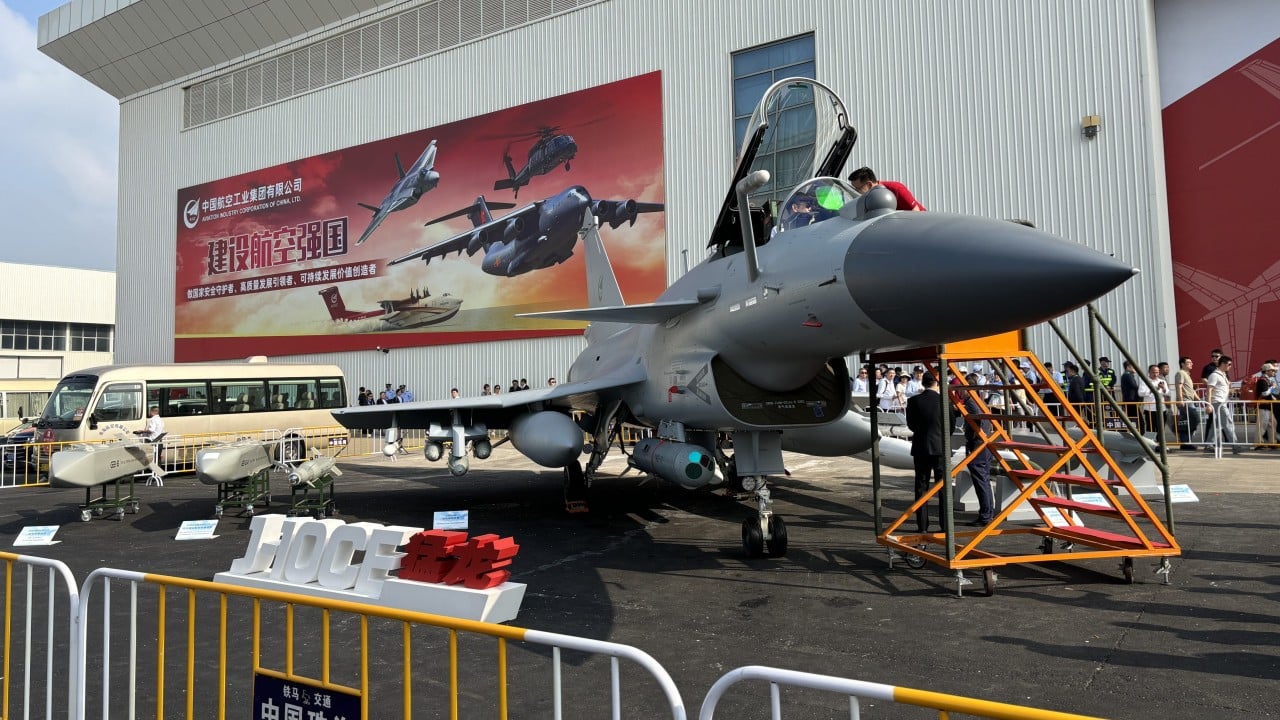
In six months, if current timelines hold true, the Indonesian Air Force—TNI-AU—is expected to take delivery of its first batch of Chengdu J-10CE multirole fighter jets.
Pause for a second and let the geography of that sentence settle. Indonesia. The world’s largest archipelago, a nation of seventeen thousand islands scattered like broken emeralds across the equator, bridging the Indian and Pacific Oceans. For generations, its defense posture was anchored elsewhere. But procurement strategies do not change because of a sudden aesthetic preference for delta wings and canards. They change because the world is cracking open, and old certainties are no longer enough to buy sleep at night.
Consider what happens when a nation looks at its defense budget not as an accounting ledger, but as insurance against a storm.
For a hypothetical Indonesian defense planner sitting in a windowless briefing room in Central Jakarta, the calculus is brutal. Western suppliers face production backlogs that stretch into the next decade. Deliveries slip. Political conditions attached to arms sales—human rights stipulations, end-use monitoring, export controls—feel, to a sovereign military, like an invisible hand reaching down from Washington or Brussels to steady the throttle.
Enter Beijing’s defense export apparatus.
The J-10CE is not some experimental prototype cobbled together in a backyard hangar. It is a mature, 4.5-generation single-engine fighter equipped with an Active Electronically Scanned Array radar, thrust-vectoring options in some variants, and an integrated suite of beyond-visual-range missiles like the PL-15. It flies fast, it turns hard, and most importantly for a developing power staring down a volatile Indo-Pacific: it arrives on schedule.
And yet, numbers and hardware specifications miss the poetry of the shift.
To understand why this delivery matters, you have to look at the pilots. Picture Captain Hendra, a fictionalized veteran of the Sukhoi Su-27 and F-16 fleets who has spent fifteen years wrestling heavy iron through monsoon clouds. To him, an aircraft is not a geopolitical statement. It is a living thing with a voice. It speaks in hydraulic pressure, cockpit glow, and the high-pitched whistle of air over a titanium canopy.
When Hendra climbs into a J-10 simulator for the first time, he isn't thinking about trade deficits or regional hegemony. He is thinking about how fast the radar locks onto a target slipping through a squall line over the Malacca Strait. He is evaluating the ergonomics of the glass cockpit, the layout of the weapon systems, the visceral response of the airframe when he pulls back hard on the stick at Mach 1.
That is where the real story lives. Not in the grand halls of international summits, but in the transition from one technological lineage to another.
For years, Western defense analysts whispered about interoperability, assuming that once a nation buys Eastern hardware, it gets locked into a different kind of orbit. But modern nations are pragmatic. Indonesia has long practiced a doctrine of * bebas aktif*—free and active. It refuses to be pinned to any single superpower's chest like a campaign ribbon. It buys French Rafales. It explores South Korean KF-21 jets. And now, it looks squarely at Chinese aerospace engineering to fill a critical gap in its sovereign airspace defense.
The arrival of the J-10CE in six months is a milestone that marks the erosion of an old monopoly.
Think about the supply chains required to keep a modern fighter jet in the air. Spare parts, avionics diagnostics, software updates, structural repairs. When you buy from Chengdu, you are buying a relationship that requires a different kind of diplomatic stamina. Training technicians in Mandarin, rewriting maintenance manuals into Bahasa Indonesia, establishing secure communication channels that do not rely on Western infrastructure—these are the invisible stitches holding the new security architecture together.
The skeptics will point to the risks. Every new aircraft type introduced into an inventory creates a logistical nightmare. Pilots need retraining. Ground crews need specialized tools. Supply chains can become political leverage points if tensions flare in the South China Sea.
Yet, the risk of doing nothing is far worse.
The skies above the Natuna Islands are growing crowded. Gray-hulled coast guard cutters push against fishing boundaries. Strategic bombers trace invisible lines across international waters. In the cockpit of an interceptor scrambling to identify an unknown radar contact, the pilot does not care where the jet was built. They care whether the engines roar to life when the starter button is pressed, and whether the missile on the rail will guide true if the worst comes to pass.
As the months tick down toward delivery day, the crews at the air base are already studying. They are poring over flight manuals, learning the quirks of a new engine, preparing their minds for a machine born in a different hemisphere.
Out on the flight line, the heat never breaks. The humidity hangs heavy, thick enough to taste. Somewhere out over the Java Sea, a lone propeller climbs into the gray dawn, tracing a small, lonely arc against the infinite blue. Soon, it will share that sky with something faster, sharper, and born of a new era.
The horizon is moving. And there is no turning back the throttle.