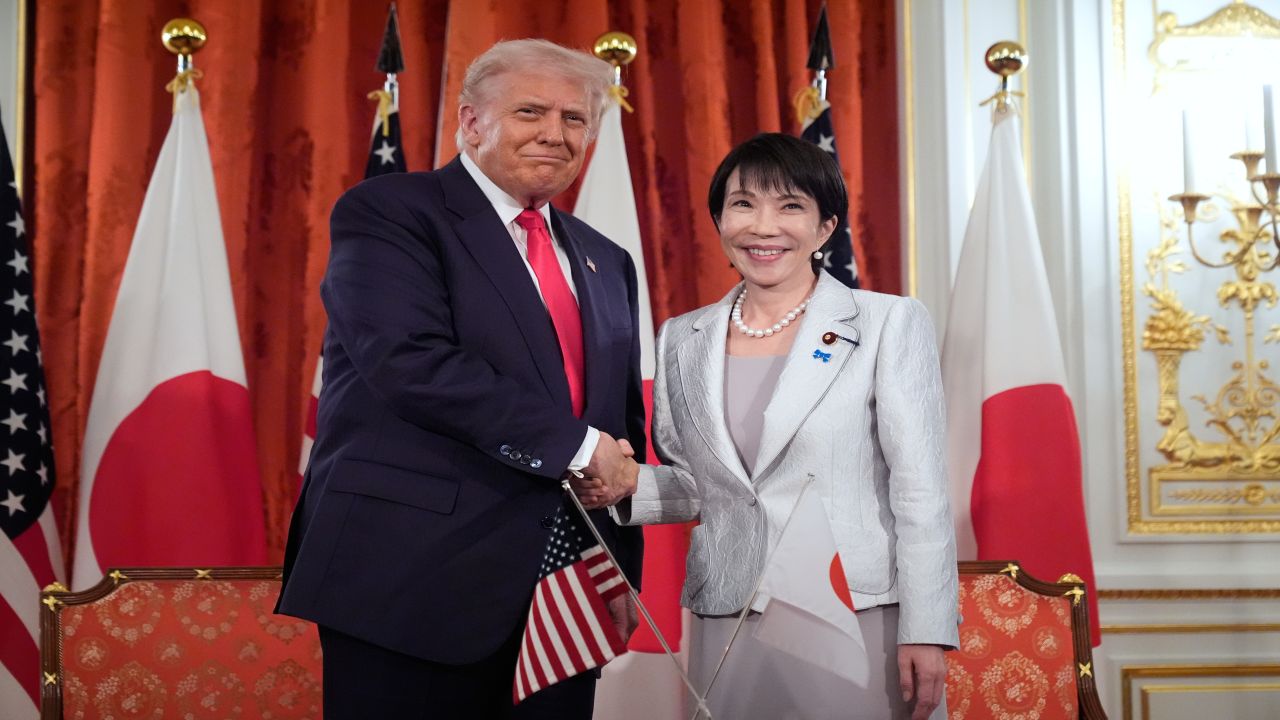
The white noise of the helicopter blades on the South Lawn usually signals the start of a choreographed diplomatic dance, but today’s meeting between President Donald Trump and Japanese Prime Minister Sanae Takaichi is anything but scripted. Takaichi, fresh off a historic February landslide that granted her Liberal Democratic Party a two-thirds supermajority, enters the West Wing with more domestic political capital than any Japanese leader in the postwar era. Yet, she arrives at a moment where that capital is being weighed against the escalating cost of a war in the Middle East that Tokyo did not ask for and cannot easily join.
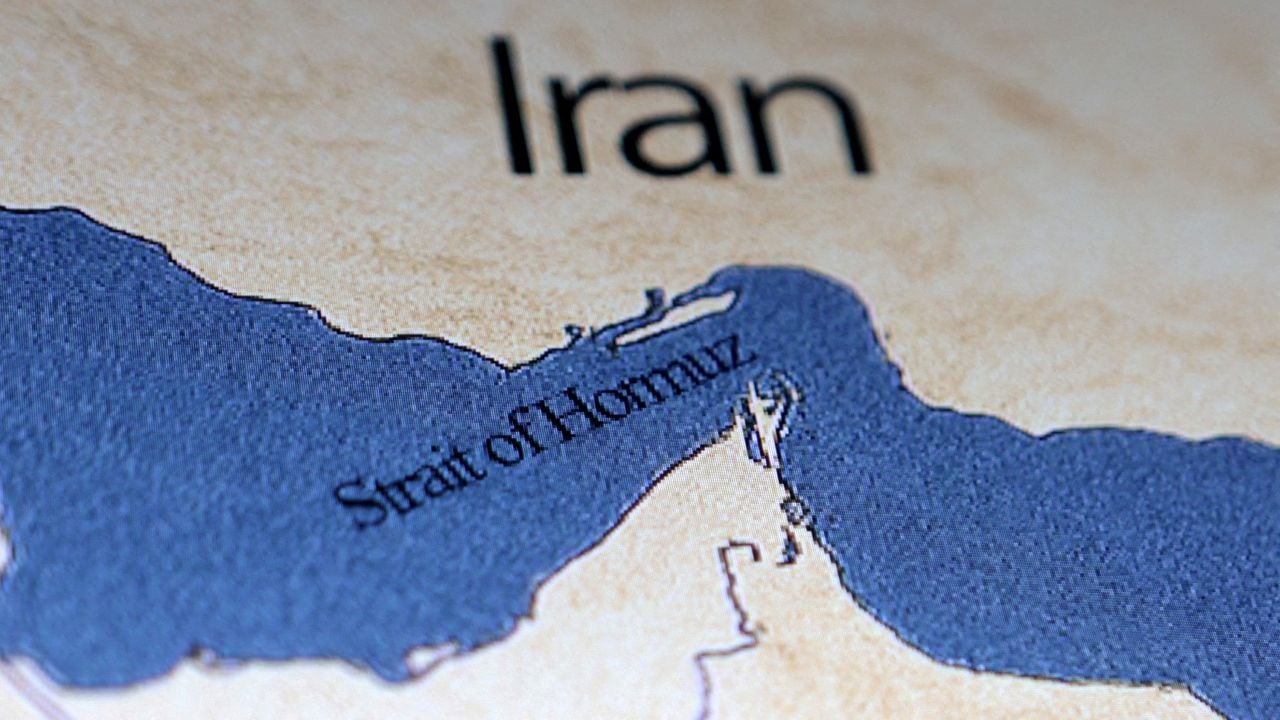
The primary tension involves a direct and uncomfortable request. Washington wants Japanese warships in the Strait of Hormuz to break an Iranian blockade that has choked global energy markets and sent oil prices into a vertical climb. For Takaichi, the calculation is a brutal binary. Agreeing to the request risks a "state of war" with Tehran and a violation of Japan’s pacifist constitution that even her massive mandate might not survive. Refusing it risks alienating a president who views alliances not as sacred bonds, but as subscription services where the protection is only as good as the latest payment.
The Strait of Hormuz Trap
Japan is uniquely vulnerable to the current theater of operations. Over 90% of its energy imports flow through the Middle East, with the lion’s share transiting the Strait of Hormuz. When the U.S. and Israel launched strikes against Iranian targets three weeks ago, they effectively lit a match in a room full of gasoline. Iran’s response—asserting control over the shipping lanes—has forced Tokyo to dip into 15 days of its strategic oil reserves.
This isn't just about gas prices. It is about the fundamental survival of the Japanese economy. While Trump has publicly oscillated, at one point tweeting that the U.S. "no longer needs" help from allies before backpedaling to demand naval escorts, the back-channel pressure on Takaichi is relentless. The White House expects "boots on decks." Takaichi, however, told the Diet just days ago that she will explain "what we can and cannot do" based on Japanese law.
The "cannot" is the sticking point. Under the 2015 security legislation, Japan can only exercise "collective self-defense" if a situation threatens the very survival of the Japanese state. While a total energy cutoff might qualify in a laboratory setting, the legal leap required to send the Maritime Self-Defense Force (MSDF) into an active combat zone against Iran is a gap that few constitutional scholars are willing to bridge.
A Mandate in the Crosshairs
Takaichi is often called "Japan’s Margaret Thatcher," a label she has leaned into with hawkish rhetoric regarding China and a promise to revise the "Three Documents" of Japan’s security strategy. Her February victory was a referendum on strength. Young voters, in particular, flocked to her plain-spoken style and her refusal to blink in the face of Chinese maritime incursions.
But there is a difference between standing firm against a regional neighbor and being pulled into a global conflict 5,000 miles away. Recent polling by The Asahi Shimbun shows a staggering 82% of the Japanese public opposes involvement in the Iran war. Takaichi is walking into the Oval Office with a supermajority at her back but a silent majority at her throat.
The irony of the current crisis is that Takaichi’s trip was originally intended to secure a different kind of protection. Tokyo is deeply unsettled by the possibility of a "Grand Bargain" between Trump and Chinese President Xi Jinping—a deal where Washington might trade away security guarantees for Taiwan or the Senkaku Islands in exchange for trade concessions. Takaichi came to Washington to buy predictability. Instead, she is being asked to sell Japan’s military neutrality.
The Cost of the Security Umbrella
Trump’s "Golden Dome" missile defense initiative is another chip on the table. Japan has already signaled interest in joining the program and has accelerated its target to reach 2% of GDP in defense spending. In a vacuum, these are the exact "contributions" the Trump administration has demanded for years. In the context of 2026, they look like a down payment that hasn't quite cleared the bank.
Washington has already begun thinning its Pacific presence to feed the Middle Eastern front. The Pentagon recently redirected 2,500 Marines and an amphibious warship from Japan to the Arabian Sea. Batteries of THAAD and Patriot missile systems have been pulled from South Korea. For Takaichi, the sight of American assets leaving the theater just as China ramps up its own "gray zone" pressure is a nightmare scenario.
The Iranian Channel
What the White House often overlooks is Tokyo’s unique diplomatic history with Tehran. Unlike Washington, Japan has maintained a working relationship with the Iranian leadership for decades. Foreign Minister Motegi Toshimitsu has been on the phone with his Iranian counterpart, Abbas Araghchi, as recently as March 17, trying to secure the release of detained Japanese vessels.
The Iranians have been blunt. They have signaled to Tokyo—and to other regional powers like India and Turkey—that their ships can pass through the Strait safely if they do not support the U.S.-led military campaign. This creates a perverse incentive for Japan to distance itself from its only treaty ally to keep the lights on in Tokyo. Takaichi must now decide if the U.S. alliance is worth an immediate energy collapse.
The Ghost of the 1991 Gulf War
Senior officials in the LDP still remember the "checkbook diplomacy" debacle of 1991. Japan contributed $13 billion to the coalition that liberated Kuwait but sent no troops. The result was international ridicule and a sense that Japan was a "free rider" on the global order. Takaichi is determined not to repeat that humiliation, but her options for "physical" contribution are limited to non-combat roles:
- Intelligence sharing via existing patrol planes in the Gulf of Oman.
- Increased financial support for regional stabilization.
- Escelerated investment in U.S. domestic energy to reduce long-term Middle East dependence.
None of these are likely to satisfy a president who wants a visual show of force. Trump has spent the better part of the last decade complaining that the U.S. pays for everyone else’s security. Seeing the MSDF's advanced Aegis destroyers sitting in the harbor at Yokosuka while U.S. tankers are under fire is exactly the kind of imagery that triggers a "transactional" response from the Oval Office.
Moving Past the Stalemate
The meeting today will not end with a joint declaration of war. It will likely end with a vaguely worded communique about "deepening the alliance" and "shared concerns over maritime security." But the real work is happening in the margins. Takaichi is expected to pitch a $550 billion investment package into the U.S. economy—a "defense Keynesianism" play—in exchange for a softening of the naval demands.
She is essentially trying to buy her way out of a combat role. It is a high-stakes gamble that relies on Trump valuing American jobs over a Japanese naval presence in the Middle East. If he bites, Takaichi returns to Tokyo as the leader who saved the alliance without firing a shot. If he doesn't, the "Takaichi Effect" that won her the election will face its first, and perhaps final, expiration date.
Watch the joint press conference for any mention of the "Strait of Hormuz." If the phrase is missing, Takaichi has managed to hold the line. If it’s there, Japan has just taken its first step toward a new, and far more dangerous, era of military engagement.