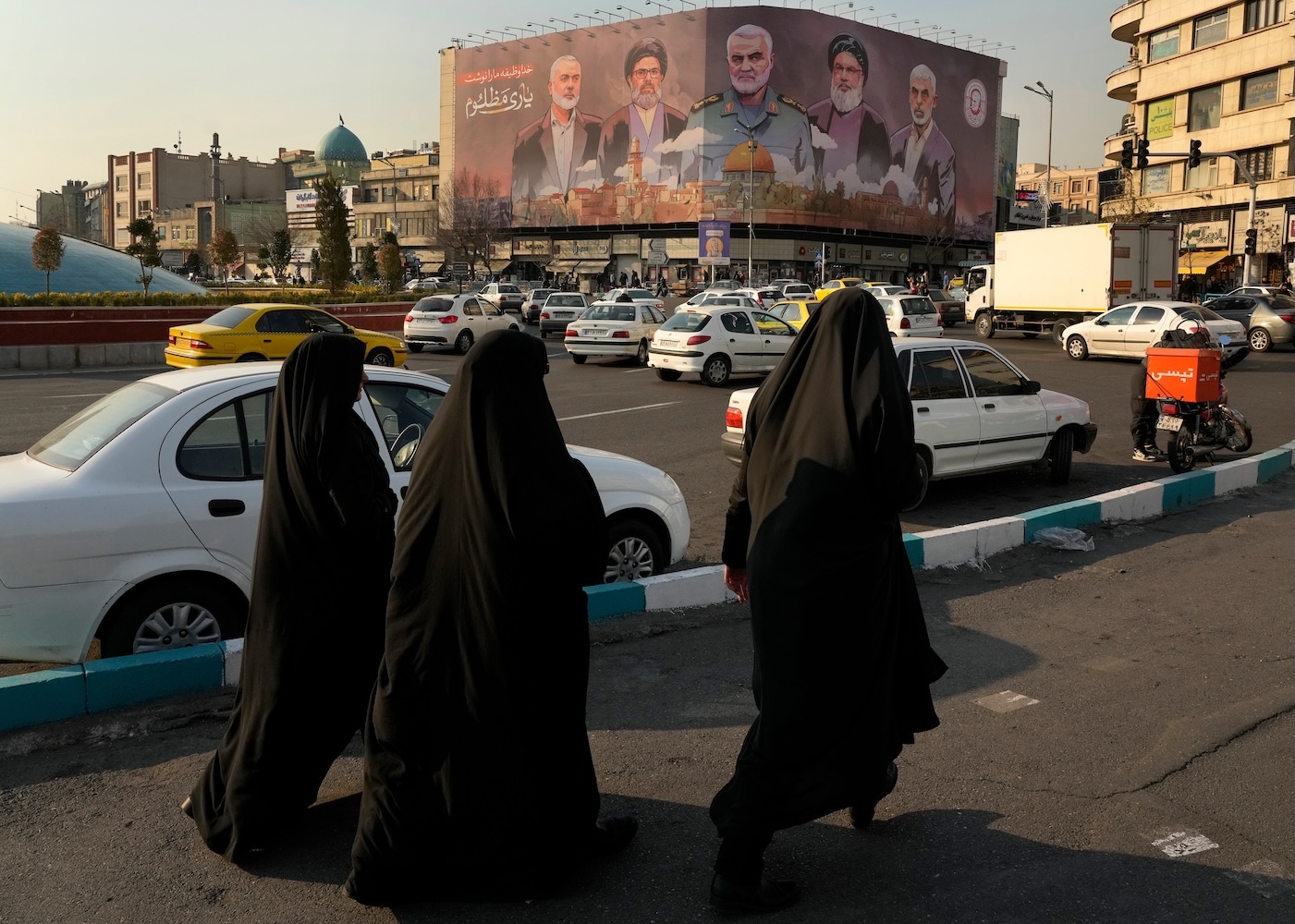
In a small, dimly lit apartment in the suburbs of Tehran, a tea kettle whistles itself dry. The woman who set it to boil is no longer looking at the stove. She is staring at a flickering television screen, her hand trembling as it hovers over a smartphone. Across the sea, in a bustling cafe in Tel Aviv, a young man ignores his espresso to refresh a news feed for the hundredth time. Both of them are breathing the same heavy air of anticipation. It is the suffocating weight of a "wider conflict," a phrase that sounds clinical in a briefing room but feels like a physical blow in a living room.
The headlines tell us that high-ranking military leaders have been eliminated. They speak of surgical strikes, intelligence triumphs, and strategic decapitation. But strategy is a cold comfort when the ground begins to shake. Behind every targeted strike is a sequence of events that resembles a falling row of obsidian dominoes, each one heavier and more jagged than the last.
The Mirage of the Clean Break
There is a seductive myth in modern warfare: the idea that you can remove a single piece from the board and the rest of the game will simply stop. We call it "surgical." It implies a sterile environment, a controlled outcome, and a patient who wakes up cured.
The reality is messier.
When a nation decides to eliminate the architects of its enemy’s shadow wars, it isn't just removing a person. It is tearing a hole in a complex, organic web of loyalties, obligations, and religious fervor. Imagine a spiderweb coated in gasoline. You cannot pluck a single strand without the whole structure vibrating, and you certainly cannot do it without risking a spark.
The experts quoted in the morning papers warn of "escalation cycles." It is a dry term for a terrifying human reality. It means that the person who just lost their commander—or their father, or their mentor—is now sitting in a room somewhere, fueled by a potent mix of grief and the absolute necessity of saving face. In the Middle East, "face" is not about vanity. It is the currency of survival. If you do not hit back, you are perceived as prey. And in this geography, prey does not last long.
The Ghost in the Command Center
Consider a hypothetical commander named Hassan. He isn't a monster in his own mind; he is a patriot, a true believer, and a man who has spent thirty years building a network of proxies that stretch from the Mediterranean to the Persian Gulf. When he is killed, his files don't disappear. His ideology doesn't evaporate.
Instead, he becomes a ghost.
A living leader can be negotiated with, deterred, or even bribed. A dead leader is an icon. He becomes a rallying cry that is far harder to kill than the man himself. The vacuum left behind is rarely filled by a moderate. It is filled by someone younger, hungrier, and desperate to prove they are just as "committed" as the martyr they replaced.
The invisible stakes here aren't just about how many missiles are in a silo. They are about the psychological breaking point of two populations that have been told for decades that the other is an existential threat. When the high-level assassinations begin, the "existential" part stops being a political talking point and starts being a daily calculation for the person deciding whether to go to the grocery store or stay in the basement.
The Calculus of Miscalculation
History is a graveyard of "limited engagements" that refused to stay limited.
In 1914, the world didn't think a single shooting in Sarajevo would lead to the muddy hell of the trenches. They thought it was a local matter, a regrettable but necessary settling of accounts. We are currently walking that same thin line. The tension between Israel and Iran has long been a "Shadow War"—a series of stabs in the dark, cyberattacks, and proxy skirmishes that allowed both sides to claim victory without committing to a total, devastating firestorm.
That shadow is retreating.
When you kill the top tier of a military hierarchy in a foreign capital, you are dragging the war into the high noon of direct confrontation. The "plausible deniability" that kept the peace—or a version of it—is gone.
Logic would dictate that neither side wants a total war. Iran’s economy is a fragile thing, held together by sheer willpower and black-market oil sales. Israel, for all its military might, is a small country where a single sustained missile barrage could paralyze the national psyche and the economy for months.
But war is rarely logical.
War is a series of "if-then" statements where the "then" is written in blood. If they hit our embassy, then we must hit their airbase. If they hit our airbase, then we must hit their port. It is a ladder where every rung leads higher into the clouds of uncertainty, and eventually, the people on the ladder realize they can no longer see the ground.
The Sound of the Silence
There is a specific kind of silence that follows a major assassination. It isn't the silence of peace; it’s the silence of a held breath.
It’s the silence of the "Red Telephone"—the direct lines of communication that are supposed to prevent accidental apocalypse. In moments of extreme tension, those lines often go dead. Diplomacy requires a baseline of trust, or at least a shared desire to avoid mutual destruction. When the strikes become this personal, the desire for revenge often outshines the desire for survival.
We often hear about the "Iron Dome" or the "Arrow" defense systems. We see the videos of golden streaks of light intercepting incoming threats in the night sky. It looks like a video game. It feels distant.
It isn't.
Behind those streaks of light are families huddled in reinforced rooms, listening to the muffled thuds of explosions and wondering if the next one will find a gap in the shield. The "wider conflict" the experts talk about is simply the expansion of that fear to millions more people. It is the transformation of a regional rivalry into a global tremor that shakes gas prices in Ohio, shipping lanes in the Red Sea, and the mental health of an entire generation in the Levant.
The Invisible Threshold
We are currently standing on a threshold that lacks a signpost. No one knows exactly which strike will be the one that tips the scales. It might not even be the biggest one. It might be a small, secondary explosion that hits the wrong target at the wrong time—a school, a hospital, a crowded market—triggering a wave of public fury that no government can contain.
The tragedy of the "expert" perspective is that it views these events as a game of chess. They talk about "assets," "capabilities," and "deterrence posture."
They forget that the pawns have heartbeats.
The young man in Tel Aviv and the woman in Tehran are not assets. They are the ones who will pay the bill for the decisions made in windowless rooms by men who believe they can control the wind. You can kill a leader, and you can destroy a building, but you cannot easily put the ghost of war back into the bottle once it has been uncorked.
The tea kettle in Tehran finally boils over, spilling water onto the flame with a sharp hiss. In the sudden quiet, the woman finally picks up her phone. She doesn't call a general. She calls her daughter. She doesn't talk about strategy. She tells her to buy extra flour, to fill the water jugs, and to stay away from the windows.
The red telephone might be silent, but the lines of ordinary people are buzzing with the frantic, quiet preparations of those who know that when the giants fight, it is the earth that suffers. We are waiting for the next move, not on a map, but in the marrow of our bones. The sky is clear for now, but the air carries the metallic scent of an approaching storm that no one is truly ready to weather.
The dominoes are standing, but they are leaning, and the hand that pushed them has already moved on to the next play.