The air inside the concrete bunker smells of stale chicory, paraffin, and the quiet, collective dread of ten million people who are trying to decide whether to buy milk or flashlight batteries.
Outside, in the blinding afternoon glare of Tehran, traffic flows past pistachio stalls and shuttered pharmacies with a deceptive, sluggish normalcy. But in the corridors of power, thousands of miles away across oceans and shifting alliances, the math is being reduced to a single, unyielding integer: three point six seven.
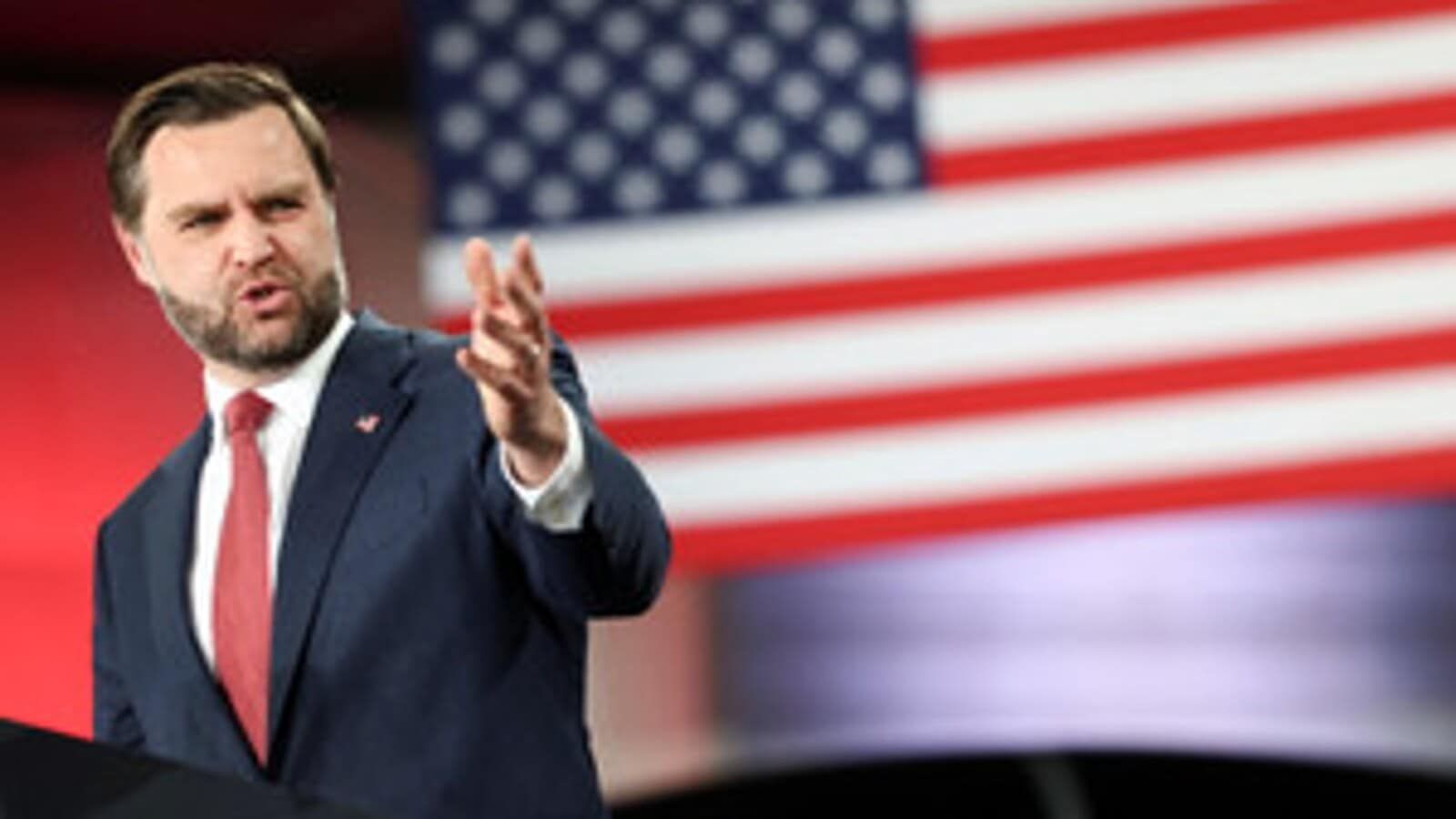
That is the percentage. Two decades ago, it was the threshold of academic debate. Today, it is the margin between a humming medical isotope facility and a subterranean cathedral of centrifuges spinning toward weapons-grade purity. When Vice President JD Vance stepped to a microphone to outline the administration’s baseline—that Iran must halt its uranium enrichment entirely if it wants an end to the current hostilities—he was not just talking about heavy machinery or cascade rotations. He was drawing a chalk line across a map written in blood, fear, and sixty years of mutual suspicion.
History rarely arrives with a trumpet blast. It sneaks in through the back door while you are arguing about the price of flour.
To understand why this moment feels so heavy, you have to strip away the suits, the teleprompters, and the diplomatic press corps. You have to look at the mechanics of deterrence through the eyes of someone whose basement floor vibrates every time a sonic boom rattles the windowpanes.
Consider a hypothetical civilian—let us call him Farhad, a retired electrical engineer living in a suburb north of Isfahan. Farhad remembers the war with Iraq in the eighties. He remembers the blackouts, the sirens wailing over the Alborz mountains, the jagged shards of glass swept off kitchen linoleum. When he hears Western officials talk about capping enrichment at zero, he does not hear a technical safeguard against proliferation. He hears a demand for unconditional surrender wrapped in the neutral language of international law.
And from Washington’s perspective, the logic looks entirely different, born of a different kind of trauma.
Imagine sitting in a secure briefing room beneath the Potomac mud at three in the morning. The satellite imagery on the glowing monitors shows grey-roofed complexes carved deep into granite ridges at Natanz and Fordow. You know what happens if those centrifuges reach ninety percent purity. You know the calculus of preemptive strikes, carrier strike groups, and the catastrophic risk of a regional conflagration that could drag the global economy into a permanent winter. From that chair, zero is not a negotiation tactic. It is the only number that lets you sleep at night.
This is the tragedy of modern geopolitics. Two entirely rational fears, staring at each other across an impossible chasm, creating the very catastrophe they are trying to prevent.
For months, the drumbeat of conflict has ground down the patience of a region that was already running on fumes. Proxies fire rockets across borders; air defense batteries track blips on green radar screens; leaders in capitals from Jerusalem to Tehran calculate the cost of backing down versus the cost of doubling down.
When the United States insists that any lasting peace must begin with the complete dismantling of Iran's enrichment capacity, it is testing a hypothesis that has failed every time it has been tried before: that a sovereign nation under siege will voluntarily surrender its technological leverage under duress.
Sanctions have bitten deep into the Iranian middle class. They have turned university graduates into ride-share drivers and made life-saving cancer drugs impossibly expensive luxuries. Yet, counter-intuitively, economic isolation has often had the opposite political effect of what textbook economists predict. When a populace is cornered, the flag becomes the only shelter left. The state points to the outside pressure and says: Look. They do not want you to have peace. They want you to have nothing.
This is where the narrative breaks down. A communique from Washington or a fiery speech in Tehran can summarize policy in neat, digestible soundbites. But policy does not bleed. People do.
We have been down this road before. The Joint Comprehensive Plan of Action was built on the premise of managed containment—capping enrichment at three point six seven percent, putting inspectors in the white-suited hazmat gear inside the enrichment halls, and locking up the surplus stockpile. It was messy. It relied on trust where there was none. And when it collapsed, it did so with a predictable, slow-motion violence.
Now, the pendulum has swung violently back to maximalist demands. Zero enrichment. Total cessation. Complete rollback.
Yet, physics is stubborn. Once knowledge is unlocked, it cannot be un-invented. You can bomb a facility, but you cannot carpet-bomb a university curriculum. You can impose embargoes, but you cannot starve out an ideology that feeds on historical grievances dating back to the 1953 coup.
As Vance made clear, the current White House stance leaves no room for creative ambiguity. The war—whether fought with kinetic strikes, cyber sabotage, or economic strangulation—will not stop until the centrifuges stop.
Farhad turns off his kitchen radio as the evening news anchor finishes reading the latest translation from Washington. Outside, the dusk is turning the dust of the Iranian plateau into a bruised purple. He looks at his granddaughter, who is struggling with her algebra homework by the dim light of a flickering LED bulb powered by a neighborhood generator.
She wants to be a physicist. She is brilliant at math. She dreams of accelerators and quantum fields.
In another world, her talent would be a bridge between her home and the rest of the world. In this world, her talent is a geopolitical hostage.
The line in the sand is drawn. The ink is drying on the statements. But as the shadows lengthen across the mountains, the distance between what is demanded and what is possible remains as vast and silent as the desert night.